

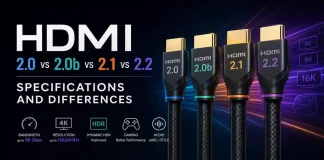
HDMI 2.0 vs 2.0b vs 2.1 vs 2.2, specifications and differences
The HDMI standard has several versions, which were developed as televisions, monitors, and other video devices transitioned to higher resolutions and refresh rates. The...

Hisense TV model numbers explained 2014-2024
The Chinese company of the same name manufactures Hisense TVs. You should know that Hisense is the largest TV manufacturer and owns many...

Samsung TVs QN1EF vs QEF1
In the 2025 model range, Samsung QN1EF TVs are available in two technological variants: Neo QLED and standard QLED. Despite their similar names, these...

What is judder and how to get rid of it
Judder is a motion problem on a TV that makes moving objects or camera movements appear uneven, jerky, or slightly choppy rather than smooth....

X-tended Dynamic Range PRO on Sony TV, explanation
Sony offers technology designed to improve picture quality, especially in dark areas. This technology automatically corrects the image on the TV screen to optimize...

LG EG960 and EF950 OLED TVs Abandon Standard VESA Mounting
When LG introduced OLED models such as the LG OLED EG960 and LG OLED EF950, the company also unveiled a new mounting concept. Due...

How to properly transport and connect your TV
Whether you’re buying a new TV or moving an old one to a new home, following the proper guidelines for transporting a TV is...
Clear Motion Rate (CMR) in Samsung TV explained
Samsung Clear Motion Rate (CMR) is a proprietary technology developed to enhance the smoothness and clarity of television images. It combines frame rate, display...

Audio codecs AAC, MP3, WMA, DTS, Dolby explained simply
In today’s digital world, audio is stored and transmitted in digital format. Although digital audio can be transmitted without compression, uncompressed files are extremely...

What is LG SoundSync?
LG Sound Sync is a feature from LG that allows the TV to connect to and control audio devices (such as headphones, soundbars, or...