
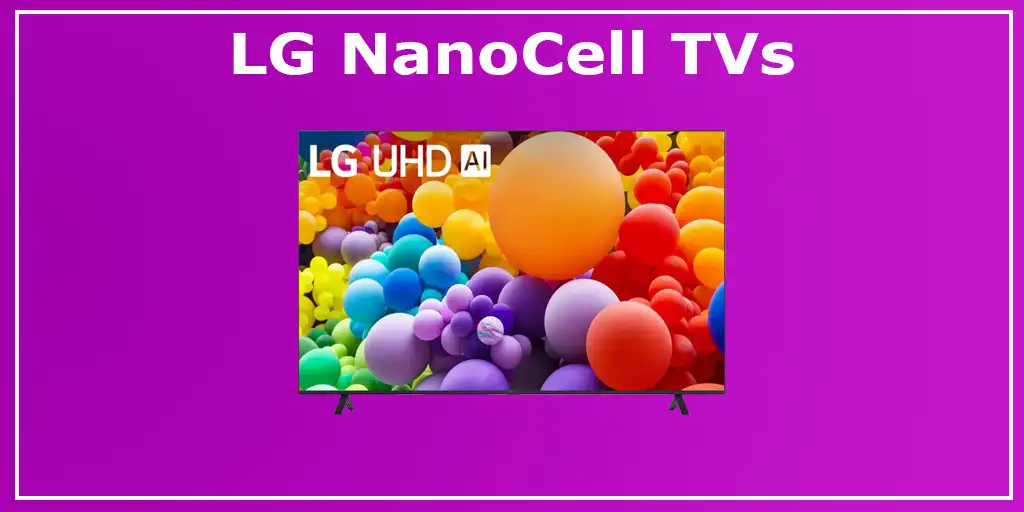
LG NanoCell is a display technology used in LG LCD TVs. The name refers to the use of very fine particles in the display’s design, which improve color reproduction by filtering out unwanted wavelengths of light. This name was given to the first TVs with enhanced LCD panels; LG registered the name and began using it for its TV lineup.
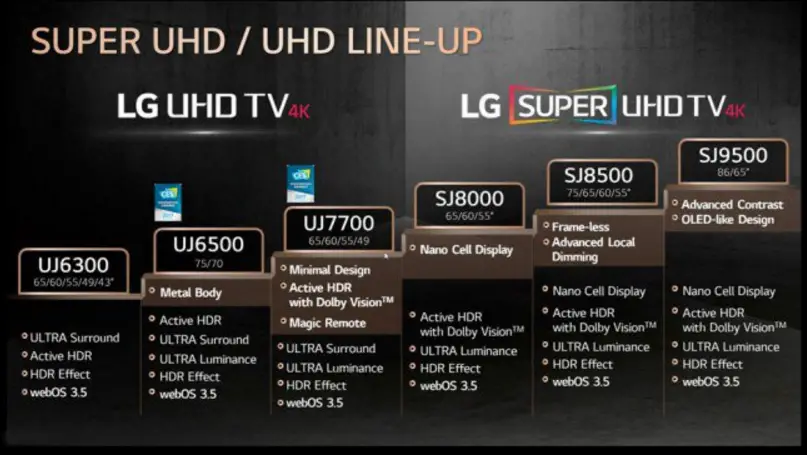
LG introduced NanoCell TVs as a cutting-edge LCD alternative to its OLED models. When they were first released in 2017, these TVs were positioned as Super UHD TVs. However, over time, the position of NanoCell TVs within LG’s lineup has changed, especially following the introduction of QNED TVs.
How does LG NanoCell technology work?
NanoCell technology is designed to enhance the purity of colors reproduced by an LCD display and is implemented during the panel manufacturing process.
In an LCD TV, a backlight source is used to illuminate the pixels. The light passes through several layers before reaching the screen. Some unwanted wavelengths can affect the final colors. The NanoCell layer helps filter out this unwanted light, allowing the display to reproduce purer and more accurate colors.
It’s important to note that NanoCell does not replace the LCD panel or the LED backlight. It is a technology added to an LCD TV to improve color reproduction. That’s why NanoCell should not be considered a separate type of display, like OLED.
NanoCell vs OLED and QLED
NanoCell, OLED, and QLED describe different approaches to improving television picture quality.
| Technology | Basic principle | Main characteristic |
|---|---|---|
| NanoCell | Nanoparticle-based color filtering in an LCD TV | Improved color reproduction |
| QLED | Quantum-dot technology used with an LCD display | Wider color range and high brightness potential |
| OLED | Self-emissive pixels | Excellent black levels and contrast |
NanoCell TVs still depend on an LCD panel and backlight. Therefore, NanoCell technology itself does not provide the pixel-level black control possible with OLED.
The actual picture quality also depends on the particular TV model, including its panel, backlight, local dimming system, processor, and other components.
LG NanoCell TVs before 2020
LG introduced the NanoCell name as part of its higher-end LCD TV strategy. In the years before 2020, NanoCell was positioned much closer to the premium part of LG’s television range and was promoted alongside OLED TVs.
During this period, LG used NanoCell as a way to distinguish its advanced LCD models from conventional LED TVs.
The positioning changed as LG introduced new technologies and product lines. In particular, the introduction of QNED gave LG another name for its more advanced LCD televisions.
What happened to NanoCell TVs after 2020?
After 2020, NanoCell gradually moved down LG’s product hierarchy. QNED became the more prominent name for LG’s higher-end LCD TVs, while NanoCell models were increasingly positioned as more affordable LCD televisions.
This does not mean that every NanoCell TV has identical hardware. LG has released different NanoCell models with different panels, backlighting systems, refresh rates, and other specifications.
For this reason, it is better to evaluate a NanoCell TV by its specific model rather than assuming that all NanoCell televisions have the same technical characteristics.
In short, NanoCell is an LG LCD display technology rather than a separate type of TV panel. It was originally positioned as a more advanced LCD solution, but after the introduction of QNED, NanoCell TVs became more closely associated with LG’s affordable LCD range.