
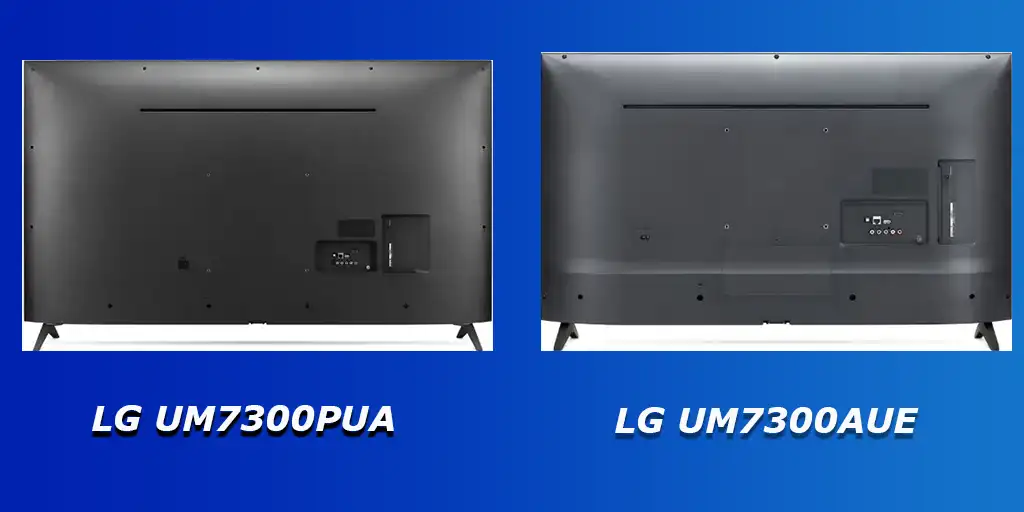
The UM7300PUA and UM7300AUE TVs belong to the same series developed for the markets of the United States and Canada and have identical specifications. The main differences between them relate only to design and internal components and do not significantly affect picture quality.
Differences between the PUA and AUE suffixes
Models with the AUE suffix were produced in just two screen sizes — 43″ and 55″ — and therefore have different product codes (UPC), reflecting minor technical variations. The first letters, P and A, indicate differences in the internal layout of the electronic boards, including the position of the power connector, which points to the use of different chassis designs. In simple terms, motherboards from different manufacturers or production generations are not identical, and these distinctions can sometimes be noticed when comparing the TVs directly.
The letter U denotes the type of digital tuners used for broadcasts in the United States and Canada, which operate according to the ATSC standard.
The letter E in the PUA and AUE designations signifies small external modifications, such as slight changes in the shape of the stand legs. These adjustments do not affect functionality but result in subtle differences in appearance and assembly.
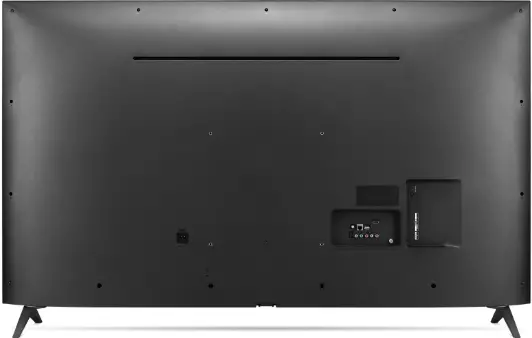
LG UM7300PUA
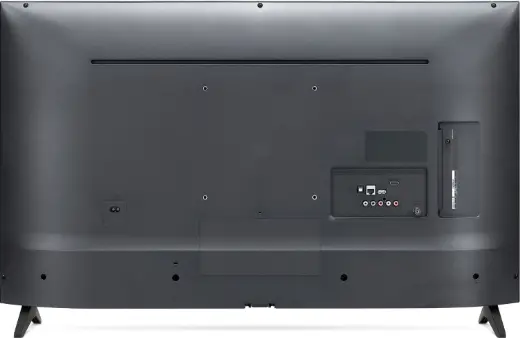
LG UM7300AUE
Technical specifications for UM7300 TVs
| Specification | Value |
|---|---|
| Display Type | LED LCD |
| Resolution | 3840 × 2160 (4K UHD) |
| Refresh Rate | 60 Hz |
| HDR Support | HDR10, HLG |
| Operating System | webOS |
| Smart Features | Apps, streaming, voice control |
| Processor | Quad-core |
| Audio Output | 20 W stereo |
| HDMI Ports | 3 |
| USB Ports | 2 |
| Wireless Connectivity | Wi-Fi, Bluetooth |
| TV Tuner | ATSC / Clear QAM |
LG UM7300 series TVs are equipped with an LCD panel with LED backlighting and a resolution of 3840 × 2160 pixels. The panel is 8-bit and uses FRC (Frame Rate Control) technology, which prevents the TV from creating more shades than the panel can display. However, special software substitutes colors, and the human eye, due to its inertia, sees colors that are completely different from those actually displayed by the TV. Manufacturers claim that the TV can produce about one billion shades, although this is not true; the TV can only display 16 million color shades.
The native refresh rate is 60 Hz, and the display cannot show more than 60 frames per second.
The TVs support HDR10 and HLG formats with a typical peak brightness of around 300 nits, although full HDR performance is limited by the 8-bit panel. Simply put, the TV can hardly display HDR content.
The TVs are equipped with an entry-level quad-core processor from the α series (these are not LG processors, but MediaTek processors, α being the marketing name) and include 3 HDMI 2.0 ports, 2 USB ports, an optical digital audio output, Ethernet, dual-band 802.11ac Wi-Fi, and Bluetooth 5.0.
The built-in stereo system consists of two speakers with a total power of 20W and supports Dolby Digital decoding. The ATSC/Clear QAM tuner allows you to receive terrestrial and cable broadcasts. The TVs run on the webOS platform, which supports voice commands and the installation of apps from the official store.