
Samsung announced this feature for its SUHD TVs in 2016, and later introduced it in some QLED models, presenting it as a solution for reducing screen glare in brightly lit rooms and improving the visibility of dark scenes when watching during the day or with the lights on. In reality, Samsung did not develop any fundamentally new technology. The TVs used standard anti-glare displays that had been developed decades earlier and were already widely used in the industry.
Anti-glare coating technology has been successfully used in screens since the 1990s, and its basic principles have remained largely unchanged over the years due to the effectiveness of the technology itself.
How it works
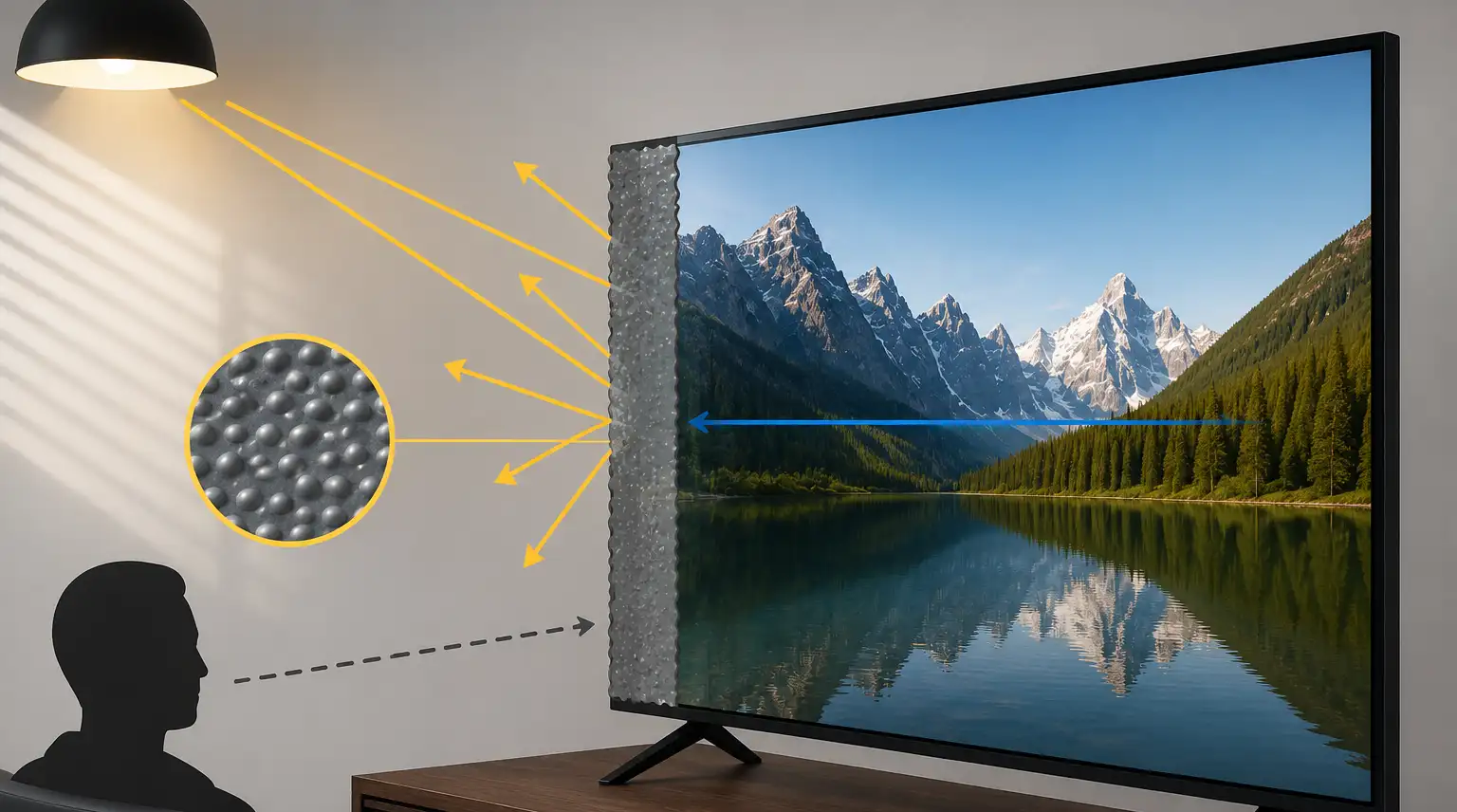
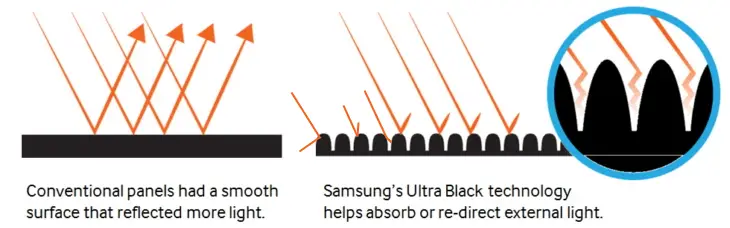
Samsung’s Ultra Black technology works as follows: a special coating with microscopic bumps is applied to the surface of the screen. These tiny bumps scatter light from lamps or sunlight instead of reflecting it directly into the viewer’s eyes. The coating also has light-absorbing properties, allowing light from the screen to pass through while absorbing external light, which reduces reflections on the display. As a result, glare is virtually eliminated, and the image remains clear even in bright lighting.
The future of Ultra Black technology
As practice has shown, it is quite difficult to promote a technology that is essentially standard and already used by almost all TV manufacturers. Over time, such names lose their impact, and after a few years they are replaced by new marketing terms with prefixes such as “super,” “nano,” and others. In addition, after Samsung completely exited the LED panel manufacturing business, the use of this branding lost its relevance and is no longer used in the company’s TVs.