
The lifespan of home appliances and electronic devices can vary widely, depending on factors such as the brand, model, usage conditions, maintenance, and technological developments. To understand the full picture, it helps to categorize appliances and consider their typical lifespans—keeping in mind that these are average estimates, and actual performance may differ.
It is important to note that every appliance comes with a manufacturer-defined service life. Under proper care—regular maintenance, timely replacement of worn components, and changing consumables like filters—this lifespan is often achievable. If a device fails within its designated service life and requires costly repairs, compensation from the manufacturer may be possible. However, pursuing such claims is usually complex and often occurs through class-action lawsuits, which typically conclude with a settlement.
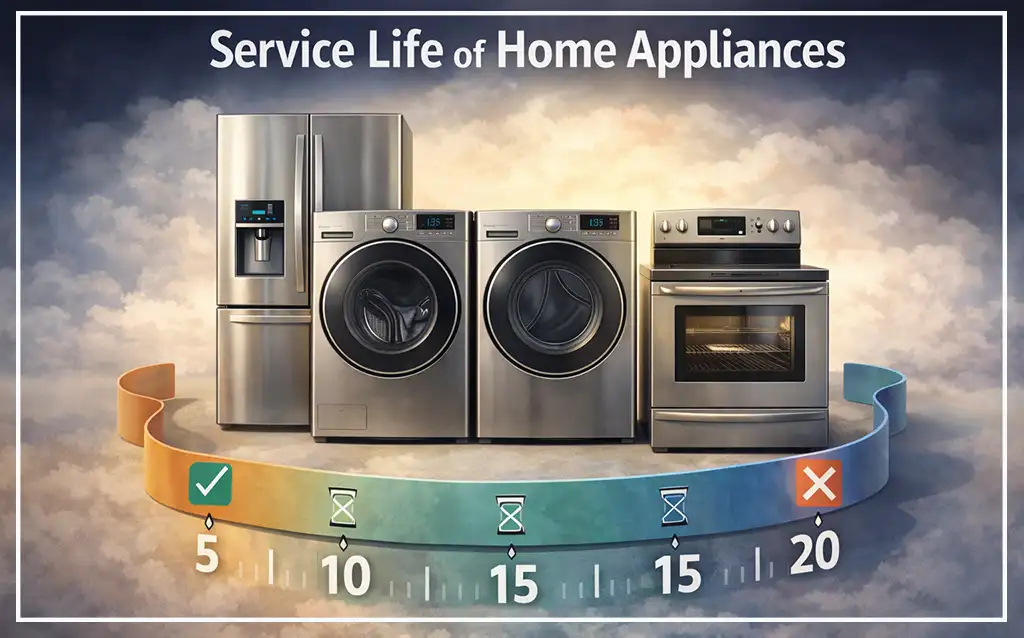
Most major home appliances last about 10 to 15 years, although the actual lifespan depends on the type of appliance, how often it is used, maintenance, installation quality, and the availability of replacement parts. Some appliances, such as refrigerators, water heaters, ovens, and central heating and cooling systems, can last 15 to 20 years or longer.
The figures below are typical lifespan estimates. They should not be treated as a guaranteed service life because the same type of appliance can last much longer or fail earlier depending on operating conditions.
Home appliance lifespan chart
| Appliance | Typical lifespan |
|---|---|
| Refrigerator | 10–20 years |
| Compact refrigerator | 4–12 years |
| Dishwasher | 10–15 years |
| Washing machine | 10–15 years |
| Clothes dryer | 10–15 years |
| Oven and stove | 10–20 years |
| Trash compactor | 7–12 years |
| Microwave oven | 7–12 years |
| Garbage disposal | 10–15 years |
| Portable air conditioner | 5–10 years |
| Window air conditioner | 8–15 years |
| Split air conditioner | 15–20 years |
| Central heating and cooling system | 15–20 years |
| Water heater | 15–20 years |
| Small household appliances | 3–5 years |
| Food processor | 2–4 years |
These are general estimates rather than fixed limits. For example, ENERGY STAR notes that refrigerators older than 15 years can use significantly more electricity than newer efficient models, which can be an important reason to replace an appliance even when it still works.
Refrigerator Lifespan
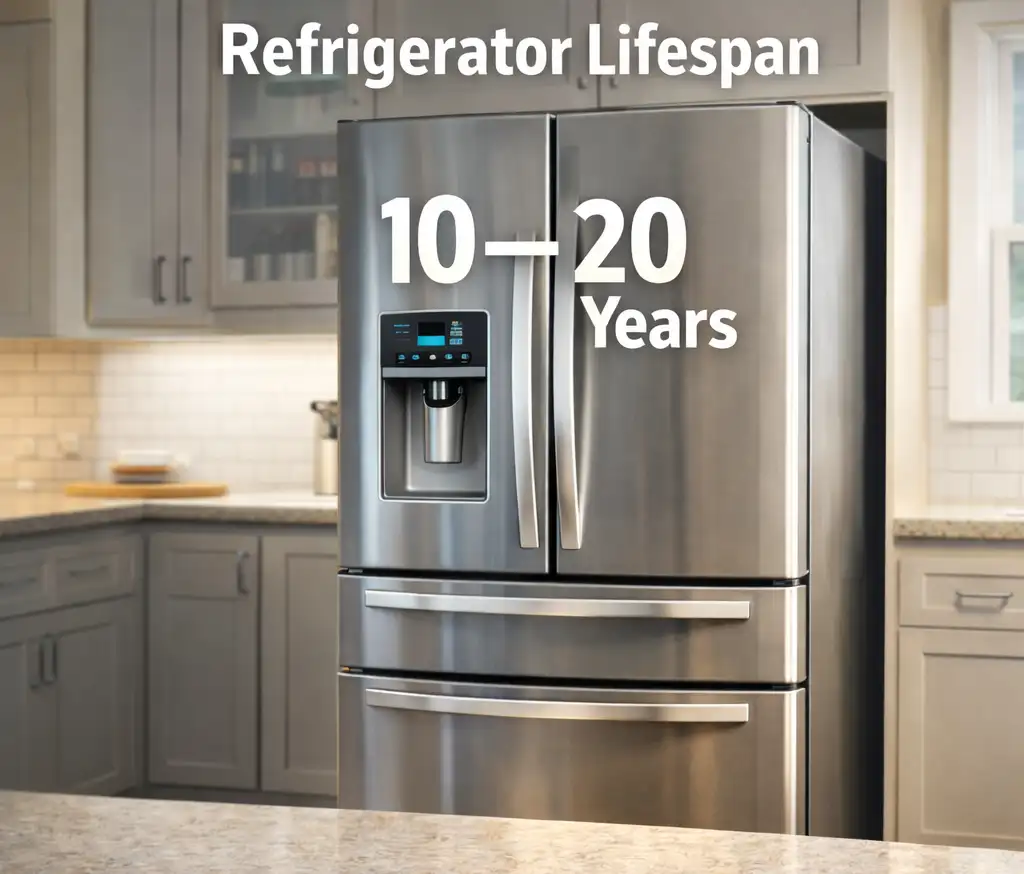
A refrigerator typically lasts 10 to 20 years. Its actual lifespan depends on the compressor, cooling system, door seals, electronics, and other components.
The compressor is one of the most important components because it circulates the refrigerant through the cooling system. Door seals are also important. A damaged or poorly sealing gasket allows cold air to escape and makes the refrigerator work harder.
Ice makers and water dispensers can develop problems before the main cooling system fails. Refrigerators with water filters also require regular filter replacement.
Dishwasher service life
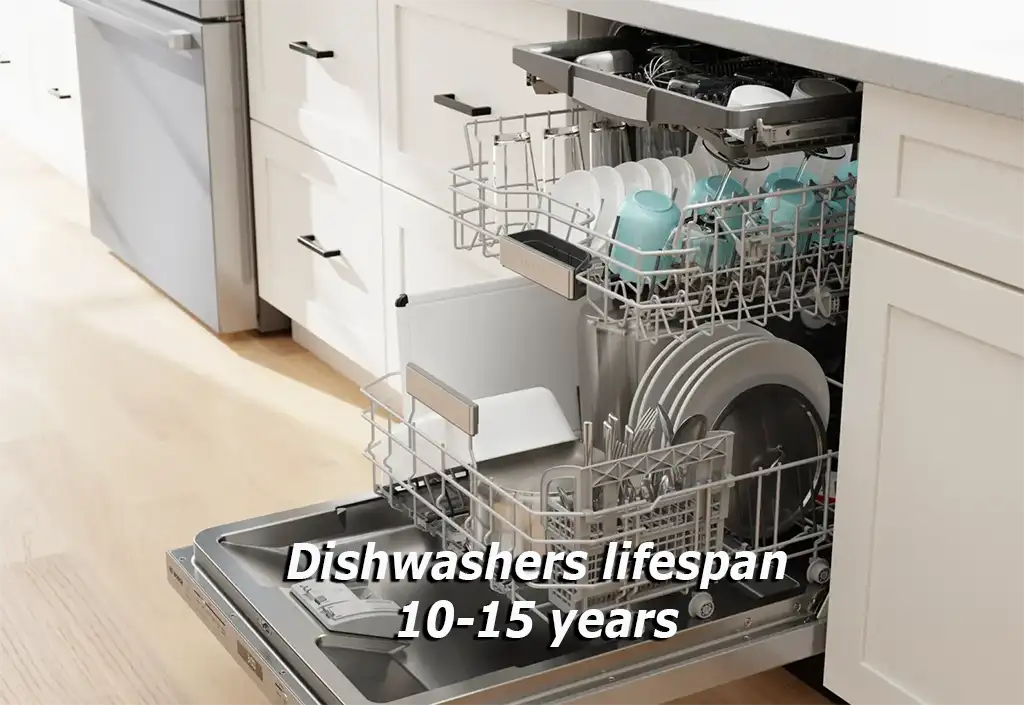
A dishwasher usually lasts 10 to 15 years.
The heating element, circulation pump, drain pump, seals, and electronic controls are among the components that can eventually fail. Hard water can accelerate mineral buildup, particularly around the heating system and other water-contact components.
Regular cleaning and using the appropriate detergent and water-softening system can help reduce deposits and maintain normal operation.
Washing machine and dryer lifespan
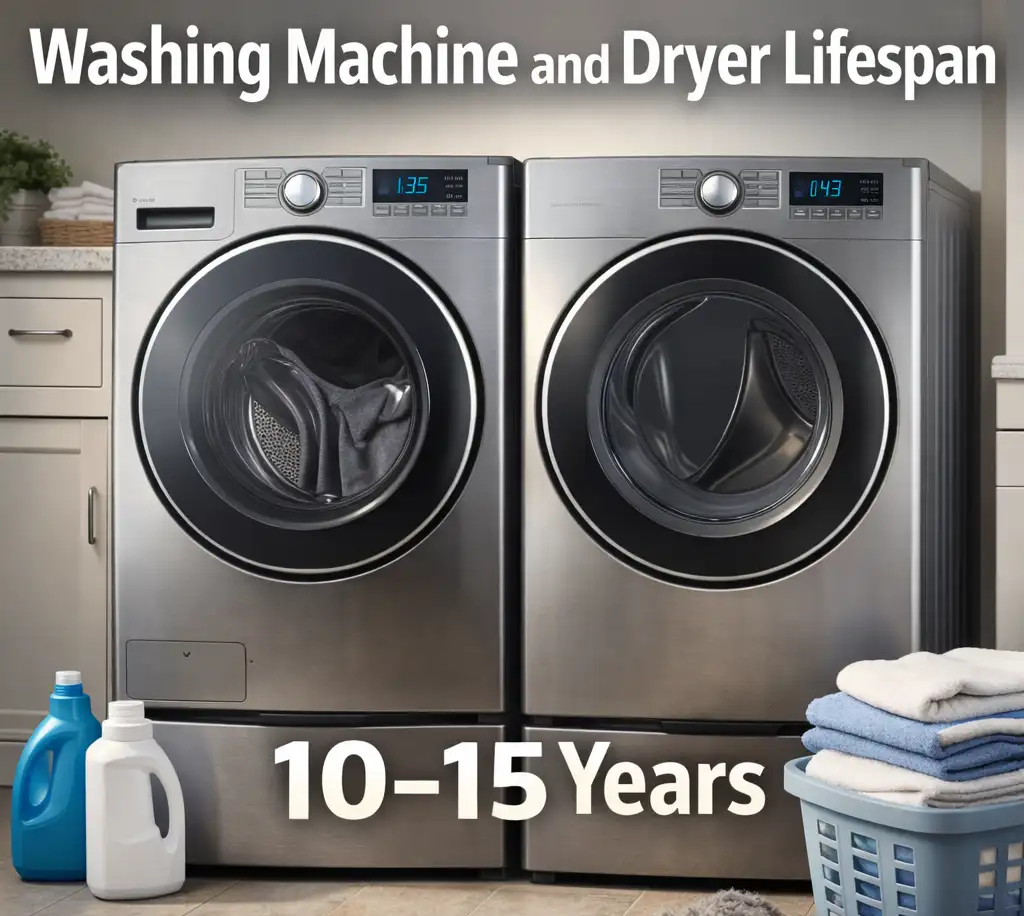
Washing machines and clothes dryers generally last 10 to 15 years.
For washing machines, frequent use and overloading can accelerate wear on bearings, the motor, suspension components, and other mechanical parts. Hard water can also contribute to deposits on the heating element and other components.
Clothes dryers have a similar typical lifespan, although their actual durability depends heavily on usage and maintenance. Cleaning the lint filter and keeping the ventilation system clear are important for normal operation.
Oven and stove lifespan
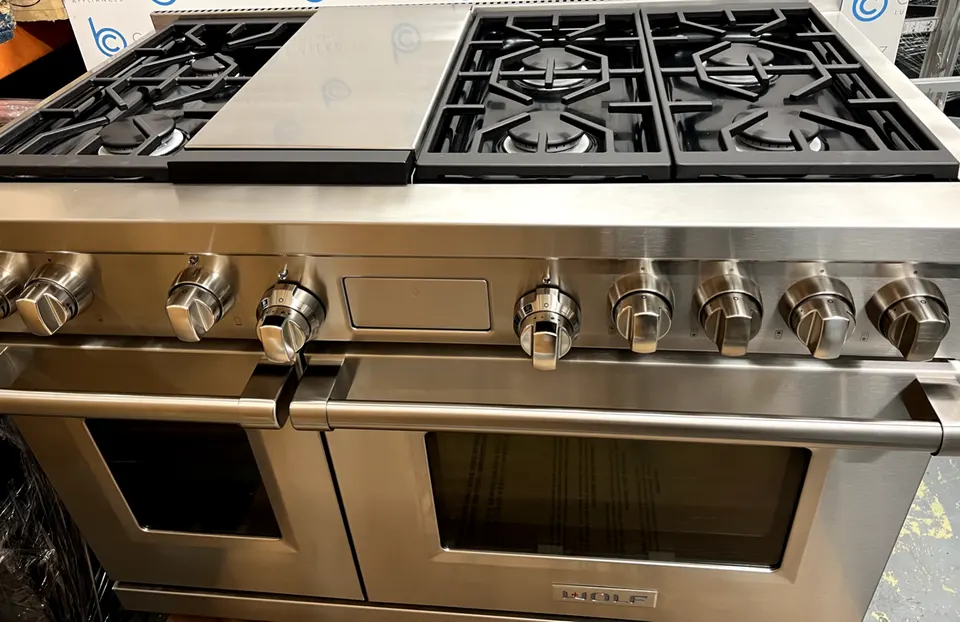
Ovens and stoves typically last 10 to 20 years, although some can remain in use longer.
Their relatively simple mechanical design means there are often fewer components that can fail compared with more complex appliances. Common problems include heating elements, thermostats, ignition systems, control boards, and door components.
Replacement is not always caused by a complete failure. An oven or stove may be replaced because of corrosion, worn components, the lack of spare parts, or the desire for a newer model with different features.
Air conditioner lifespan
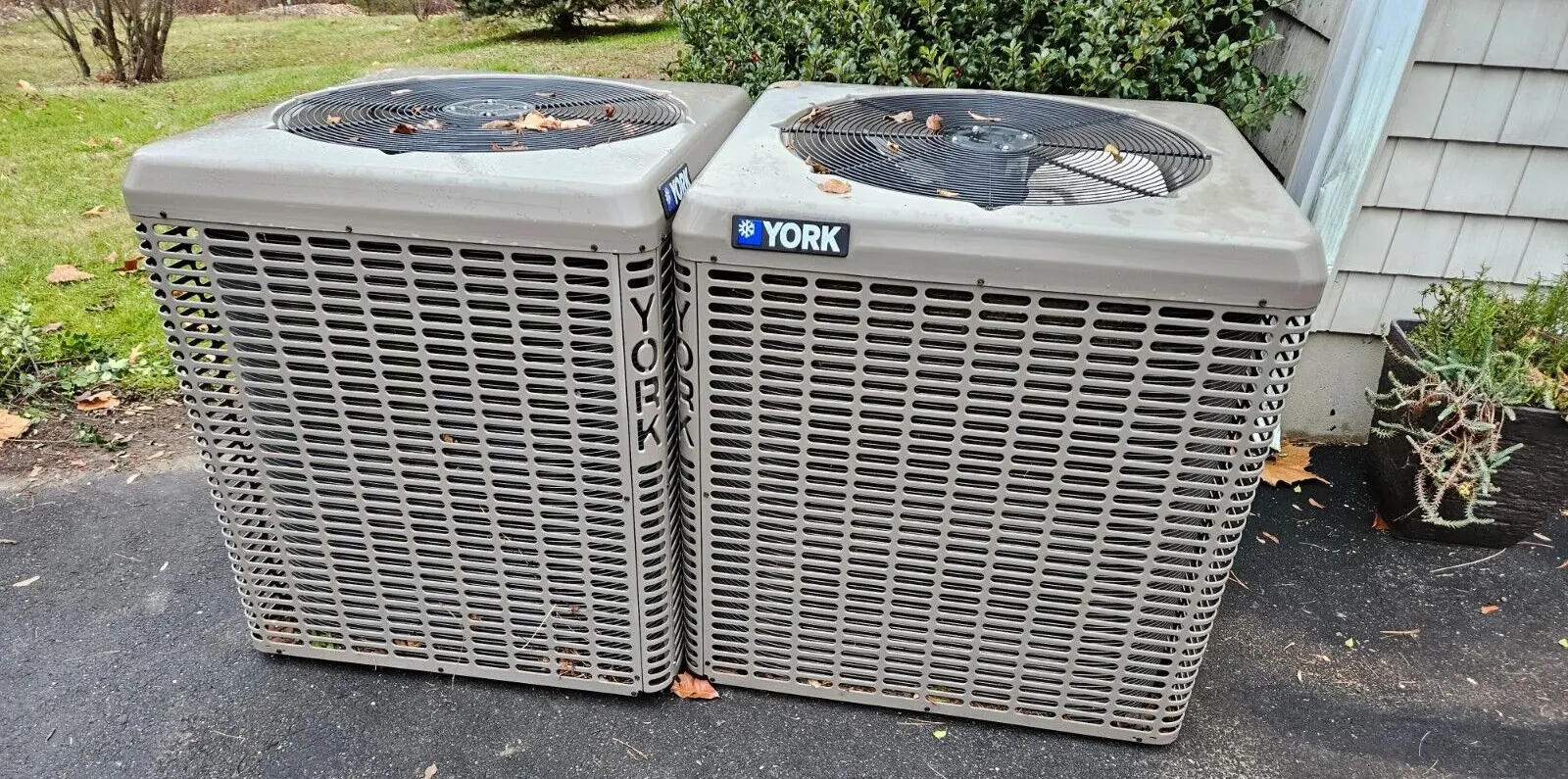
The lifespan of an air conditioner depends strongly on its type.
- Portable air conditioners: about 5–10 years
- Window air conditioners: about 8–15 years
- Split and multi-split systems: about 15–20 years
- Central heating and cooling systems: about 15–20 years
Installation quality is particularly important for split and central systems. Refrigerant piping, airflow, drainage, and electrical connections all affect long-term operation.
Regular filter cleaning and maintenance can also help maintain efficiency and reduce stress on the compressor and fans.
Water heater lifespan
A traditional storage water heater generally lasts 15 to 20 years, although the actual lifespan varies considerably depending on the tank material, water quality, maintenance, and type of heater.
Hard water can cause scale buildup, while corrosion can eventually damage the tank. For storage water heaters that use an anode rod, checking and replacing the rod when necessary can help protect the tank from corrosion.
Tankless water heaters can have a longer useful life than some traditional storage models when properly maintained. Solar water-heating systems can also operate for many years, although their lifespan depends on the individual components and installation conditions.
Microwave oven lifespan
A microwave oven typically lasts 7 to 12 years.
The magnetron, control electronics, door mechanism, and other components can eventually fail. Improper cleaning and use can also cause problems.
One area that deserves attention is the mica cover inside the cooking chamber. Grease and food residue can accumulate on it and eventually cause arcing. Keeping the interior clean can help prevent this type of damage.
Small household appliance lifespan
Small appliances generally have shorter lifespans than major household appliances. A typical estimate is 3 to 5 years, although the difference between individual products can be large.
Examples include:
- electric kettles
- toasters
- irons
- coffee makers
- rice cookers
- blenders
- food processors
The frequency of use is particularly important. An appliance used several times a day can wear out much faster than the same model used only occasionally.
Food processors, for example, may have a typical lifespan of only 2 to 4 years, while a lightly used appliance can continue working longer.