
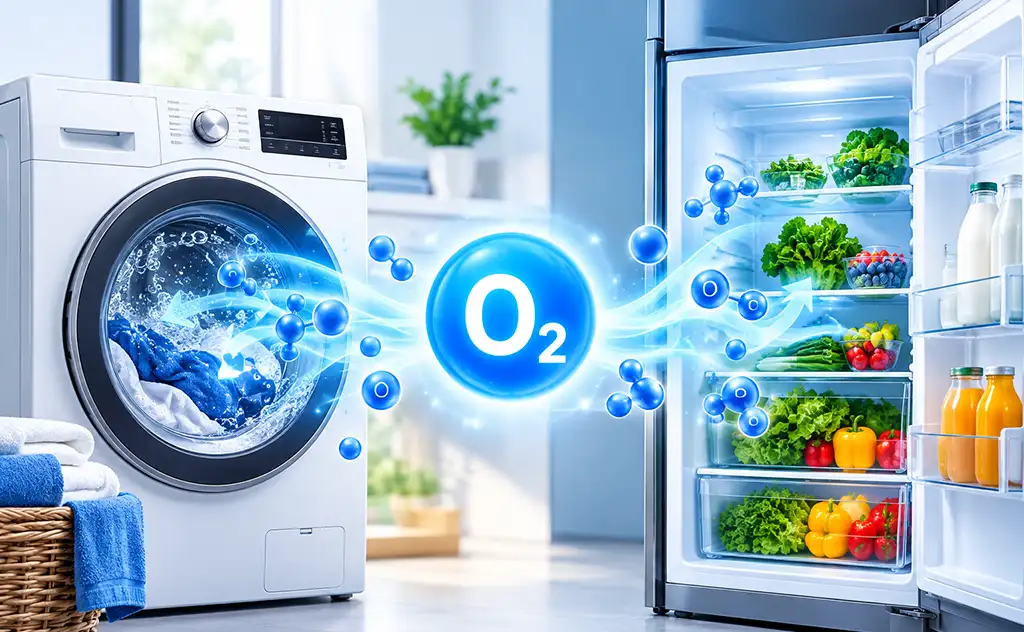
Active Oxygen is a technology used in some washing machines and refrigerators. It is designed to reduce unpleasant odors and affect organic compounds and microorganisms.
The technology works by generating reactive oxygen inside the appliance. Depending on the appliance, this may involve ozone or other reactive oxygen species. The purpose of Active Oxygen depends on the type of appliance.
Active Oxygen in Washing Machines
In washing machines, Active Oxygen is used to treat laundry during a washing or refresh program.
Reactive oxygen interacts with organic substances on the fabric. This can help reduce unpleasant odors and affect certain microorganisms. Active Oxygen can be useful when clothes need to be refreshed at a relatively low temperature. Some washing machines have special programs that use this technology without detergent.
However, Active Oxygen does not generally replace detergent. Whether detergent is required depends on the particular washing machine and the selected program.
Active Oxygen in Refrigerators
In refrigerators, Active Oxygen is mainly used to reduce unpleasant odors.
Food releases various volatile compounds that can accumulate inside the refrigerator and produce odors. Reactive oxygen can oxidize some of these compounds, reducing the substances responsible for unpleasant smells.
The technology can also affect certain microorganisms because reactive oxygen can damage their cells. Active Oxygen does not prevent food from spoiling. It also does not replace regular cleaning of the refrigerator or proper food storage.
How Does Active Oxygen Work?
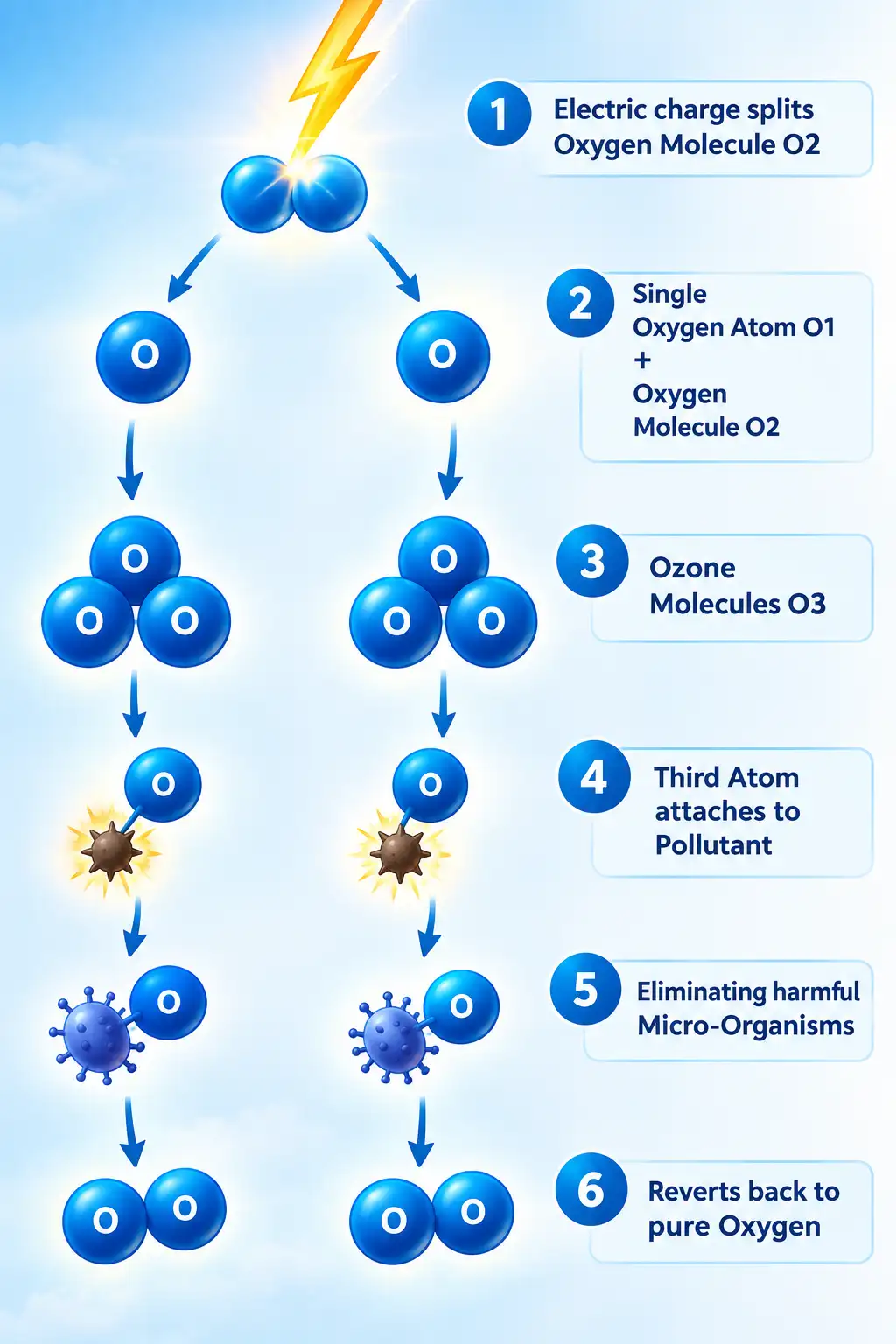
Active Oxygen systems generate reactive oxygen inside the appliance. In some appliances, the system produces ozone from oxygen in the air using an electrical discharge. Reactive oxygen is chemically active and reacts with other substances. When it comes into contact with organic compounds, it can oxidize them and change their chemical structure.
This process can break down some compounds responsible for odors and can affect certain microorganisms. The exact method used to generate Active Oxygen depends on the manufacturer and appliance model.
Active Oxygen in Washing Powder
The term active oxygen is also used for laundry detergents and oxygen-based bleaching products. In this case, it refers to a different technology from the Active Oxygen system built into a washing machine. Oxygen-based detergents commonly contain compounds such as sodium percarbonate. When dissolved in water, sodium percarbonate releases hydrogen peroxide, which acts as an oxygen-based bleaching agent.
This process helps remove certain stains and can also reduce some odors and organic compounds. Therefore, a washing powder labeled “with active oxygen” does not mean that the powder generates ozone. The active oxygen comes from the chemical ingredients in the detergent.
This is different from a washing machine with an Active Oxygen function, where the appliance itself generates a reactive oxygen substance. The two technologies can also be used together. A washing machine may have an Active Oxygen function while the user uses a detergent containing an oxygen-based bleaching agent.
Active Oxygen and Ozone
In appliances that generate ozone, ozone is the substance produced by the system. Ozone consists of three oxygen atoms (O₃), while ordinary oxygen consists of two (O₂). Ozone is highly reactive and can oxidize various organic compounds.
However, Active Oxygen is a technology term rather than the name of one specific chemical substance. Its exact implementation depends on the manufacturer. In some appliances, it involves ozone generation, while the term can be used differently in other products.
Active Oxygen and Detergent
Active Oxygen technology and detergent perform different functions.
Detergent contains substances that help remove dirt, grease, and other contaminants from fabrics. An Active Oxygen system provides an additional oxidation process that can help reduce odors and affect certain organic substances and microorganisms.
Some washing machine programs are designed to use Active Oxygen without detergent, for example, when refreshing clothes. Other programs combine the technology with conventional washing and detergent. The exact operating principle depends on the washing machine model.