

In 2018, Hisense sold different TV models in Europe, the USA and Australia. The model numbers and series varied by market, so the 2018 lineup was not identical across these regions.
The European lineup included the U9, U7, NEC, A6 and N5 series. In the USA, Hisense offered the H9, H8, H6, H5 and R7 series. Australia had its own P-series lineup, including the P9, P8, P7, P6, P5 and P4 series.
The tables below list the main Hisense TV models sold in these markets in 2018 and show their key specifications.
Hisense TV lineup in Europe
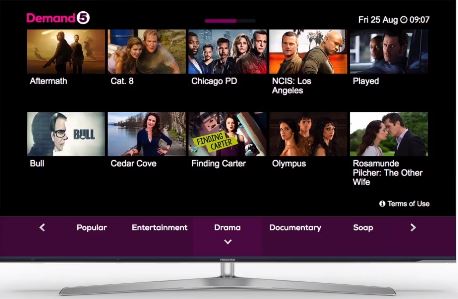
The European 2018 lineup included the U9 and U7 series at the higher end, followed by the NEC and A6 series. The N5 series was represented by the 75-inch N5800.
The U9 series included 65- and 75-inch models with 120 Hz panels. The U7 series was available in 50, 55 and 65 inches and used 60 Hz panels.
The A6 series covered several screen sizes and included the A6500, A6200 and A6100 models. These were 4K televisions with 60 Hz panels.
| Model | Series | Screen size | Refresh rate | Resolution | Color depth | Smart platform | Tuner |
|---|---|---|---|---|---|---|---|
| H65U9A | U9 | 65″ | 120 Hz | UHD | 10-bit (8-bit + FRC) | Hisense | DVB |
| H75U9A | U9 | 75″ | 120 Hz | UHD | 10-bit (8-bit + FRC) | Hisense | DVB |
| H50U7A | U7 | 50″ | 60 Hz | UHD | 10-bit (8-bit + FRC) | Hisense | DVB |
| H55U7A | U7 | 55″ | 60 Hz | UHD | 10-bit (8-bit + FRC) | Hisense | DVB |
| H65U7A | U7 | 65″ | 60 Hz | UHD | 10-bit (8-bit + FRC) | Hisense | DVB |
| H75NEC6700 | NEC | 75″ | 60 Hz | UHD | 10-bit (8-bit + FRC) | Hisense | DVB |
| H65NEC5650 | NEC | 65″ | 60 Hz | UHD | 10-bit (8-bit + FRC) | Hisense | DVB |
| H43A6500 | A6 | 43″ | 60 Hz | UHD | 10-bit (8-bit + FRC) | Hisense | DVB |
| H50A6500 | A6 | 50″ | 60 Hz | UHD | 10-bit (8-bit + FRC) | Hisense | DVB |
| H55A6500 | A6 | 55″ | 60 Hz | UHD | 10-bit (8-bit + FRC) | Hisense | DVB |
| H65A6500 | A6 | 65″ | 60 Hz | UHD | 10-bit (8-bit + FRC) | Hisense | DVB |
| H43A6200 | A6 | 43″ | 60 Hz | UHD | 10-bit (8-bit + FRC) | Hisense | DVB |
| H50A6200 | A6 | 50″ | 60 Hz | UHD | 10-bit (8-bit + FRC) | Hisense | DVB |
| H55A6200 | A6 | 55″ | 60 Hz | UHD | 10-bit (8-bit + FRC) | Hisense | DVB |
| H65A6200 | A6 | 65″ | 60 Hz | UHD | 10-bit (8-bit + FRC) | Hisense | DVB |
| H43A6100 | A6 | 43″ | 60 Hz | UHD | 10-bit (8-bit + FRC) | Hisense | DVB |
| H50A6100 | A6 | 50″ | 60 Hz | UHD | 10-bit (8-bit + FRC) | Hisense | DVB |
| H55A6100 | A6 | 55″ | 60 Hz | UHD | 10-bit (8-bit + FRC) | Hisense | DVB |
| H65A6100 | A6 | 65″ | 60 Hz | UHD | 10-bit (8-bit + FRC) | Hisense | DVB |
| H75N5800 | N5 | 75″ | 60 Hz | UHD | 10-bit (8-bit + FRC) | Hisense | DVB |
The European models in this list used DVB tuners. The number and type of HDMI and USB ports varied between the individual series and models.
Hisense TV lineup in the USA
The US lineup used a different naming system. The higher-end models included the H9 Plus and H9 series, while the R7 series used Roku TV.
The H9 Plus models listed for 2018 used 120 Hz panels and a Motion Rate of 240. The H9 models used 60 Hz panels and a Motion Rate of 120.
The H8 and H6 series consisted of 4K models. The H5 series covered smaller and lower-resolution televisions.
| Series | Models | Screen sizes | Refresh rate | Resolution | Smart platform |
|---|---|---|---|---|---|
| H9 Plus | 65H9E Plus, 55H9E Plus, 55H9080E Plus, 65H9080E Plus, 65H9908E, 55H9908E, 55H9100E, 65H9100E | 55″, 65″ | 120 Hz | UHD | Hisense + Android TV |
| H9 | 55H9E, 65H9E, 55H9080E, 65H9080E, 55H9050E, 65H9050E | 55″, 65″ | 60 Hz | UHD | Hisense + Amazon Alexa |
| R7 | 43R7E, 50R7E, 55R7E, 65R7E | 43″, 50″, 55″, 65″ | 60 Hz | UHD | Roku TV |
| H8 | 43H8E, 50H8E, 55H8E, 65H8E, 43H8080E, 50H8080E, 55H8080E, 65H8080E | 43″, 50″, 55″, 65″ | 60 Hz | UHD | Hisense Smart |
| H6 | 43H6E, 49H6E, 50H6E, 55H6E, 60H6E, 65H6E | 43″, 49″, 50″, 55″, 60″, 65″ | 60 Hz | UHD | Hisense Smart |
| H5 | 32H5, 40H5, 43H5, 50H5 | 32″, 40″, 43″, 50″ | 60 Hz | HD / Full HD | Hisense Smart |
The US models in this list used ATSC tuners. The H9 Plus models had four HDMI inputs, including two HDMI 2.0 and two HDMI 1.4 ports according to the original specifications. The H8, H6 and H5 series generally had three HDMI inputs and one USB 2.0 port.
Hisense TV lineup in Australia
Australia had a separate P-series lineup in 2018. The P9 and P8 were the higher-end models and were available in 65- and 75-inch sizes.
The P7 series was available in four screen sizes and used 100 Hz panels according to the original specifications. The P6, P5 and P4 models used 50 Hz panels.
The P4 series included smaller televisions. The 32-inch model had HD resolution, while the 39-, 49- and 55-inch models were Full HD.
| Series | Models | Screen sizes | Refresh rate | Motion Rate | Resolution | Smart platform |
|---|---|---|---|---|---|---|
| P9 | 65P9, 75P9 | 65″, 75″ | 100 Hz | 200 | UHD | Hisense Smart |
| P8 | 65P8, 75P8 | 65″, 75″ | 100 Hz | 200 | UHD | Hisense Smart |
| P7 | 50P7, 55P7, 65P7, 75P7 | 50″, 55″, 65″, 75″ | 100 Hz | 200 | UHD | Hisense Smart |
| P6 | 43P6, 50P6, 55P6, 65P6 | 43″, 50″, 55″, 65″ | 50 Hz | 100 | UHD | Hisense Smart |
| P5 | 58P5, 65P5, 75P5 | 58″, 65″, 75″ | 50 Hz | 100 | UHD | Hisense Smart |
| P4 | 32P4, 39P4, 49P4, 55P4 | 32″, 39″, 49″, 55″ | 50 Hz | 100 | HD / Full HD | Hisense Smart |
The Australian models listed here used DVB tuners. The P9 and P8 models had Quantum Dot displays, while the other models in the table used VA panels.
Hisense 2018 TV lineup by region
The main series available in each market can be summarized as follows.
| Region | Main series | High-end series | Other series |
|---|---|---|---|
| Europe | U9, U7, NEC, A6, N5 | U9 | U7, NEC, A6, N5 |
| USA | H9 Plus, H9, R7, H8, H6, H5 | H9 Plus | H9, R7, H8, H6, H5 |
| Australia | P9, P8, P7, P6, P5, P4 | P9 | P8, P7, P6, P5, P4 |
The regional lineups differed not only in model numbers but also in available screen sizes, Smart TV platforms, tuners and some hardware specifications.
Hisense 2018 TV models and specifications
The full model list is useful when identifying an older Hisense television by its model number. The tables show the main specifications of the models sold in Europe, the USA and Australia, including screen size, series, refresh rate, resolution, Smart TV platform and tuner.
When looking up a 2018 Hisense TV, use the model number together with the region where the television was sold. This is especially important for older models, as regional versions could have different specifications, ports and Smart TV platforms.

These are TVs from 2015-2016, during this time Hisense had problems with their screens. Due to problems with the glass, they could crack from a small shake or due to overheating, the screen backlight often failed. If we talk about screens, these are budget TV models. The screen is better in 55M7000UWG has greater brightness and contrast.
Hi, Sorry to leave a slightly unrelated comment but I was hoping to decipher these model numbers and find out which is the better screen. I will be using it as a monitor [No gaming, some YouTube but mainly charts]
55K3300UW
55M7000UWG
Thanks in advance for any assistance you are able to provide.