

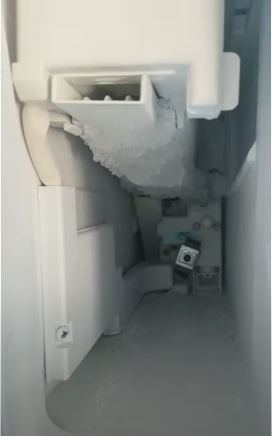
A common problem with refrigerators equipped with an ice maker is excessive ice buildup inside the ice maker. Ice can accumulate around the ice tray, on the mechanism, or in the ice dispenser area. Over time, the ice cubes may stick together and form a single large block of ice, preventing the ice maker from functioning properly. As a result, it stops dispensing ice and becomes unusable.
Sometimes, removing the excess ice and defrosting the ice maker can temporarily solve the problem. However, if the underlying cause is not addressed, the ice may build up again within a few days or weeks.
The most common causes include excessive humidity, an incorrect freezer temperature, drainage problems, too much water entering the ice tray, or a malfunction in the normal ice-making and dispensing cycle.
Before looking at the possible causes, it is helpful to understand how a refrigerator’s ice maker works.
How a Refrigerator’s Ice Maker Works
A typical automatic ice maker is connected to the refrigerator’s water supply. Water passes through the refrigerator’s water filter, if one is installed, and then enters the ice maker through an inlet valve.
When a new ice-making cycle begins, the valve opens and releases a measured amount of water into the ice tray. The water then freezes, forming individual ice cubes.
Once the water has completely frozen, the ice maker activates a small heating element. This element gently warms the tray, allowing the ice cubes to separate from the mold. A motor then drives the tray or ejection mechanism, moving the cubes into the ice storage bin. The process is designed to loosen the ice cubes without allowing them to melt excessively and freeze together again.
The exact design and mechanism may vary depending on the refrigerator model, but the basic ice-making process remains essentially the same.
How does an ice maker work in a refrigerator?
Let’s look at a standard ice maker in the fridge with a water supply connection. The water from the water supply network is connected to the fridge, for ice preparation the water filtered by the filter is used. The filter is designed to remove impurities and improve the taste of water. The fridge has a valve that opens the water supply to the ice maker, the water is poured into special forms in which freezing ice takes the form of cubes.
Now a little more in detail: When all the conditions for ice preparation have been met, the fridge has been operating for at least 24 hours from the first time you turned on the ice maker. The water valve opens, the water fills in the forms because the fridge is designed to connect a water supply with different pressures of 20-125 psi, that’s 1.4 to 8 atmospheres. Clearly, it is difficult to accurately dose the amount of water, so excess water drains from the pallet outside the fridge into a bowl above the compressor. And then the water evaporates.
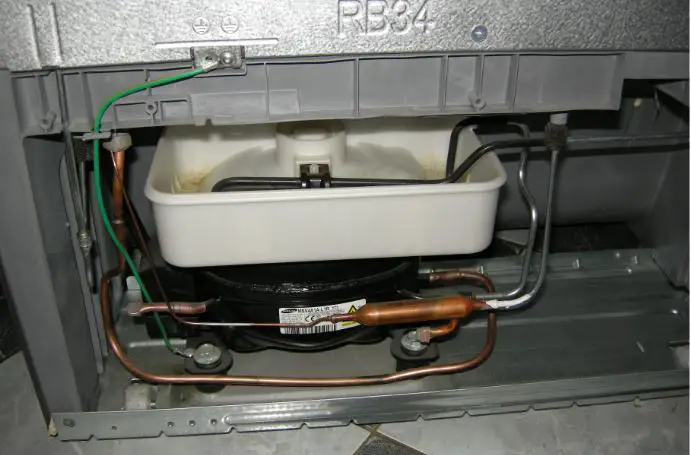
When the ice is cooked, a heating element is activated which heats the mould with the cooked ice. This is necessary so that the ice cubes can easily fall out of the mold into the ice collecting container. A screw stands in the ice storage tank like in a meat grinder, and when the ice is dispensed it rotates to shove the ice out of the tank. The water that is generated by defrosting the cubes also flows into the bowl above the compressor.
Recommendations for correcting the intent of the ice in the ice maker
If it’s working well, the ice maker shouldn’t freeze. Excess moisture is removed without causing the ice maker to stop working. But if some requirements are not met, this can cause a malfunction and usually it happens after a while. Check the following recommendations, we’ll explain what this affects.
Required freezer temperature for the ice maker to work properly
- The temperature in the freezer compartment, for normal operation of the ice generator, the temperature in the freezer compartment must be within certain limits, usually manufacturers recommend setting the temperature from 5 °F (-15 °C) to -8 °F (-23 °C). Why this temperature range. It is calculated in the ice maker that if the temperature in the ice maker chamber reaches 5 °F (-15 °C) and remains this or lower, then the ice has been prepared and it can be moved to the ice storage tank and a new portion can be prepared. At a temperature above 5 °F (-15 ° C) ice will stop cooking. Ready-made ice cubes will not be moved from the molds, of course, the defrost mechanism will not turn on, there will be a gradual freezing of ice, even if the ice is produced, the cubes may not be frozen enough (with water) and you have in a pallet of one sticky ice cube.
- Check the temperature in the freezer and ice maker, this can be done by placing a thermometer with the appropriate measuring range. There are times when the temperature does not match the recommended temperature and the refrigerator sensors show normal temperature.
- Check if there is a problem with the ice maker after loading large quantities of food into the freezer. If you have loaded a lot of food from the store, the temperature in the freezer may rise. Preferably, if you buy a lot of food at the same time and load it into the refrigerator, turn off the ice maker for 6-8 hours. Turn the ice maker on after 8 hours and see if there are any problems with ice preparation.
Correctly setting up the fridge
- Check how the fridge is installed, if installed correctly, the fridge must be tilted back a little. Of course, it’s unlikely that your fridge has changed its position, but it still needs to be checked. Why would you tilt your fridge backwards?
- first, it allows the fridge doors to close under their weight.
- Unnecessary moisture, while defrosting the dice in the mould, will drain out at an incline into a special drain hole.
Removal of moisture from the fridge for normal ice maker operation
- The fridge has a special function to remove excess moisture from the fridge. It is possible that the defrost system does not work properly in the fridge. How the removal of moisture works. On the evaporator inside the fridge, moisture condenses during compressor operation. It just freezes. After the compressor cycle, the heating element mounted on the evaporator is activated. The ice melts and water flows into a bowl above the compressor. If the defrosting system does not work properly, this is bad, moisture will enter the ice maker with cold air and condensation will appear.
Defrosting the ice maker
If you’ve already had a problem with your ice machine, of course you should defrost the ice machine and remove the ice. Most fridges have forced defrosting. When you activate this mode, the defrosting heating elements work, the fridge defrosts faster. Some use a hair dryer, although the manufacturers do not recommend doing so.
Why it is not recommended to use a hair dryer to defrost your fridge.
There can be two reasons, you can damage the plastic if hot air is supplied to one place. It is possible to damage the temperature sensor if it is overheated. Although if you use the hair dryer carefully, nothing will happen to the fridge.
Analyzing the cause of ice on the ice maker
So, look at the ice machine picture below.
What we see in the photo, the ice is in the coldest place, the ice appeared on the way the cold air from the evaporator of the refrigerator. This means that there is excess moisture in the ice maker that remains in the fridge after the defrost cycle. And this can be if the ice maker receives very cold air, with a temperature below the recommended temperature, or very humid air. What happens in this case, when you turn on the defrost cycle, water drains to the bottom of the ice maker and must flow out of the ice maker tray outside the fridge. But this did not happen, and gradually the amount of ice is increasing, and this happens until the ice generator stops working. We have to find a reason why there is so much moisture in the ice maker and it is not removed from the ice maker. As an option, you can try to completely defrost the refrigerator, not just the ice maker.