

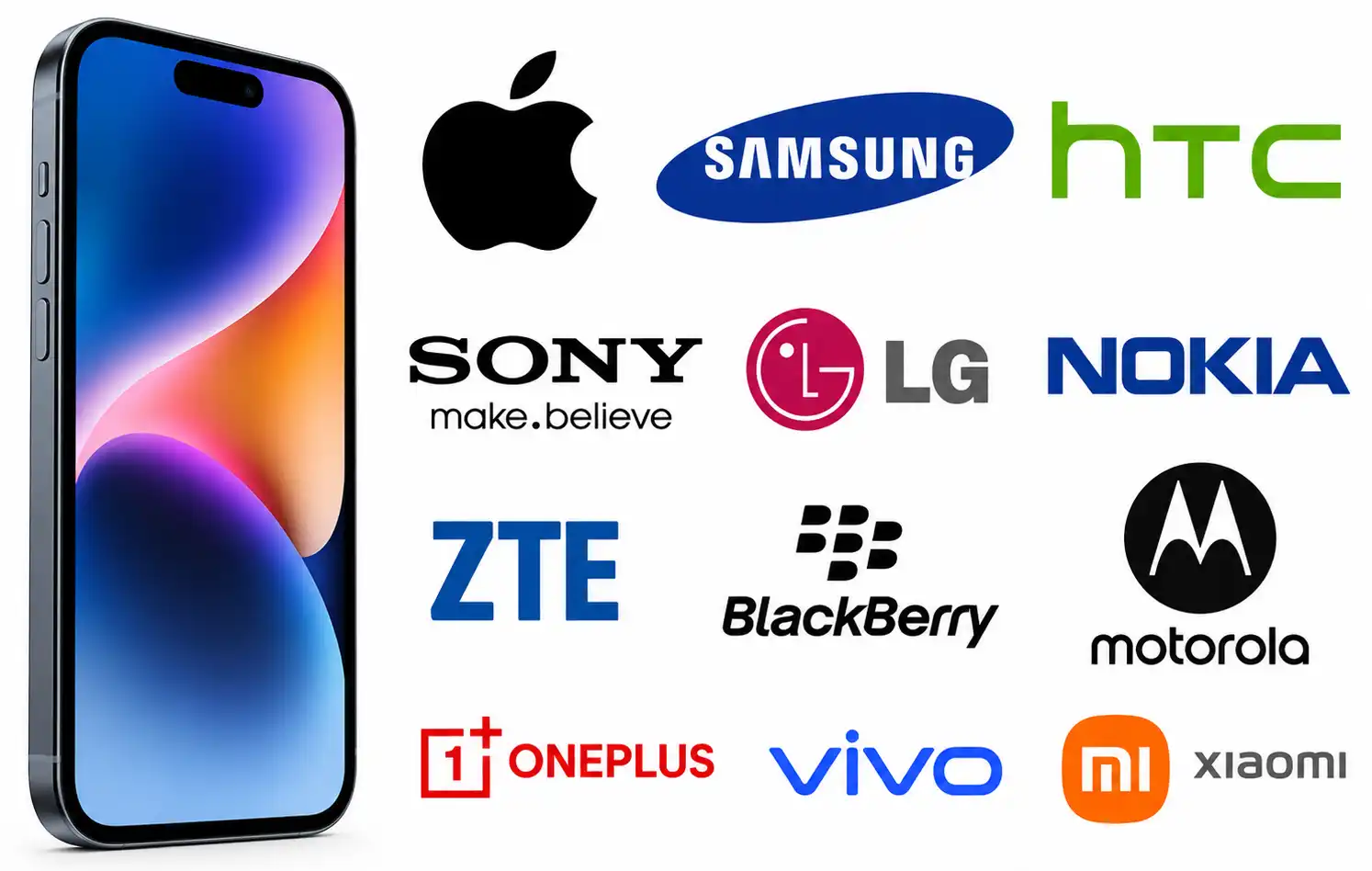
Many people are curious about who manufactures a smartphone, especially when it comes from a lesser-known brand. However, smartphone ownership and manufacturing are not always straightforward.
The company that owns a brand holds the trademark but may or may not manufacture the phones itself. In some cases, another company obtains a license to produce and sell smartphones under that brand. The licensee may be a contract manufacturer or a company that outsources production to third-party manufacturers.
For example, Samsung manufactures most of its smartphones in its own factories. Other brands operate differently. The Alcatel trademark is owned by the Finnish company Nokia, while smartphones sold under the Alcatel name are developed and marketed by the Chinese company TCL.
Where Phones Are Manufactured
The common claim that “90% of phones are manufactured in China” is no longer accurate. China remains the largest assembly hub, but Vietnam and India have long accounted for a significant share of production. Samsung manufactures phones primarily in Vietnam and India. Apple does not have its own assembly plants; its devices are assembled by contractors, primarily Foxconn, and an increasing portion of production is shifting to India.
According to Counterpoint Research data for the second quarter of 2026, Samsung has regained the top spot, accounting for about 23–24% of global shipments, followed by Apple (20–21%), Xiaomi (about 12%), OPPO (about 11%), and vivo (about 8%). Exact figures from Counterpoint Research, IDC, and Omdia vary due to differences in methodology, but the order of the leading brands remains unchanged.
The market is shrinking. According to estimates from these agencies, shipments in the second quarter of 2026 were 4–11% lower than a year earlier, and Counterpoint Research called it the weakest second quarter since 2013. The main reason is a shortage of memory chips and rising prices, which hit budget models the hardest.
Phone Manufacturers Catalog
Large Manufacturers and Their Sub-brands
- Samsung (South Korea) — the Galaxy lines. Samsung builds phones in its own factories. By a 2024 estimate, about 55% of volume came from Vietnam (plants in Bac Ninh and Thai Nguyen provinces), about 25% from India and about 12% from Brazil. The rest is made in Indonesia and South Korea. The company deliberately spreads output across countries so it does not depend on a single site.
- Apple (USA) — iPhone. Apple has no assembly plants of its own; devices are built by contractors: Foxconn (the largest), Luxshare and Tata Electronics. Tata joined the chain in November 2023 by buying Wistron’s Indian business, and in 2024 it took 60% of Pegatron’s Indian unit. According to Smart Analytics Global, China assembled 74% of iPhones in 2025 (83% in 2024) and India 23% (up from 14%), and India’s share could reach 28% in 2026. Counterpoint gives a similar figure, around 26%.
- Xiaomi (China) — also sells phones under the Redmi and POCO brands. According to media reports, Xiaomi hardly assembles its own smartphones and orders them from contractors. In India these are Foxconn’s Bharat FIH unit, China’s BYD Electronic and DBG, and since 2023 also Padget Electronics (a Dixon subsidiary).
- OPPO (China) — owns OnePlus and realme. In January 2026 realme returned to the status of an OPPO sub-brand, and in spring there were reports that OnePlus and realme would be merged into one division. There was no official confirmation of that merger at the time of writing, but OnePlus’s independence has clearly ended. OnePlus has belonged to OPPO since 2021, and in India OnePlus and realme phones are built by, among others, the contractor Optiemus.
- vivo (China) — includes the iQOO sub-brand.
- Huawei (China) — after US sanctions, which left its new models without Google services from 2019, it is betting on its own HarmonyOS. The company is practically absent from Europe: according to Omdia data for 2024 and 2025, Huawei plays no measurable role in the European market and falls into the “Others” category. Some flagships still appear, for example the Pura 80 in 2025. In the CIS the picture is mixed: in Russia Huawei’s official stores closed in 2022, and its products are sold through partners such as M.Video. The company also moved part of its staff to Kazakhstan and Uzbekistan, which it regards as the most promising markets in the region.
- Honor (China) — formerly Huawei’s second brand. In November 2020 Huawei sold it to a consortium led by Shenzhen Zhixin New Information Technology, and Honor is now a separate company.
Other Notable Brands
- Google Pixel (USA) — Google handles design, the Android software and its own Tensor processor. Google does not assemble the phones itself. The first Pixels were built by HTC (LG took part in the Pixel 2 XL). From the third generation, Taiwan’s Foxconn and Compal handle most assembly. Since 2023 Google has reportedly increased output in Vietnam (through Foxconn and Compal) to reduce its dependence on China, while some models are still made in China. Since 2024 Pixels are also assembled in India: Foxconn at a plant in Tamil Nadu and Padget Electronics (a Dixon company) in Noida together with Compal. In January and February 2026 about 10,500 Pixels were exported from India, against 602 a year earlier. The first batch of Pixel 10 was brought in from Taiwan. According to media reports, Google sold about 12 million Pixels in 2025 and expects to grow 8–10% in 2026.
- Motorola — the brand has belonged to China’s Lenovo since 2014, but Motorola Mobility’s headquarters stayed in Chicago. Before Lenovo the brand was owned by Google, and before that by the American Motorola. Production is spread around the world: Lenovo has an assembly complex in Wuhan (China), two plants operate in Brazil (Jaguariuna and Manaus, reportedly run by the contractor Flex), and in India Motorola signed an agreement with Dixon Technologies (Padget Electronics, Noida).
- Transsion (China) — owner of Tecno, Infinix and itel, mass-market brands for Africa, South Asia and other emerging markets.
- Nothing (UK) — founded in 2020 by Carl Pei, headquartered in London, first smartphone released in 2022. The company has no factories of its own: phones are assembled in India, including at a facility in Chennai. In September 2025 Nothing and India’s Optiemus Infracom (which also works for OnePlus and realme) announced a joint venture to make Nothing and CMF devices. CMF is a separate budget sub-brand for which India is becoming the main base.
- TCL (China) — has been in mobile phones since 1999. In 2004 TCL formed a joint venture with Alcatel and in 2005 took it over entirely. Under its own name the company sells smartphones whose main feature is NXTPAPER screens with a paper-like image (in phones since 2023; in 2026 TCL showed an AMOLED version). TCL also makes phones under the Alcatel name under a Nokia license.
- HMD (Finland) — the company was set up to make Nokia phones (a 2016 license) but also develops its own HMD brand. It has no factories and production is done by contractors. Feature phones are reportedly made in China and India.
- Sony (Japan) — the Xperia line survives, but it is produced in small series and mainly for Japan and Europe.
- ZTE (China) — a maker of telecom equipment and phones.
Brands That Live on Licenses
- Alcatel — the brand belongs to Nokia, and the phones are made by TCL Communication. Formally TCL’s license expired at the end of 2024, but Alcatel devices keep coming out, so the arrangement appears to have been extended. The terms have not been published.
- Nokia — phones under this name have been made by HMD since 2016. Under the 2023 amendment to the agreement, its exclusive license ended in March 2026. According to unconfirmed reports, it was extended for feature phones for another two to three years. HMD meanwhile promotes its own brand.
- BlackBerry — TCL’s license ended in 2020, and the attempt to bring the brand back with a 5G smartphone (OnwardMobility) was shut down in 2022 without ever releasing a phone. There are no new BlackBerry smartphones now.
- CAT — rugged phones under the Caterpillar brand are made by a licensee. It used to be Bullitt Group; before buying, check who makes the current models.
Left the Market or Froze Production
- LG — closed its mobile division in 2021.
- Asus — in January 2026 the company’s chairman said it would no longer release new phone models, so the Zenfone and ROG Phone lines are frozen. Support for devices already sold is said to continue.
- Meizu — according to Chinese media reports, the smartphone business has effectively stopped, and a formal exit from the market was expected in March 2026. The company did not officially confirm this, and the brand will probably remain inside the Geely group.
- Razer — stopped making smartphones long ago.
Other Brands
- AGM (China) — rugged phones. They are made by Shenzhen Xinhuatai Electronic Technology.
- Archos (France) — the company was founded in 1988 and has made smartphones since 2013. Today the emphasis is on the corporate market: rugged mobile solutions for industry and defense through its subsidiary Logic Instrument. The group’s 2025 revenue was about 47.9 million euros. The phones are made in China, in particular by Guangzhou SQ Trade.
- BLU Products (USA) — headquartered in the Miami area, founded in 2009, the name stands for Bold Like Us. Its main markets are Latin America, the Caribbean and the US. The company handles design, sales and support, while the phones themselves, according to Wikipedia, are ordered from Chinese ODMs (Koobee, QiKU, Gionee, Tinno and others). In 2016–2017 pre-installed software on its phones was found sending data to servers in China, and Amazon temporarily pulled them from sale. The View line is phones for the TracFone network.
- Blackview (China) — rugged phones. Founded in Hong Kong in 2013, headquartered in Shenzhen. Doke Electronic is named as the manufacturer.
- CUBOT (China) — budget and rugged models, including the KingKong series. The phones are made by Shenzhen Huafurui Technology.
- DOOGEE (China) — rugged and budget phones. Sources disagree on the legal entity: both Shenzhen Doogee Hengtong Technology and Shenzhen Zhouji Homtom Technology are named.
- Easyfone (India) — simple phones in old form factors for the domestic market.
- HOMTOM (China) — linked to DOOGEE: the phones are made by the same company, Shenzhen Zhouji Homtom Technology.
- HTC (Taiwan) — in 2017 Google paid 1.1 billion dollars for part of the HTC team that worked on Pixel. HTC itself still makes its own phones, but very few.
- Kyocera (Japan) — in 2023 it announced its exit from the consumer smartphone market, with sales to the general public in Japan due to end by March 2025. For business it makes rugged models, for example the DuraForce PRO 3, sold by Verizon.
- LEAGOO (China) — the brand is owned by Shenzhen OTEDA Technology, and the phones are made in China.
- Lenovo (China) — has owned Motorola since 2014. Lenovo’s own smartphones are noticeably less well known than Motorola’s today. The company’s large assembly complex is in Wuhan.
- OUKITEL (China) — rugged models and phones with very large batteries. The phones are made by Shenzhen Yunji Intelligent Technology.
- RCA (USA) — an old American electronics brand owned by Technicolor. The smartphone license went to Canada’s Curtis International, which orders assembly from Chinese manufacturers.
- Ulefone (China) — rugged smartphones of the Armor series. Founded in 2014, the owner and manufacturer is Shenzhen Gotron Electronic Co.
- UMIDIGI (China) — inexpensive smartphones sold mostly through online marketplaces. The phones are assembled in China.
- USHINING (China) — cheap phones in old form factors.
- XGODY (China) — inexpensive phones assembled in China.
- YEZZ (USA) — an American company that sells phones under its own brand, assembled in China.
- ZQ (China) — phones of unknown origin sold online, with no manufacturer website and no service. Buy such devices with great caution.
Carriers and Retail Brands
- Cricket Wireless (USA) — a prepaid carrier owned by AT&T. Best known for its family plans.
- Boost Mobile (USA) — a prepaid carrier owned by EchoStar (formerly DISH Network). The brand passed to it in 2020 during the T-Mobile and Sprint merger.
- Metro by T-Mobile (USA) — T-Mobile’s prepaid brand. Its stores sell phones from Samsung, Motorola and TCL.
- Straight Talk (USA) — a prepaid brand owned by Verizon and sold mainly in Walmart stores.
- Walmart Family Mobile (USA) — a prepaid service launched in 2010. T-Mobile sold it to TracFone, so today it belongs to the same Verizon group as Straight Talk.
- Lively (USA) — formerly GreatCall, which Best Buy bought in 2018 for 800 million dollars. The brand was changed to Lively in May 2021. The company sells Jitterbug phones for older people (Flip2 and Smart4) together with emergency response services, and service runs on the Verizon network.
- onn (USA) — Walmart’s house brand, under which it sells electronics, including phones. The devices are made for it by third-party manufacturers.
- Unbranded is not a brand but a label in store catalogs meaning a phone with no brand. Choose such a device by its specifications, reviews and the seller’s reputation.
Other Phone and Electronics Makers
- OSCAL (China) — rugged phones with very large batteries, in the Pilot, Tank and Marine series. Sold mainly through online marketplaces, often under the double name Blackview OSCAL.
- SOYES (China) — mini smartphones the size of a bank card. It belongs to Shenzhen Soye Youpin Technology, the brand launched in 2014, and the company has its own factory in Shenzhen.
- HP (USA) — released the Elite x3 on Windows 10 Mobile in 2016 and gave up phones in 2017.
- Panasonic (Japan) — in 2013 it abandoned consumer smartphones in Japan. Today it is known for its Toughbook rugged devices.
- VTech (Hong Kong) — landline phones and children’s electronics. It does not make smartphones.

Oukitel has been in existence since 2007, and have had lots of far-reached smart phones till date. I’ll be listing some of their best-selling devices along with their specification and prices. Newer devices would be added as soon as the need arises. Do note that: just like Leagoo, Oukitel devices are produced in series. To wit; C-series, U-series, and K-series.