
Vizio has long followed an aggressive pricing strategy, focusing on offering the lowest possible prices for its TVs. However, the highly competitive TV market has forced many manufacturers to leave the industry, and Vizio was no exception. The company’s previous owners attempted to sell the business as early as 2016, but the deal ultimately fell through.
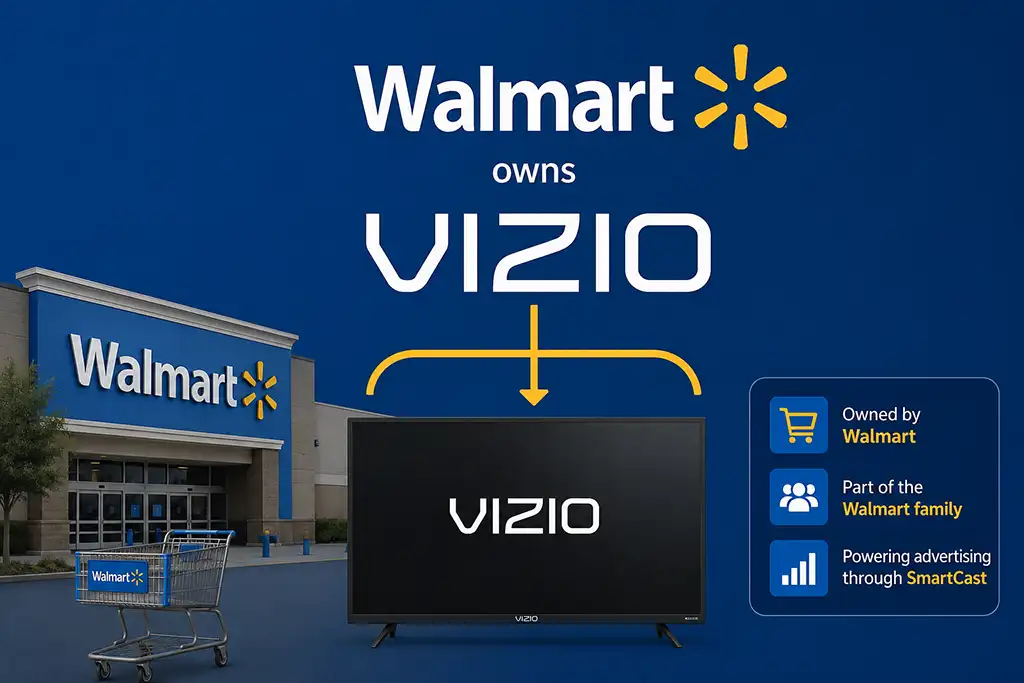
A successful acquisition finally took place in 2024, when Vizio became a subsidiary of Walmart. The purchase was driven less by Vizio’s television business than by the value of its SmartCast platform. With approximately 12 million active users, SmartCast provides Walmart with a significant opportunity to expand its digital advertising business and generate additional advertising revenue.
In 2026, Walmart made another major strategic change by discontinuing sales of Vizio TVs through Amazon and other third-party retailers. As a result, new Vizio TVs are now sold exclusively through Walmart stores and Walmart’s own online marketplace. While this strengthens Walmart’s control over distribution, it also limits customer access, and in my opinion, the decision is likely to reduce Vizio’s overall customer base.
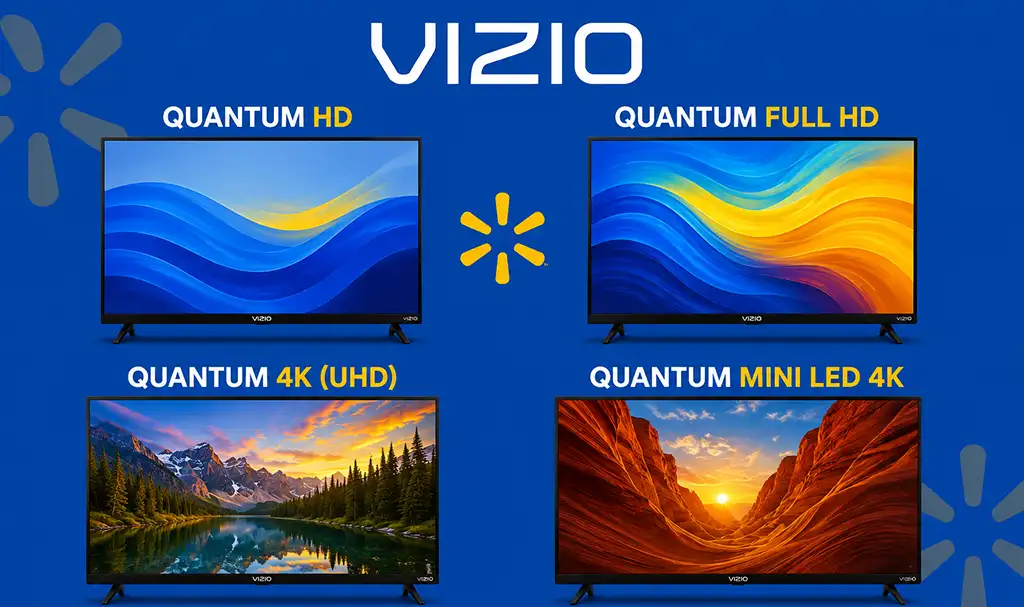
Another significant change has been the simplification of Vizio’s TV lineup. In the past, the company used a confusing naming system with product families such as P-Series Quantum X, P-Series Quantum, M-Series Quantum, V-Series, and D-Series. Beginning in 2024, Vizio replaced these marketing-oriented series names with a much simpler classification based on display technology and resolution. Instead of remembering multiple letter-based series, buyers can now identify a TV by its display type and capabilities.
As of 2026, Vizio’s lineup consists of the following categories:
- Quantum HD — entry-level, low-resolution TVs that remain available primarily because of their extremely low price.
- Quantum Full HD — affordable Full HD models that are also considered outdated by modern standards.
- Quantum 4K (UHD) — the company’s mainstream lineup of modern 4K televisions.
- Quantum Mini LED 4K — premium models featuring Mini LED backlighting for improved brightness, contrast, and HDR performance.
You can learn more about Vizio’s naming system in the article “Decoding and Explaining Vizio TV Model Numbers.”
Technical Specifications of Vizio TVs
Unlike companies such as Samsung or LG, Vizio does not design or manufacture its own TVs. Instead, its TVs are produced by OEM manufacturers using components supplied by companies such as BOE, CSOT, Innolux, MediaTek, and others. This approach allows Vizio to keep production costs low and compete in the budget and mid-range TV segments.
To reduce manufacturing costs, Vizio often uses display panels from previous generations rather than the latest technologies. As a result, many Vizio TVs are thicker than premium models from leading brands and generally offer lower peak brightness and fewer picture adjustment options.
Vizio also promotes features such as Wi-Fi 6 and Wi-Fi 6E. Although these standards provide higher theoretical bandwidth than Wi-Fi 5, the practical benefit for most home users is minimal. A typical 4K video stream requires only a small fraction of the bandwidth available on a Wi-Fi 5 network. Wi-Fi 6 was developed primarily to improve performance in networks with many connected devices, not to significantly increase the speed of a single connection.
Another aspect of Vizio’s marketing is how refresh rates are presented. Some TVs advertised as supporting 120 Hz can accept a 120 Hz signal only through HDMI inputs. When using built-in apps or other video sources, they may still display content at 60 Hz. Since Vizio does not publish detailed technical specifications, it is often difficult to determine a model’s actual capabilities before purchase.
Software for Vizio TVs
Vizio smart TVs run the proprietary SmartCast operating system. It provides access to popular streaming services, including Netflix, YouTube, Disney+, Prime Video, Hulu, Apple TV, and many others. It also supports Apple AirPlay, Google Cast, Amazon Alexa, Google Assistant, and Apple HomeKit.
Compared with platforms such as Google TV, Android TV, Samsung Tizen, or LG webOS, SmartCast has a smaller app ecosystem. Since Vizio primarily sells TVs in the United States and Canada, the platform focuses on North American streaming services, and some international apps may not be be available.
One of SmartCast’s main features is WatchFree+, a free ad-supported streaming service that offers about 300 live TV channels and a library of on-demand content. The advertising capabilities of SmartCast and WatchFree+ were one of the main reasons Walmart acquired Vizio in 2024.
Although SmartCast is easy to use, it is generally considered less polished than competing TV operating systems. Users sometimes report slow performance, interface glitches, and delayed software updates, especially on entry-level models. Nevertheless, it provides all the essential features needed for everyday streaming and smart TV use.