

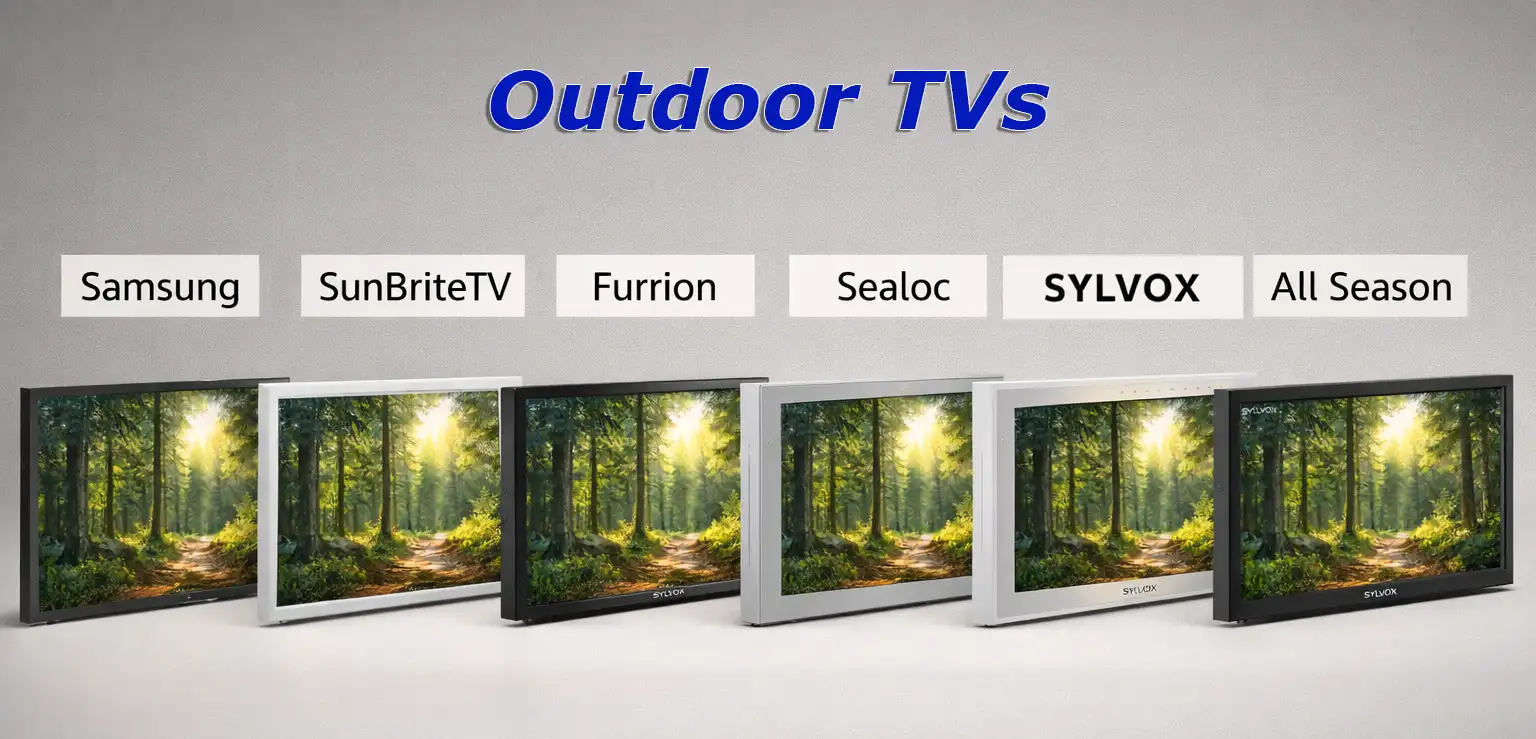
With the advent of flat-screen TVs, the idea of placing TVs on terraces or in yards has become increasingly popular. However, constantly moving the TV outside to watch it is inconvenient, creating demand for models specifically designed for outdoor use. Such TVs are most common in the United States.
Technical problems and types of outdoor TVs
Outdoor TVs face several technical challenges. First and foremost, they must be protected from moisture, which is usually achieved with waterproof enclosures. Some manufacturers simply take regular TVs, seal them in protective enclosures, and sell them under a different brand name. However, sealing the TV leads to overheating, especially when exposed to direct sunlight. To solve this problem, outdoor TVs use special radiators, fans, and additional screen cooling systems. Models designed for use in cold weather also have heating elements installed. Another problem is maintaining image visibility in bright light. Outdoor TVs are manufactured with high-brightness screens so that the image remains clear even in sunlight, which standard displays cannot provide. Direct sunlight can damage the screen, causing dark spots to appear. This is because the LED cells in the display overheat and stop working.
There are three main types of outdoor TVs. The first type is splash-proof but not completely waterproof, designed for use in areas protected from rain and direct sunlight, such as under a canopy. The second type can withstand direct sunlight for part of the day, requiring both moisture protection and cooling systems to prevent overheating. Finally, all-weather TVs are designed for year-round use, providing complete moisture protection as well as cooling and heating systems for reliable operation in all conditions.
Who makes outdoor TVs
Only a few companies manufacture outdoor TVs. These TVs are popular in the United States, Australia, and other countries with warm or temperate climates. Due to the relatively low demand, large manufacturers did not produce such TVs until 2020, when Samsung entered this segment. The main problem with these TVs is that their components are not specifically made for outdoor use; essentially, they are ordinary TVs that have been slightly modified.
Since this market segment was not of interest to large manufacturers, it was dominated by small companies producing a limited number of TVs until 2020. Although Samsung entered the market, it was not successful, as the expected demand did not materialize. All manufacturers face challenges with these TVs, since no TV display is designed to operate in extreme conditions.
Currently, outdoor TVs are manufactured by Samsung, SunbriteTV, Furrion, Sealoc, All Season, SYLVOX and MirageVision. Each of these companies offers its own solution for outdoor viewing.
Sunbrite Outdoor TVs
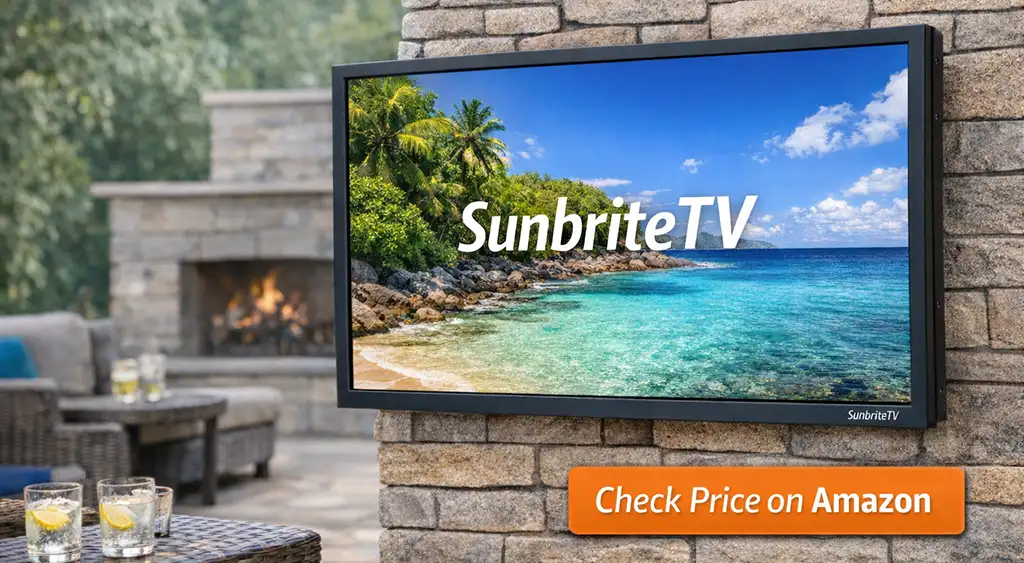
SunbriteTV is one of the oldest companies in the outdoor TV industry. Based in the US and currently owned by SnapAV, the company has been manufacturing TVs since 2004.
Some TVs are equipped with heating and cooling systems using third-party components. These systems allow the TVs to operate outdoors in a wide range of temperatures, from -24° to 122° F (-30° to 50° C), and some models are capable of functioning in extreme cold down to -40° F.
SunbriteTV offers three main product lines: TVs designed for installation under a shaded canopy, TVs for areas partially exposed to sunlight, and TVs for completely open spaces, including direct sunlight.
When purchasing a SunbriteTV, it is important to check the warranty terms. The warranty is valid only for the original purchaser and when the TV is purchased through an authorized dealer.
Samsung outdoor TVs
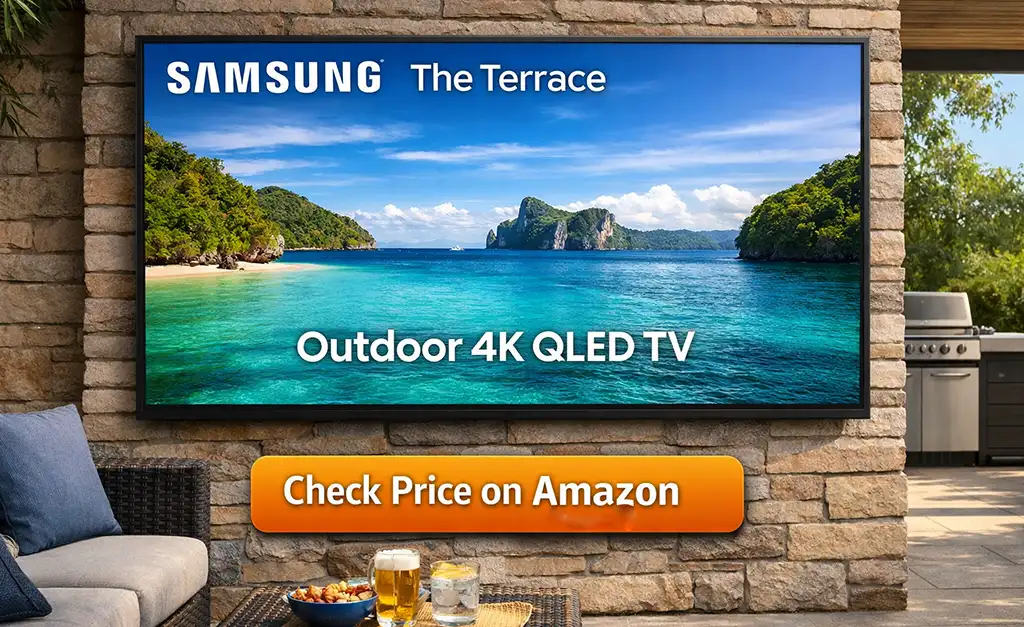
Initially, Samsung produced outdoor displays mainly as commercial products. However, in 2020, the company decided to enter the consumer market and began manufacturing outdoor TVs for home use. These TVs are sold under the name The Terrace and are IP55-rated for dust and moisture protection.
The Terrace TVs have increased screen brightness and use QLED technology. In terms of their characteristics, they are mostly similar to regular Samsung home TVs, but are adapted for outdoor use.
The second generation of The Terrace TVs was released between 2021 and 2022, and the third generation appeared in 2024. No new models were released in 2025.
Furrion outdoor TVs
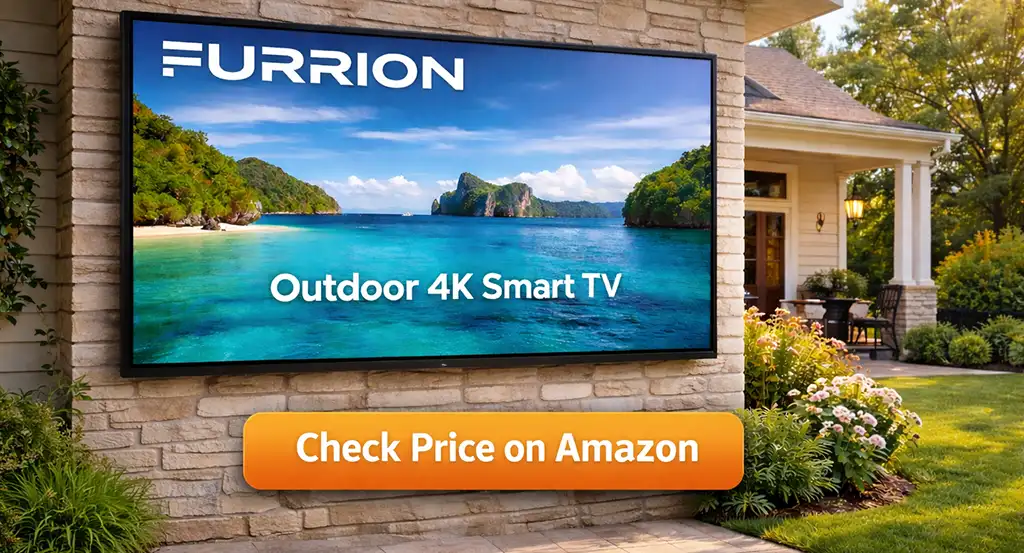
Furrion also manufactures outdoor TVs. It is a Hong Kong-based company with offices in Indiana and has been operating in the consumer electronics industry since 2013.
These TVs use LG components, so you are essentially getting an LG TV adapted for outdoor installation. Like other manufacturers, Furrion offers its TVs in three versions: models designed for shaded areas, models for partial sun, and models suitable for full sun exposure.
Sealoc outdoor TVs
Sealoc is an American company that provides additional protection for standard televisions manufactured by Samsung and LG. The process involves Sealoc purchasing TVs from LG and Samsung, disassembling them, applying a specialized protective coating to the circuit boards, and sealing the TV casing and screen. The TVs also undergo additional configuration adjustments intended to enhance picture quality, increasing brightness and contrast.
However, this approach is not ideal. The electrical components and screens of these televisions are not originally designed to operate in extreme low or high temperatures. As a result, such TVs can only be used outdoors when placed in the shade under a canopy. While they offer protection against high humidity, they are not fully waterproof. Additionally, increasing brightness and contrast may shorten the lifespan of certain TV components.
For these reasons, this solution is not considered optimal for outdoor televisions. Currently, this product line is marketed as Weatherloc-treated Residential TVs.
All Season outdoor TVs
The TVs are assembled from Samsung TV components and run on the Tizen operating system, but app availability is limited. The TVs come with a limited warranty that does not cover TVs used without surge protectors or TVs that are used for more than 12 hours a day.
SYLVOX Outdoor TVs
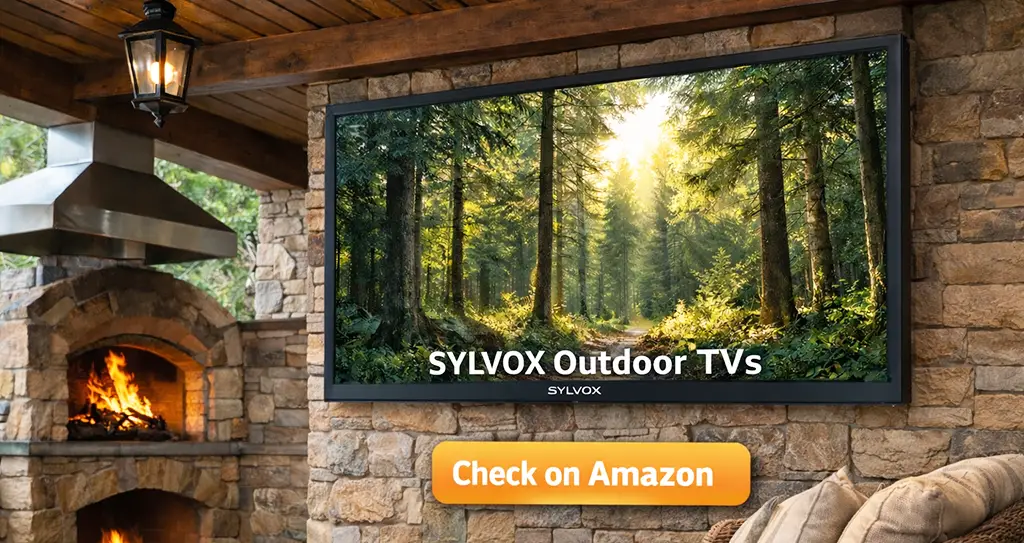
SYLVOX is a company that has been selling electronics for quite some time. In 2021, the company began selling outdoor TVs. The explanation is quite simple: they want to capture this market before large companies such as Samsung do. These TVs are manufactured in China on an outsourcing basis. In other words, the company orders production from a third party and then simply sells the products under its own brand. This is industrial TV production, with the TVs mainly manufactured by Skyworth.
Other Outdoor TV Brands
Weatherized Outdoor TVs
Weatherized is a Canadian company that modifies standard LG and Samsung televisions by sealing them with hydrophobic water-repellent technology. These TVs are designed to operate in temperatures from -17°F to 120°F (-27°C to 49°C). However, they must be installed under a canopy and in shaded areas, as they are only protected from water splashes rather than full exposure to rain.
MirageVision Outdoor TVs
MirageVision specializes in sealing standard TVs to make them suitable for outdoor environments. The company protects the internal electronic circuit boards and the TV housing. Their TVs are rated to operate between 5°F and 125°F (-15°C to 50°C), providing basic outdoor durability.
Séura Outdoor TVs
Séura is an American company that produces outdoor TVs assembled from third-party components. Their televisions feature IP54 protection, meaning they are resistant to dust and splashes. Séura outdoor TVs are designed to work in temperatures from -24°F to 122°F (-30°C to 50°C).
Peerless-AV Outdoor Displays
Peerless-AV primarily manufactures outdoor displays rather than traditional TVs, although they can connect to streaming devices and are often marketed as outdoor TVs. The company has strong expertise in producing highly protected outdoor equipment. Their displays feature IP68 protection, meaning they are fully sealed and capable of withstanding complete water immersion. They operate in temperatures from -31°F to 140°F (-35°C to 60°C) and are commonly used for advertising displays and outdoor information boards.