
Choosing a TV basically comes down to finding the best combination of screen size, picture quality, features, and price. The best option depends on how you use the TV, where you place it, and which features are important to you, although TVs have become more standardized these days and generally offer nearly identical features.
How to choose a TV with good image quality
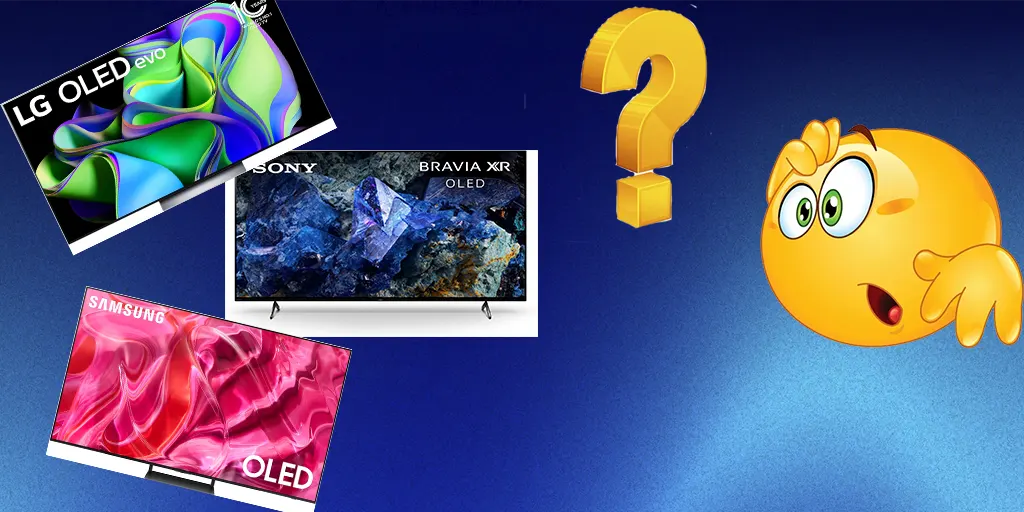
Modern TVs mainly use OLED or LED-based displays, including QLED. OLED pixels produce their own light and can switch off completely, providing deep blacks, high contrast, and wide viewing angles. QLED is an LCD technology that uses quantum dots to improve brightness and color reproduction. Some QLED TVs use 8-bit panels with FRC, while others use 10-bit panels. Standard LED TVs use an LCD panel with LED backlighting and are generally less expensive than OLED models.
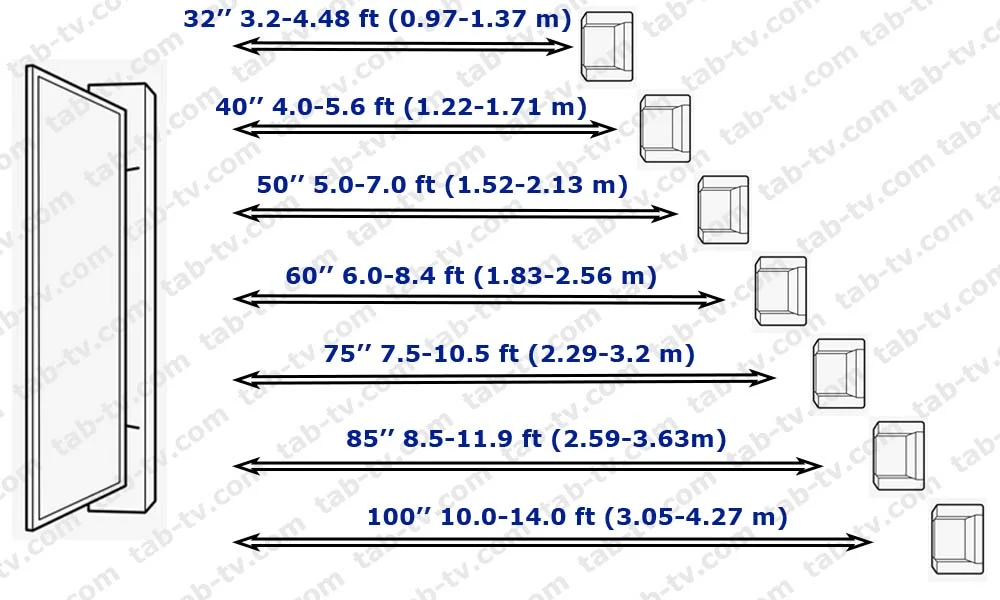
Screen size should match your viewing distance and the available space. 55-inch and 65-inch TVs are suitable for many living rooms, while larger screens work better when you sit farther away or want a more immersive image. Check the actual width and height of the TV before buying, since the diagonal measurement does not indicate how much space the TV will occupy.
For most modern TVs, 4K is already standard, so resolution is rarely a useful way to distinguish between models. Brightness, contrast, color reproduction, and viewing angles have a greater effect on the image. High brightness is useful in rooms with strong ambient light and for HDR content. OLED has an advantage in contrast because its pixels can switch off individually, while high-end LED and QLED TVs can improve contrast through local dimming.
HDR expands the range between dark and bright parts of the image. Its performance depends on brightness, contrast, local dimming, and the display technology. The refresh rate also affects motion. 60 Hz is sufficient for most TV programs and movies, while 120 Hz provides smoother motion for sports and gaming. Some newer TVs support 144 Hz. For gaming, check variable refresh rate, input lag, and HDMI capabilities as well.
The Smart TV system determines the interface and available applications. Samsung uses Tizen, LG uses webOS, while many other manufacturers use Google TV, Android TV, Roku TV or Fire TV.
TV Brand Overview
Samsung manufactures TVs under its own brand and operates its own TV production facilities. The company offers models featuring LED, QLED, and OLED technologies and uses Tizen as the platform for its “smart” TVs.
LG is another major TV manufacturer and one of the leading producers of OLED TVs. The company offers OLED, QNED, and LED TVs that use the webOS Smart TV platform.
Sony develops and sells TVs under the Sony and BRAVIA brands and is renowned for its image processing technologies and premium models. Its home entertainment business is being reorganized as part of a strategic partnership with TCL. Under agreements signed in 2026, TCL will own 51% of the shares in the new joint venture, while Sony will own 49%. All production will take place at TCL’s facilities.
TCL is both a brand and a TV manufacturer. The company has its own production and R&D facilities and is also one of the largest display manufacturers.
Hisense is also a manufacturer, not just a brand; it is listed as the manufacturer of Hisense TVs in Europe and the UK, and the company itself operates its own TV manufacturing plants in several countries; it is also a major OEM manufacturer.
Vizio is currently owned by Walmart, which completed the acquisition in December 2024. Vizio continues to operate as a separate division, with its own TV brand and Smart TV platform. All TVs are manufactured through outsourcing.
Panasonic’s television business is undergoing changes depending on the region. In February 2026, Panasonic announced a strategic partnership with Shenzhen Skyworth Display Technology and its group companies regarding its European television business. Under the new agreement, Skyworth will provide manufacturing capacity and handle sales, marketing, and logistics in the region, meaning Panasonic has exited this business. Panasonic has not sold televisions in North America for quite some time.
| TV brand | Company / brand owner | Who manufactures the TVs |
|---|---|---|
| Samsung | Samsung Electronics | Samsung and manufacturing partners |
| LG | LG Electronics | LG and manufacturing partners |
| Sony | Sony | Sony’s TV business; planned TCL-Sony joint venture from 2027 |
| TCL | TCL Technology / TCL Electronics | TCL |
| Hisense | Hisense Group | Hisense and its manufacturing subsidiaries |
| Panasonic | Panasonic Holdings | Panasonic and regional manufacturing partners |
| Philips | TP Vision | TP Vision |
| Sharp | Sharp Corporation / regional licensees | Sharp and licensed manufacturers, depending on region |
| Toshiba TV | Hisense / Vestel, depending on region | Hisense in some markets; Vestel in Europe |
| Vizio | Walmart | Contract manufacturers |
| JVC | Brand licensed to regional companies | Regional licensees and contract manufacturers |
| Grundig | Beko / Arçelik | Arçelik and manufacturing partners |
| Hitachi | Brand licensed to regional manufacturers | Regional licensees |
| Skyworth | Skyworth Group | Skyworth |
| Xiaomi | Xiaomi | Xiaomi and contract manufacturers |
| Haier | Haier Group | Haier and manufacturing partners |
| Konka | Konka Group | Konka |
| Changhong | Sichuan Changhong | Changhong |
| Metz | Skyworth / regional licensees | Skyworth and regional partners |
| RCA | Brand licensed to third parties | Licensed manufacturers, depending on market |