

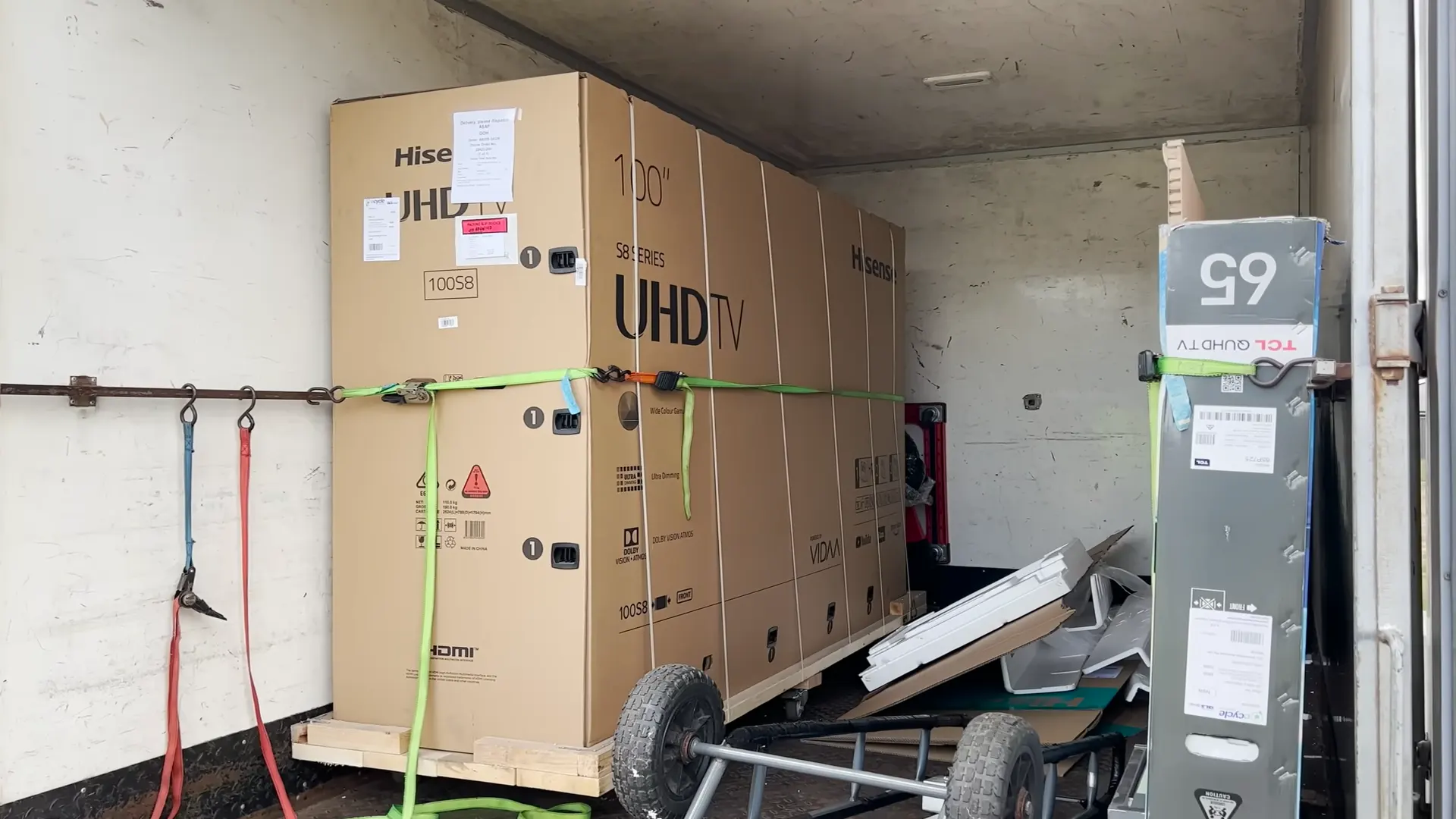
Whether you’re buying a new TV or moving an old one to a new home, following the proper guidelines for transporting a TV is important, as it will help keep it in working condition and prevent damage.
Although these instructions are usually included in the TV’s user manual, not everyone takes the time to read them. Here is a quick guide to help you safely and securely get your TV to its destination.
How to Transport a TV Properly
When it comes to transporting a TV—whether it’s new or an old one you’ve used for years—the main rule is to transport it in an upright position, as recommended by manufacturers. However, in practice, TVs are often transported horizontally. If this cannot be avoided, be especially careful and always place the screen facing up.
Using the original packaging is the safest option, but if it’s no longer available, professional movers can help you securely pack the TV. Otherwise, to protect the TV during the move, wrap it in bubble wrap, add a protective layer of foam, and place it in a sturdy cardboard box.
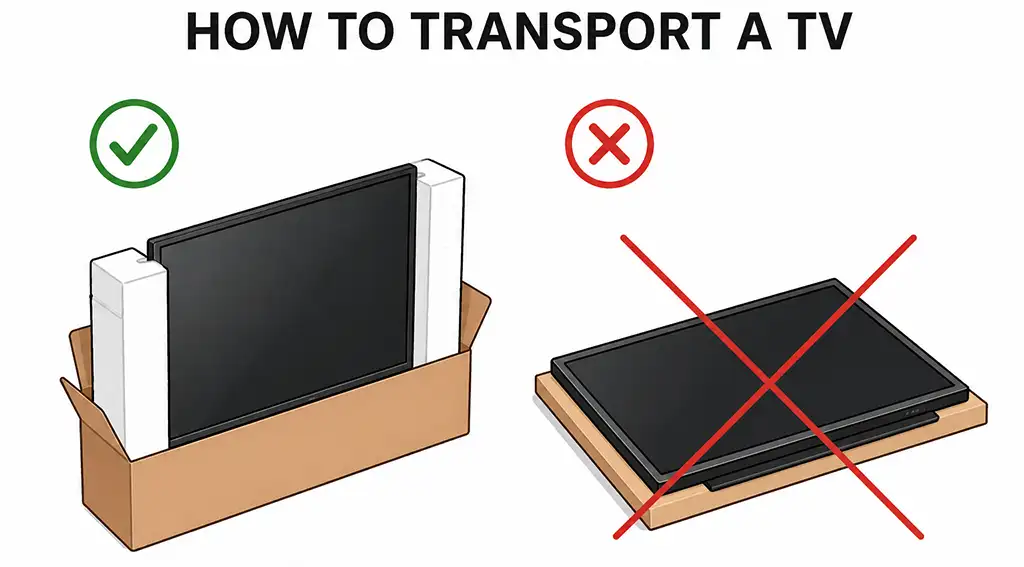
Unpacking and setting up the TV also require caution, especially with larger models. For safely unpacking TVs larger than 43 inches, it’s best to have two people help, while more compact models can usually be handled alone.
Mounting the TV on the wall
When mounting the TV on the wall, choose the correct mount. The mount must be compatible with your TV’s specifications. Select a sturdy wall capable of supporting the TV’s weight, avoiding weak materials such as drywall unless it is reinforced. Professional installation will help ensure the bracket is securely fastened. Always use the bolts included with the wall mount, as their precise length is important to prevent damage to the TV.
Additional precautions in cold temperatures
In regions with harsh winters, special care is required if the TV has been exposed to sub-zero temperatures.
Before turning on the TV, allow it to gradually warm up to room temperature. After unpacking, place it on a stand or mount it on the wall, but wait at least three hours before turning it on. Sudden temperature changes can cause condensation, which may damage electronic components. This is particularly dangerous for the display, as temperature differences—such as a cold outer surface and warm backlighting—can put stress on the glass, potentially leading to cracks or other serious damage to the TV.