
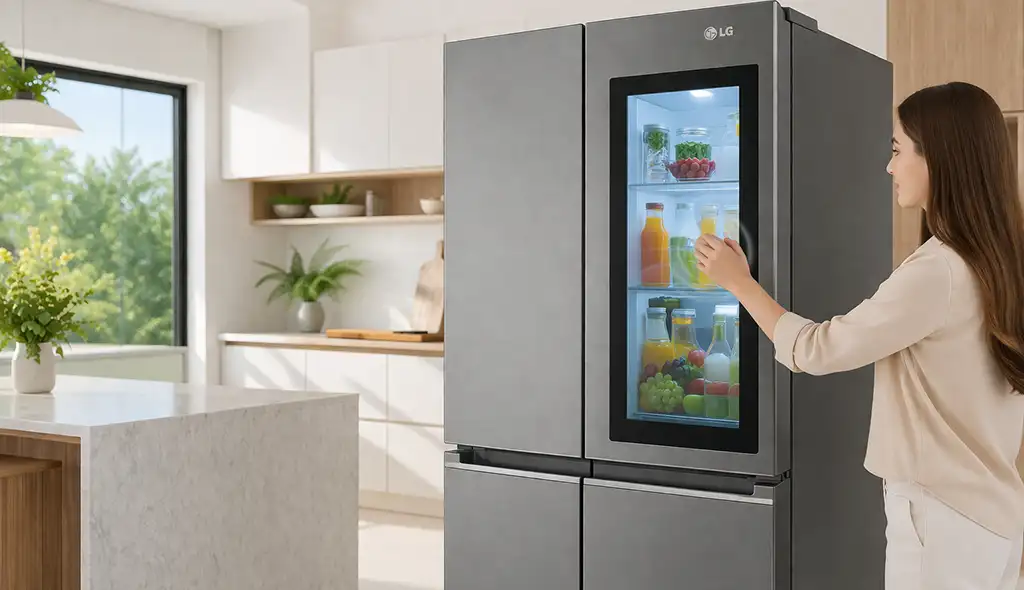
LG has incorporated the “Door-in-Door” design into its refrigerators, developed to enhance user convenience. This system consists of two doors: the outer door opens separately, providing quick access to frequently used items. Behind it is a glass panel that allows you to see the contents without opening the entire refrigerator. When the outer door is opened, the interior lighting turns on, making it easy to see everything at a glance. In some models, additional shelves are built into this section, increasing storage space for everyday items. By reducing the frequency of opening the main compartment, this technology helps keep cold air inside and improves overall efficiency.
InstaView Door-in-Door Technology in LG Refrigerators
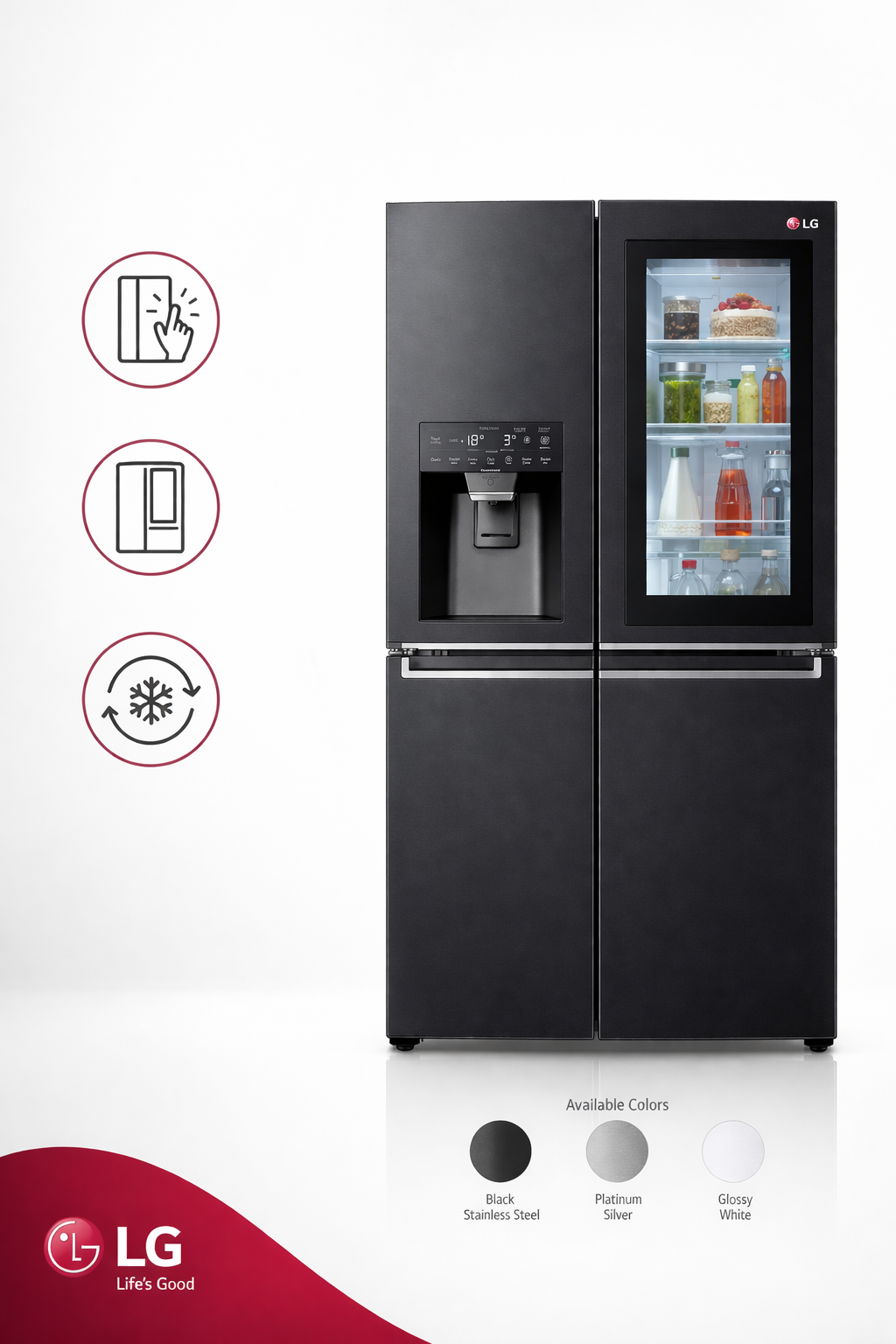
The next step was the development of InstaView Door-in-Door—a more advanced and modern solution. Instead of opening the outer panel, simply tap the glass twice. This activates the built-in backlight and makes the glass transparent, allowing you to see the contents without opening the door at all. This feature further minimizes cold air loss and gives the refrigerator a high-tech, futuristic look.
Advantages and Disadvantages of Both Technologies
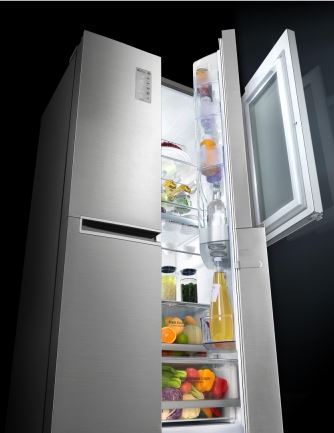
Both Door-in-Door and InstaView Door-in-Door offer several key advantages. The most important of these is energy efficiency, as these technologies reduce the need to open the main compartment—which means you can save between 5 and 10 kilowatt-hours of electricity per month with these refrigerators.
However, there are some drawbacks to consider. Visibility is limited to the area behind the glass, so you won’t be able to see everything stored inside, especially items located at the back. The design may also slightly reduce available storage space due to additional components. Finally, refrigerators with these technologies are usually more expensive than standard models, which may be a deciding factor for some buyers.