

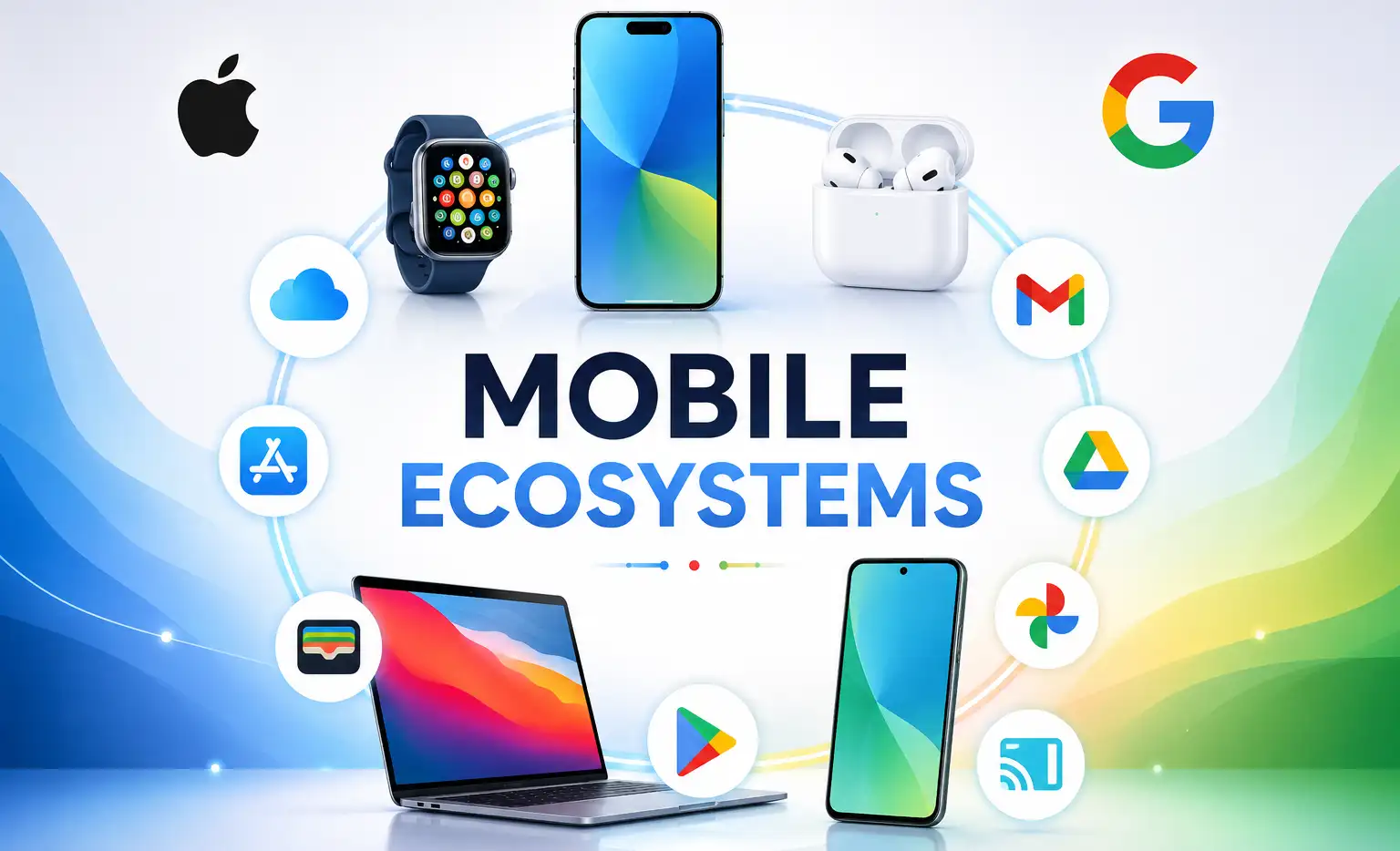
Over the past 10 to 15 years, the term “mobile ecosystem” has become increasingly common. Since iOS and Android dominate the smartphone market, the phrases “Apple ecosystem” and “Android ecosystem” are now widely used in advertising, the media, and technology publications. In the past, mobile platforms such as Windows Mobile and BlackBerry were sometimes described in a similar way, although they have since disappeared from the market.
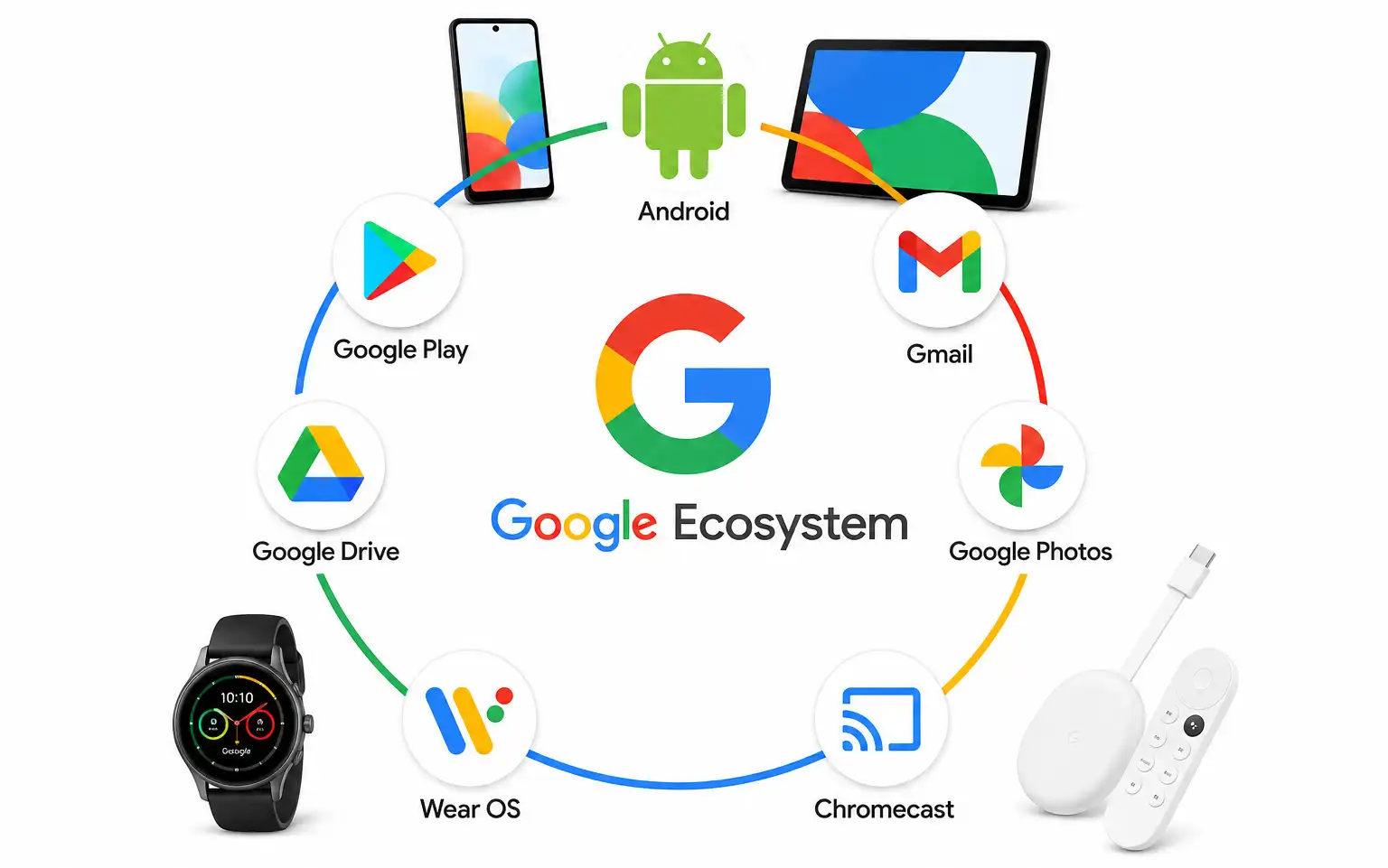
The word “ecosystem” originally comes from biology. Coined in the 1930s, it describes a natural system in which plants, animals, microorganisms, and their environment exist in a balanced interrelationship. Each element depends on the others, allowing the system to function and renew itself over long periods of time.
When this definition is applied to mobile technology, its meaning becomes much less precise. A smartphone’s operating system, cloud storage, app store, and connected devices may work together, but they do not form a self-sustaining ecosystem in the biological sense. These are separate technologies designed to perform specific tasks.
The term “mobile ecosystem” has become popular because it sounds broader than simply “operating system” or “software platform.” It is typically used to describe a group of products and services designed to work together. This label is convenient because it emphasizes compatibility among devices, apps, and online services.
Using the same approach, practically anything could be described as an ecosystem. For example, a house includes a refrigerator, a kitchen, a bathroom, heating, electricity, and the people who use them. All these elements interact with one another, but they are not usually referred to as a “home ecosystem.” The same principle applies to mobile devices.
Do mobile ecosystems actually exist?
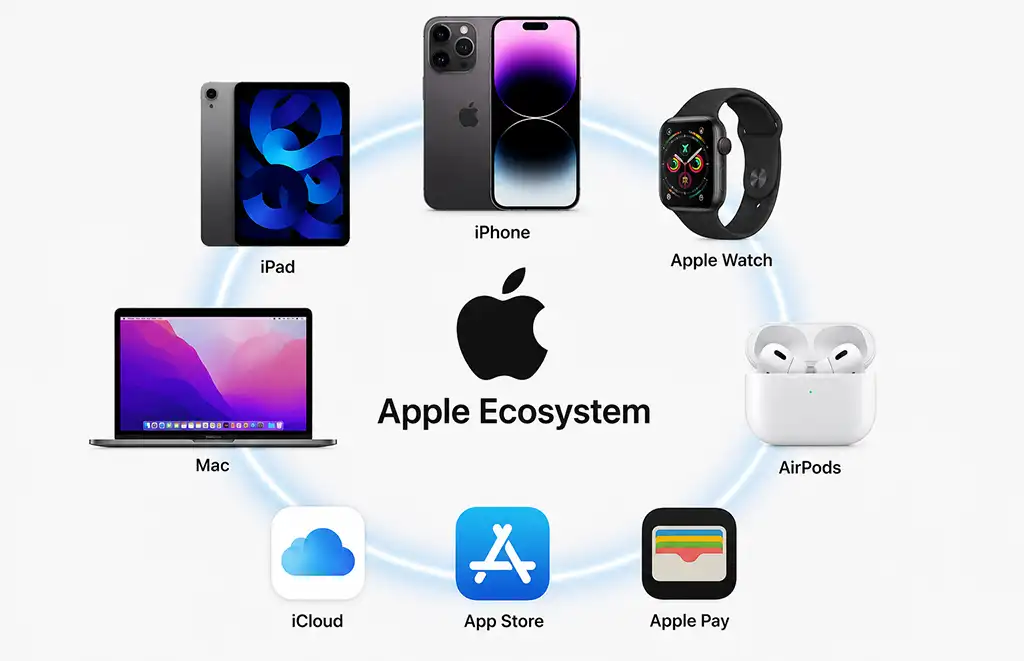
Strictly speaking, mobile ecosystems do not exist in the same sense as ecosystems in nature. What actually exist are operating systems, cloud services, app stores, servers, and devices connected via the Internet. These technologies exchange information, synchronize settings, and allow apps to work across multiple devices.
Each of these components performs its own function and can exist independently. Their interaction is based on software, communication standards, and network technologies, not on the principles of a natural ecosystem.
Modern digital technologies are simply tools designed to make everyday life more convenient. Throughout history, people have constantly replaced old tools with new ones. Candles were supplanted by electric lighting, bows gave way to firearms, and horses were largely replaced by automobiles and railroads. As technology evolves, today’s operating systems and online services may also be replaced by new solutions.
For this reason, the term “mobile ecosystem” should be understood as a convenient industry and marketing term describing a group of compatible devices and services, rather than as a true ecosystem in the scientific sense.