

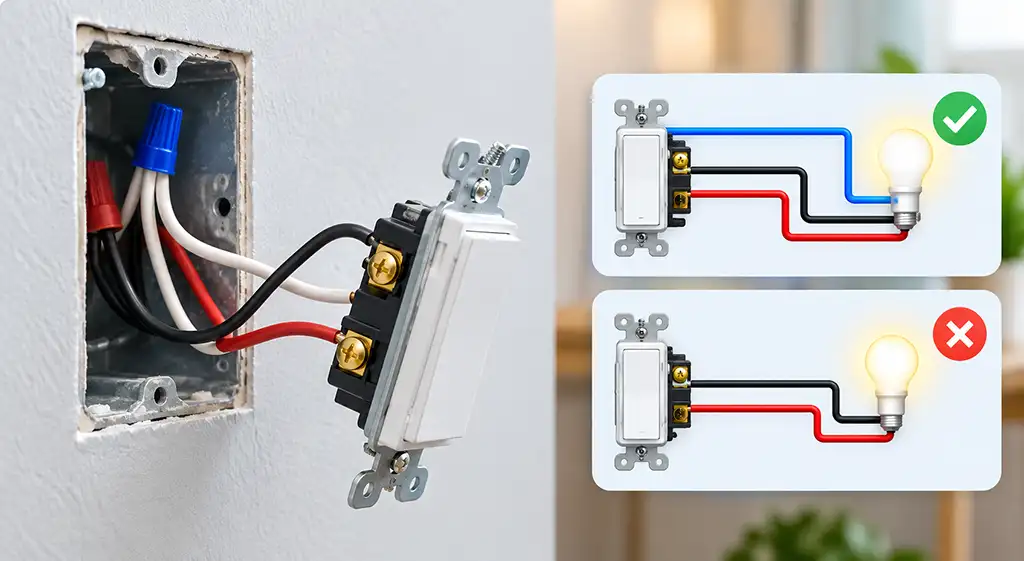
The neutral wire is part of an electrical circuit. In some countries, it is also called the zero wire. In a typical household circuit, current flows from the power source to a light fixture or electrical appliance and returns through the neutral wire.
The neutral wire is different from the ground wire. The neutral is part of the normal operating circuit, while the ground wire is intended to provide protection in the event of an electrical fault.
A wall switch does not always have a neutral wire. This usually wasn’t a problem when switches were used only to turn lights on and off. Traditionally, it was common to connect the light fixture to the neutral wire and route the hot or phase wire through the switch. The switch itself did not need a separate power supply.
Things have changed with the spread of smart home technology. Smart switches and other connected devices often need a constant power supply to operate, so the presence or absence of a neutral wire at the switch has become an important consideration.
Why does a “Smart” switch need a neutral wire?
A standard light switch generally does not need its own power supply. It simply opens or closes the circuit that supplies power to the light fixture.
A “smart” switch is different because it contains electronic components that need power to operate. The switch may need to remain powered even when the light is off so that it can communicate with the smart home system, turn the lights on or off remotely, or control them according to a preset schedule.
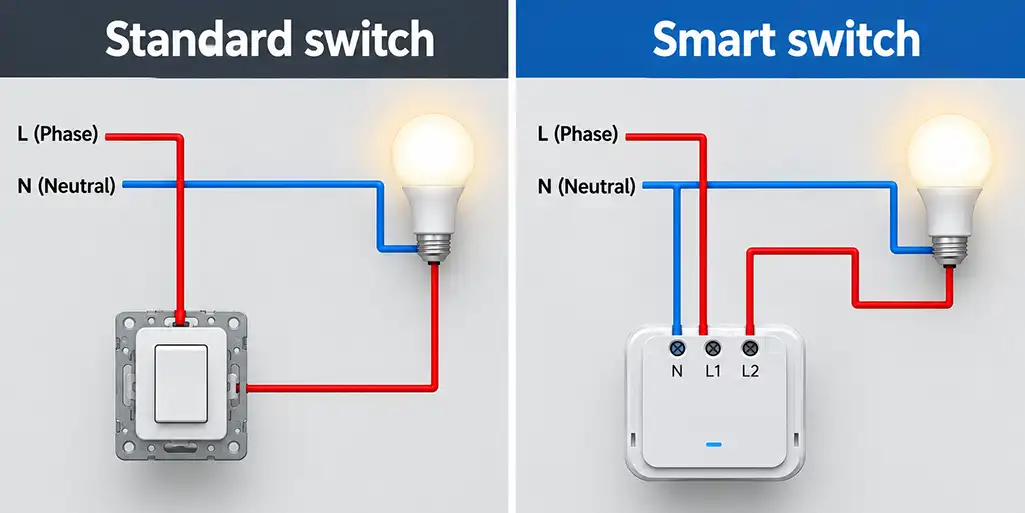
For this reason, many smart switches require a connection to the neutral wire. Without a neutral connection, a switch designed to use one cannot receive the power it needs to operate.
However, not every smart switch requires a neutral wire. Some models are specifically designed to work in installations where no neutral wire is available.
Why doesn’t the switch have a neutral wire?
In some older homes, the neutral wire was not brought to the wall switch. Instead, the neutral remained at the light fixture, while the switch was connected to the live conductors needed to control the light.
This arrangement works perfectly well with a traditional switch because the switch itself does not need a separate power supply.
The problem appears when you replace the traditional switch with a “smart” model. If the new switch requires a neutral connection, there may be no suitable neutral wire in the switch box, so the switch cannot be installed as intended.
In North American wiring, neutral conductors are typically identified by white or gray insulation. In many European installations, blue is normally used for neutral. However, wire color alone should not be relied upon to identify a conductor. Older installations may use different wiring arrangements, and the actual function of a wire should be confirmed before making any connections.
What should you do if there is no neutral wire?
If there is no neutral wire at the switch, you have several options.
One option is to modify the electrical wiring and bring a neutral wire to the switch. This would allow you to install smart switches that require a neutral connection. However, work on residential electrical wiring should be carried out by a qualified electrician, and adding new wiring can be a relatively expensive job.
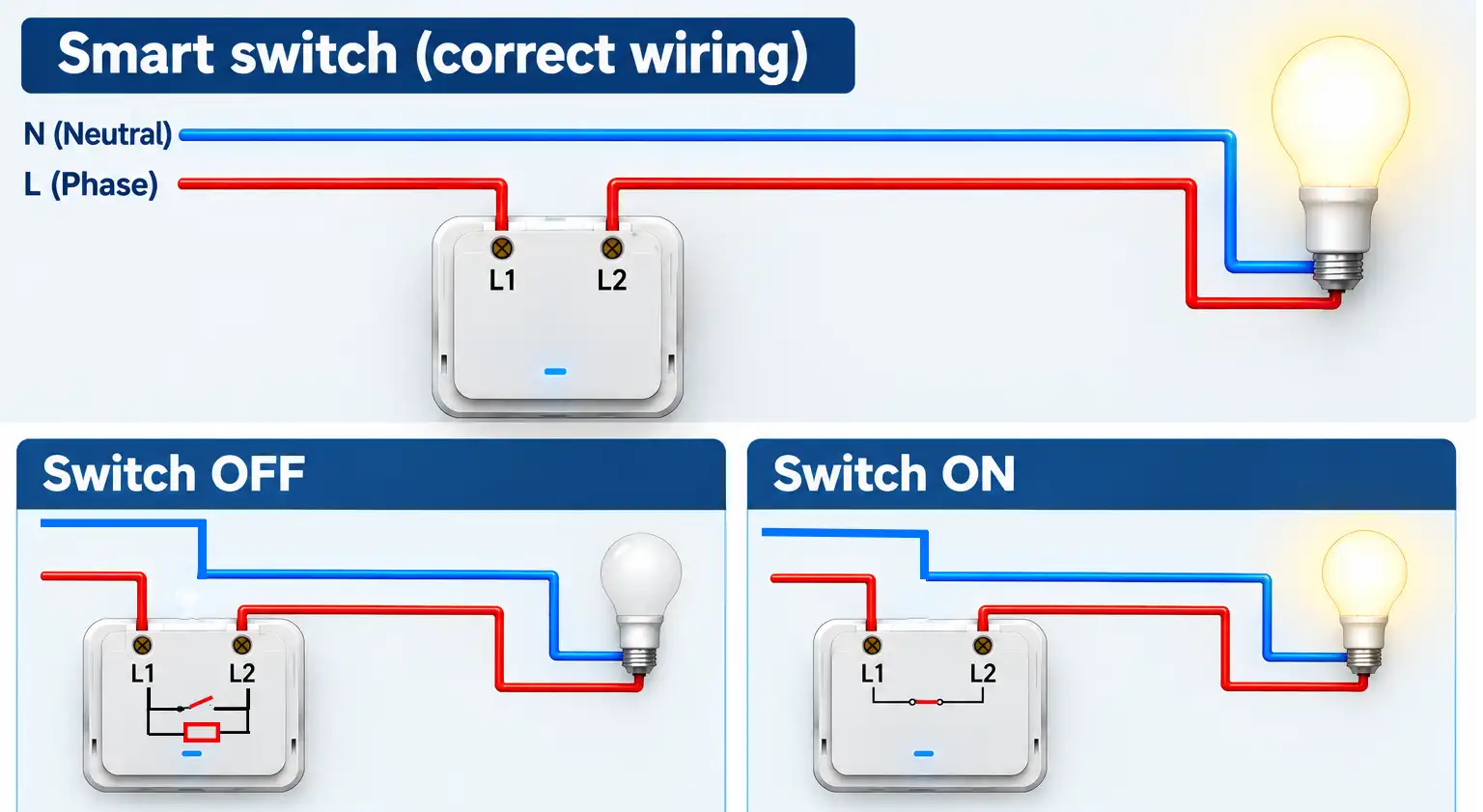
Another option is to choose a smart switch designed to work without a neutral wire. These switches are specifically designed for installations where no neutral is available. Instead of completely interrupting the circuit when the light is off, the switch allows a very small current to pass through the circuit. This current is enough to power the switch’s electronics but normally not enough to turn the light on.