

Hisense uses different TV model-numbering systems across regions, so the same series may have different codes in the USA, Europe and Australia. Although the company manufactures TVs at its own facilities in several countries, including China, Slovenia, Mexico and South Africa, regional versions of the same series can differ in tuners, smart TV platforms, panels and ports. Many new models are unveiled at CES in January and reach European and Australian markets between March and July. The tables below show the model year for each series.
The last letter of a Hisense TV model number usually indicates the model year. Since 2021, Hisense has used the same letter across all regions: G for 2021, H for 2022, K for 2023, N for 2024, Q for 2025 and S for 2026. Earlier US models followed a different pattern: E was used for 2018 and F for 2019, while both the 2020 H-series and the 2021 U-series used G. A regional suffix may follow the year letter. For example, the 2025 U8 series is designated U8QG in the USA, U8QTUK in the UK and U8QAU in Australia.
Hisense TV lineups by year
| Year | USA | Europe | Australia | Main change |
|---|---|---|---|---|
| 2026 | 116UXS, UR9S, UR8S, UR7S, UR6S, U7SG, U7SF, U6SF Pro, U6SF, U6SV Pro, QD8, S7, S5, S6 FollowMe, R6 | UR9S, UR8S, U7S Pro, U7SE, E8S, E7S | UR9, UR8, U85, U7, U6, UXS | RGB MiniLED expands to smaller screen sizes; new MiniLED models and a multi-primary RGB MiniLED flagship |
| 2025 | UX, U9QG, U8QG, U7QG, U6QF, QD7QF, QD6QF, S5 | UXQ, U8Q, U7Q Pro, U7Q, E8Q, E7Q Pro, A85Q | U8QAU, U7QAU, U6QAU Pro | First consumer RGB MiniLED TV; 165 Hz panels in selected premium LCD models |
| 2024 | U9N, U8N, U7N, U6N, U76N, 98UX, 110UX | UXN, U8N, U7N, U6N, E7N Pro | UXAU, U8NAU, U7NAU, U6NAU | ULED X flagship models, advanced local dimming and high peak brightness |
| 2023 | U8K, U7K, U6K, UX, A65K | A85K, UXKQ, U8KQ, U7KQ, U6KQ | UXAU, U8KAU, U7KAU, U6KAU | Mini LED across the main ULED range in the USA |
| 2022 | U9H, U8H, U7H, U6H, A7H, A6H, A4H, A9H | A85H, U8HQ, E7HQ | U9HAU, U8HAU, U7HAU, X9HAU, X8HAU | Mini LED in premium models; Google TV across the main US U and A series |
| 2021 | U9DG, U8G, U7G, U6G, U800GR, R7, A6 | U9GQ, A9G, U8GQ, A7GQ | U8G, U7G, A7G | Dual Cell and 8K in the USA; Mini LED in selected European models |
| 2020 | H9G, H8G, H65G, R8F, R6E3, H4G | U8QF, U7QF | Q8, S8 | Quantum Dot in selected LCD models; Android TV and Roku TV |
| 2019 | H9F, H8F, U9F, R8, R7, R6, H65 | B7500, U8B | R9, R8, R7, R6, Series G | Dolby Vision and Dolby Atmos in selected models; Android TV and Roku TV |
| 2018 | H9E Plus, H9E, R7, H8E, H6E, H5 | U9A, U7A, NEC, A6, N5 | P9, P8, P7, P6, P5, P4 | Premium ULED models and a wider range of smart TV platforms |
The tables list representative models rather than every model sold in each market. Availability, screen sizes, specifications and smart TV platforms can vary by region. Models announced in one calendar year may go on sale later or remain available the following year.
Hisense TV lineup in the USA, 2018–2026
| Year | Series | What it was |
|---|---|---|
| 2026 | 116UXS, UR9S, UR8S, UR7S, UR6S, U7SG, U7SF, U6SF Pro, U6SF, U6SV Pro, QD8, S7, S5, S6 FollowMe, R6 | 116UXS: a 116-inch RGB MiniLED flagship featuring an additional Sky Blue-Cyan LED in its backlight system. UR9S and UR8S: RGB MiniLED TVs with refresh rates of up to 180 Hz and sound systems tuned by Devialet. The UR9S is the higher-end series, with peak brightness of up to 4,000 nits, while the UR8S reaches up to 3,500 nits. The range covers screen sizes from 55 to 100 inches. UR7S and UR6S: entry-level MiniLED models with Quantum Dot technology and a matte anti-reflective coating; specifications and availability may vary. U7SG: a MiniLED series with Google TV, a native 165 Hz refresh rate and screen sizes up to 116 inches. U7SF: the Fire TV version of the U7 series. U6SF Pro and U6SF: more affordable MiniLED models running Fire TV, with a native 144 Hz panel specified for the series. U6SV Pro: a MiniLED model running VIDAA, with a native 144 Hz panel and four HDMI 2.1 inputs. QD8: a Hi-QLED MiniLED television running Fire TV; screen sizes and availability depend on the market. S7: the CanvasTV lifestyle series running Google TV. S5: the DécoTV lifestyle series running Fire TV. S6 FollowMe: a portable touchscreen display. R6: a budget Roku TV series. 163MX: a 163-inch MicroLED display announced at CES 2026. |
| 2025 | UX, U9QG, U8QG, U7QG, U6QF, QD7QF, QD6QF, S5 | UX (116UX): a 116-inch RGB MiniLED television and Hisense’s first consumer RGB MiniLED model. Hisense advertises peak brightness of up to 8,000 nits and a native 165 Hz panel. U9QG: a premium MiniLED model with a native 165 Hz panel. U8QG: a MiniLED Pro series with advertised peak brightness of up to 5,000 nits and a native 165 Hz panel. U7QG: a MiniLED Pro series with a native 165 Hz panel and advertised peak brightness of up to 3,000 nits. U6QF: a more affordable MiniLED series running Fire TV, with a native 144 Hz panel. QD7QF: a MiniLED television with full-array local dimming and a native 144 Hz panel on selected sizes. QD6QF: a more affordable Hi-QLED series. S5: the DécoTV lifestyle series. CES 2025: Hisense demonstrated a 136-inch MicroLED display. |
| 2024 | U9N, U8N, U7N, U6N, U76N, 98UX, 110UX | U9N: a premium MiniLED television positioned below the ULED X flagship models. U8N: a MiniLED series with a native 144 Hz panel and advertised peak brightness of up to 3,000 nits. U7N and U6N: more affordable ULED series with specifications varying by screen size. U76N: a 100-inch ULED model. ULED X: the 98UX and 110UX represented the large-screen flagship range. Hisense advertised up to 40,000 local-dimming zones and 10,000 nits of peak brightness for the 110UX; these figures should not be applied to the 98UX. |
| 2023 | U8K, U7K, U6K, UX, A65K | U8K: a MiniLED television with more than 1,000 local-dimming zones in selected configurations. U7K: a MiniLED ULED model with Quantum Dot technology and gaming support up to 144 Hz. U6K: a more affordable MiniLED series with specifications varying by screen size. UX: the ULED X flagship series. MiniLED was used across the main ULED range in the USA. Google TV was available on the principal U-series models; platform details should be checked for individual entry-level models. |
| 2022 | U9H, U8H, U7H, U6H, A7H, A6H, A4H, A9H | U9H: a 75-inch MiniLED model. U8H: a MiniLED series with Quantum Dot technology, available in several sizes. U7H: a mainstream ULED series with a 120 Hz panel in the principal US configurations. U6H: a more affordable ULED series. A7H, A6H and A4H: entry-level and midrange LCD models with specifications varying by series and size. A9H: a 65-inch OLED model. Google TV was used across the main US U and A series, although the platform should be checked against the exact model. |
| 2021 | U9DG, U8G, U7G, U6G, U800GR, R7, A6 | U9DG: a 75-inch 4K LCD TV with Dual Cell technology. It uses two LCD panels to improve contrast and black levels. U8G: a premium LCD series with Quantum Dot technology and high peak brightness. U7G: a gaming-oriented ULED series. U6G: a more affordable ULED series. U800GR: a 75-inch 8K television running Roku TV. Android TV was used on several US U-series models, while Roku TV was available on selected models. |
| 2020 | H9G, H8G, H65G, R8F, R6E3, H4G | H9G: a Quantum Dot LCD series with Android TV, Dolby Vision and Dolby Atmos. H8G: a Quantum Dot LCD series available in several sizes. H65G: a budget-oriented Android TV model. R8F: a Roku TV model introduced in late 2019 and sold into 2020. R6E3 and H4G: entry-level Roku TV models. |
| 2019 | H9F, H8F, U9F, R8, R7, R6, H65 | H9F: a premium LCD series with Quantum Dot technology, full-array local dimming and Android TV. H8F: a midrange Android TV series. U9F: a 75-inch premium ULED model launched in 2019. R8: the first Hisense Roku TV series to combine Roku TV with ULED technology, available in 55- and 65-inch sizes. R7 and R6: Roku TV series at different price points. H65: a mainstream LCD series available in several sizes. Specifications and prices varied by model. |
| 2018 | H9E Plus, H9E, R7, H8E, H6E, H5 | H9E Plus: a premium ULED 4K series with a 120 Hz panel and Android TV. H9E: a separate premium LCD series with different specifications. R7: a 4K Roku TV series. H8E and H6E: mainstream 4K LCD series. H5: a more affordable series with HD and Full HD models. The US lineup used ATSC tuners. HDMI and USB port counts differed by model; many H8E, H6E and H5 models had three HDMI inputs and one USB 2.0 port. |
Hisense TV lineup in Europe, 2018–2026
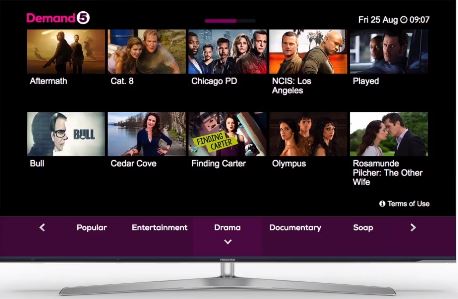
Hisense has primarily used its VIDAA smart TV platform across its European TV lineup, although platform availability can vary by model and market. In the UK, selected Hisense TVs introduced from 2024 onward also support Freely, a streaming service that provides access to live TV channels and on-demand content over the internet without an aerial.
| Year | Series | What it was |
|---|---|---|
| 2026 | UR9S, UR8S, U7S Pro, U7S, U7SE, E8S, E7S Pro, E7S, A7S, A6S, U8Q | UR9S: RGB MiniLED, available in 65″, 75″ and 85″ sizes in the UK. Hisense advertises peak brightness of up to 4,000 nits; the 65-inch version has a native 170 Hz panel, while larger versions support up to 180 Hz. UR8S: RGB MiniLED, available in sizes from 55″ to 100″. Hisense advertises peak brightness of up to 3,500 nits and a native refresh rate of up to 180 Hz. U7S Pro: a MiniLED model with a native 165 Hz panel and advertised peak brightness of up to 3,000 nits. U7S: a more affordable MiniLED model with a native 144 Hz panel and advertised peak brightness of up to 1,400 nits. U7SE: another regional MiniLED variant; availability and specifications depend on the market. E8S: a more affordable MiniLED model with a native 144 Hz panel. Peak brightness varies by screen size. E7S Pro and E7S: QLED models with specifications and gaming features varying by version. A7S and A6S: more affordable LCD series. U8Q: the 2025 MiniLED model carried over into 2026. Top end: the 116UXS RGB MiniLED flagship and the 136-inch MX MicroLED display were announced for 2026; actual availability varies by country. |
| 2025 | UXQ, U8Q, U7Q Pro, U7Q, E8Q, E7Q Pro, E7Q, A7Q, A6Q, A85Q | UXQ: a 116-inch RGB MiniLED flagship. The 116UXQ was listed for the UK and other European markets. U8Q: a flagship MiniLED LCD series with Quantum Dot technology, a native 165 Hz panel and USB-C with DisplayPort support. Hisense advertised peak brightness of up to 5,000 nits. U7Q Pro: a MiniLED Pro series with a native 165 Hz panel and Hi-View AI Engine Pro. U7Q: a more affordable MiniLED series with a native 144 Hz panel on standard sizes; the 100-inch version supports up to 165 Hz. E8Q: a more affordable MiniLED series with a native 144 Hz panel. E7Q Pro: a gaming-oriented QLED model with a 144 Hz gaming mode. E7Q and A7Q: QLED models positioned below the premium MiniLED range. A6Q: a more affordable 4K LED LCD series, available in several sizes. A85Q: an OLED series available in 55″ and 65″ sizes. |
| 2024 | UXN, U8N, U7N, U6N, E7N Pro | UXN: the European ULED X flagship family, including large-screen models. Available sizes depended on the model and market. U8N: a premium MiniLED series with a native 144 Hz panel. Hisense advertised peak brightness of up to 3,000 nits on relevant models. The number of local-dimming zones varies by screen size. U7N: a MiniLED series with a native 144 Hz panel and multiple screen sizes, including a 100-inch version in selected markets. U6N: a more affordable LCD series. Refresh rate and backlight specifications vary by model and market. E7N Pro: a QLED gaming TV with full-array local dimming and a gaming refresh rate of up to 144 Hz. |
| 2023 | UXKQ, U8KQ, U7KQ, U6KQ, E7KQ Pro, E7KQ, A7KQ, A85K | UXKQ: the ULED X flagship. Hisense advertised up to 5,184 local-dimming zones and peak brightness of up to 2,500 nits for the 85-inch model. U8KQ: a MiniLED LCD series with Quantum Dot technology and a native 144 Hz panel. U7KQ: a MiniLED series with gaming support up to 144 Hz; a 100-inch model was available in selected markets. U6KQ: a more affordable LCD series. Backlight technology and specifications should be checked against the exact model. E7KQ Pro, E7KQ and A7KQ: mainstream LCD series, with QLED technology used on relevant models. Screen sizes varied by series. A85K: a 55- and 65-inch OLED series. Panels: Hisense used both VA and IPS-type LCD panels across different series and screen sizes. |
| 2022 | A85H, U8HQ, E7HQ, L9G | A85H: an OLED series available in 55″ and 65″ sizes, with HDMI 2.1 and support for 4K at 120 Hz. Prices varied by retailer and sales period. U8HQ: a premium European LCD series with MiniLED backlighting and Quantum Dot technology. E7HQ: a QLED LCD series with Dolby Vision support on the relevant European models. L9G: a Laser TV projection system supplied with a 120-inch screen. Panels: VA and IPS-type LCD panels were used across different models; panel type depended on the specific television. |
| 2021 | U9GQ, A9G, U8GQ, A7GQ, E76GQ, A6G, A4G | U9GQ: a 75-inch MiniLED model with a native 120 Hz panel and advertised peak brightness of up to 3,000 nits. The number of LEDs and brightness specifications should not be applied to other screen sizes or series. A9G: an OLED series available in 55″ and 65″ sizes. U8GQ: a premium LCD series available in 55″ and 65″ sizes, with advertised peak brightness of up to 1,000 nits. A7GQ: a QLED LCD series available in several sizes, including 43″ to 75″ models. E76GQ: a QLED series offered in selected European sizes, including 50″ and 55″. A6G: a 4K LCD series available in sizes from 43″ to 75″, generally with a 60 Hz panel. A4G: an entry-level HD or Full HD LCD series, depending on size. |
| 2020 | U8QF, U7QF, A7500F, A7400F, A7300F, A7100F | U8QF: a ULED LCD series available in 55″ and 65″ sizes, with Quantum Dot technology, a 120 Hz panel and full-array local dimming. Selected models featured Dolby Atmos audio with JBL tuning. U7QF: a midrange LCD series available in 50″, 55″ and 65″ sizes; panel specifications varied by model. A7500F and A7400F: 4K HDR LCD models with Dolby Vision support. The precise model codes varied by market. A7300F and A7100F: more affordable LCD series. Platform: VIDAA U4 was used on the relevant European models. Alexa availability depended on the television and market. |
| 2019 | B7500, U8B, U7B, O8B | B7500: a 4K LCD television with HDR10+, Dolby Vision, HLG and VIDAA U3.0. The 43-inch model was advertised at a launch price of around £439 in the UK. U8B: a premium ULED LCD model available in 55″ and 65″ sizes. U7B: another ULED LCD series positioned below the U8B. O8B: an OLED model offered in selected European markets. Model availability varied by country. |
| 2018 | U9A, U7A, NEC, A6, N5 | U9A: a premium ULED LCD series available in 65″ and 75″ sizes, with HDR10+ and Dolby Vision. The 65-inch model had approximately 700 local-dimming zones, while the 75-inch version had up to 1,056. U7A: a ULED LCD series available in 50″, 55″ and 65″ sizes. NEC: verify the exact model code and regional designation before treating this as a separate series. A6: an entry-level 4K LCD family that included A6500, A6200 and A6100 variants in certain markets. N5: verify the exact designation before identifying it as the 75-inch N5800. Common features: selected models offered 4K UHD resolution, a DVB tuner and Hisense’s smart TV platform. Tuner and connectivity specifications varied by model. |
Hisense TV lineup in Australia, 2018–2026
Hisense uses a distinct naming system for its Australian TV lineup. Series names and model codes vary by year, and Australian model numbers often include the AU suffix. The table lists the main series and representative models. Screen sizes, specifications and availability vary by model.
| Year | Series | What it was |
|---|---|---|
| 2026 | UR9, UR8, U85, U7, U6, UX | UR9 and UR8: RGB MiniLED TVs with refresh rates of up to 180 Hz in supported gaming modes and sound systems tuned by Devialet. UX: flagship RGB MiniLED range, including 100- and 116-inch models. Hisense has also introduced RGB MiniLED evo technology with an additional Sky Blue-Cyan LED. Other series: U85, U7 and U6 MiniLED TVs. Availability and launch dates vary by model. |
| 2025 | U8QAU, U7QAU, U6QAU Pro | U8QAU: premium MiniLED Pro series with peak brightness of up to 5,000 nits, more than 3,000 dimming zones on the flagship configuration, and 4.1.2-channel sound. U7QAU: MiniLED series available in sizes from 55 to 100 inches, with a 165 Hz gaming mode. U6QAU Pro: more affordable MiniLED series, including sizes from 50 to 100 inches. Platform: the Australian range uses Hisense’s VIDAA smart TV platform. |
| 2024 | UXAU, U8NAU, U7NAU, U6NAU, Q7NAU, Q6NAU, A4NAU | UXAU: flagship ULED X MiniLED range, with screen sizes up to 110 inches. U8NAU: MiniLED Pro series in 65-, 75- and 85-inch sizes. U7NAU: ULED MiniLED series. U6NAU: MiniLED series. Q7NAU and Q6NAU: QLED models, with screen sizes varying by series. A4NAU: entry-level smart TVs in 32- and 40-inch sizes. |
| 2023 | UXAU, U8KAU, U7KAU, U6KAU, A7KAU, A6KAU | UXAU: flagship ULED X MiniLED range, including large-screen models. U8KAU: premium MiniLED series in 65- and 75-inch sizes. U7KAU: ULED MiniLED series from 55 to 100 inches. U6KAU: more affordable MiniLED series in 55-, 65- and 75-inch sizes. A7KAU and A6KAU: mainstream 4K LCD TVs, with screen sizes varying by series. |
| 2022 | U9HAU, U8HAU, U7HAU, U80HAU, X9HAU, X8HAU, A7HAU, A6HAU, A4HAU | U9HAU: premium 4K MiniLED Pro QLED series in 65- and 75-inch sizes. U8HAU: 4K MiniLED Pro QLED TVs in 55-, 65- and 75-inch sizes. U7HAU: 4K QLED TVs with Full Array Local Dimming, from 55 to 98 inches. U80HAU: 75-inch 8K MiniLED Pro QLED TV. X8HAU and X9HAU: OLED models that returned to the Australian lineup in 2022. A7HAU and A6HAU: entry-level 4K LCD series. A4HAU: Full HD models in smaller screen sizes. Other products: Hisense also sold Laser TV systems. |
| 2021 | U90G, U80G, U9G, U8G, U7G, A7G | U90G: flagship 75-inch 8K ULED MiniLED TV. U80G: 8K ULED series in 65-, 75- and 85-inch sizes. U9G: premium 4K MiniLED series in 65- and 75-inch sizes. U8G: 4K ULED series from 55 to 85 inches, with peak brightness varying by model. U7G: mid-range 4K ULED series in 55-, 65- and 75-inch sizes. A7G: entry-level 4K UHD series, with screen sizes varying by model. Platform: VIDAA, with Google Assistant functionality and Alexa compatibility advertised for the range. |
| 2020 | Q8, S8 | Q8: premium 4K ULED series with Quantum Dot colour, Full Array Local Dimming and Dolby Vision. Available in 55-, 65-, 75- and 85-inch sizes. S8: 4K UHD LCD series in sizes from 43 to 100 inches. Platform: VIDAA 4.0. Other releases: Hisense also introduced Dual Cell ULED, 8K TVs and TriChroma Laser TV products during the year. |
| 2019 | R9, R8, R7, R6, Series G | R9: flagship ULED series with Quantum Dot colour and peak brightness of up to 2,500 nits. R8: ULED series with Quantum Dot technology. R7: ULED series in the mainstream premium segment. R6: mainstream 4K UHD range, with screen sizes varying by model. Series G: separate models running Android TV. Platform: R-series models used VIDAA U3.0 AI, while Series G used Android TV. |
| 2018 | P9, P8, P7, P6, P5, P4 | P9 and P8: ULED series with Quantum Dot colour and local dimming, including 65- and 75-inch models. P7: 4K LCD series in sizes from 50 to 75 inches. P6: 4K LCD series in sizes from 43 to 65 inches. P5: 4K LCD models in 58-, 65- and 75-inch sizes. P4: entry-level models, including a 32-inch HD TV and larger Full HD versions. Other products: Hisense also launched its first OLED TVs in Australia in 2018, separately from the P-series lineup. Platform: VIDAA smart TV software on the listed smart models. |
Operating systems on Hisense TVs
Hisense uses different smart TV platforms depending on the market, model and year. VIDAA is the company’s own operating system and is widely used in Europe and Australia, while North American models have also used Android TV, Google TV, Fire TV and Roku TV. The same series name does not always mean that TVs in different countries use the same platform.
In Europe and Australia, VIDAA has been a major platform for Hisense TVs, with successive versions introduced over the years. VIDAA U3.0 AI appeared in European models in 2019, followed by VIDAA U4 in 2020, U6 in 2022 and U7 in 2023. In Australia, the 2025 lineup used VIDAA U9. In Europe, newer models such as the 2026 UR9S and UR8S use VIDAA U9.5, while the E7Q Pro uses VIDAA U8.5. However, VIDAA has not been the only platform in these markets: some models, including selected Australian TVs, have used Android TV or other systems.
In the United States, the platform choice has changed more noticeably over time:
- 2018: The H9 Plus used Android TV. Other models in the lineup used Hisense’s own smart TV platform, while the R7 series used Roku TV.
- 2019–2020: Hisense offered Android TV on selected H-series models and Roku TV on R-series models. Platform availability varied by model.
- 2021: Android TV was used on much of the lineup, while the 8K U800GR used Roku TV.
- 2022: Google TV became the main platform for the new U-series and many A-series models. Some entry-level models, including the A4H, continued to use Android TV.
- 2023–2024: Google TV was the primary platform across much of the US lineup.
- 2025: Fire TV was introduced on several more affordable models, including the U6QF, QD6, QD7, A4 and S5 series. Higher-end ULED models, including the U7 and U8, continued to use Google TV.
- 2026: Hisense expanded its choice of platforms. The UR9, UR8, 116UX and U7SG use Google TV, while the U7SF, U6SF, U6SF Pro, QD8SF and S5 use Fire TV. The U7SG and U7SF are two platform variants of the U7 series. The R6 series uses Roku TV. Google TV on the UR9 also includes Gemini-related AI features.
Voice assistants are a separate feature from the operating system, and their availability depends on the specific model and market. Amazon Alexa was supported on selected Hisense TVs from 2018 onward and was integrated into some European U7QF and U8QF models in 2020. Google Assistant was available on selected Android TV and Google TV models, including the 2020 H9G and models in Australia’s 2021 lineup. Support can mean built-in hands-free voice control, operation through the remote or compatibility with an external smart speaker.

These are TVs from 2015-2016, during this time Hisense had problems with their screens. Due to problems with the glass, they could crack from a small shake or due to overheating, the screen backlight often failed. If we talk about screens, these are budget TV models. The screen is better in 55M7000UWG has greater brightness and contrast.
Hi, Sorry to leave a slightly unrelated comment but I was hoping to decipher these model numbers and find out which is the better screen. I will be using it as a monitor [No gaming, some YouTube but mainly charts]
55K3300UW
55M7000UWG
Thanks in advance for any assistance you are able to provide.