
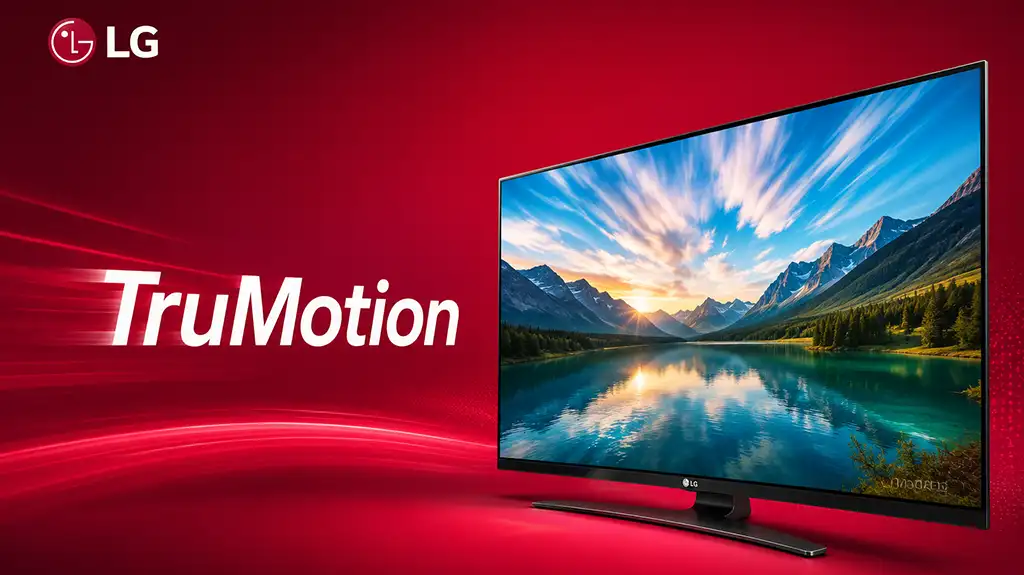
In the technical specifications of LG TVs, you will often come across two terms: Refresh Rate and TruMotion. Although they may appear to describe the same thing, they actually refer to different concepts.
The refresh rate is a physical characteristic of the TV that indicates how frequently the display can refresh the image on the screen. The actual refresh rate depends on several factors, including the capabilities of the TV’s processor and video processing system, as well as the type of display panel used.
TruMotion, on the other hand, is an LG marketing term associated with motion processing. When the technology was first introduced, TruMotion was used to advertise TVs with refresh rates and motion-processing capabilities of 100 Hz, 120 Hz, 200 Hz, 240 Hz, and even 400 Hz. These figures did not necessarily represent the native refresh rate of the panel; they could also include the effect of motion interpolation and other image-processing technologies.
Today, the TruMotion name is used much less frequently in LG TV specifications, although it remains a trademark associated with LG’s motion-processing technology.
What is Refresh rate (native)
Refresh Rate (native) is the maximum frequency at which a TV panel can display video without distortion, motion artifacts, or image quality problems. It is a physical characteristic of the display and depends on the type of panel installed in the TV and the capabilities of the video processing system.
The traditional division between 50/60 Hz and 100/120 Hz comes from the era of analog television and was originally related to differences in electrical power standards between countries. In modern TVs, this classification is mostly conditional and does not fully reflect the actual capabilities of the display.
Today, most TVs are designed to operate at 60 Hz or 120 Hz, depending on the quality of the panel installed. Entry-level TVs typically use 60 Hz panels, while higher-end models equipped with advanced panels support 120 Hz, and recently, new processors and panels have been released that support 144 or 165 Hz, but only via HDMI ports, which provides smoother motion reproduction in games.
Historically, 50 Hz was used in regions with a 50 Hz electrical standard, such as most European countries, while 60 Hz was used in countries with a 60 Hz electrical standard, such as the United States. Higher-frequency versions, 100 Hz and 120 Hz, were introduced for premium television models to improve motion reproduction. Today, this separation is mainly a legacy of older broadcasting standards rather than a strict technical limitation.
Video content is recorded at a specific frame rate. When a TV receives a signal through broadcasting, HDMI, or streaming services, it displays the image according to the frame rate of the source. Common video formats include 24 frames per second (fps) for movies, 30 fps for television programs, and 60 fps for high-frame-rate video.
The native refresh rate determines how smoothly the TV can display this content. A 60 Hz panel can reproduce video up to 60 frames per second, while a 120 Hz panel provides smoother motion and better handling of fast-moving content, sports broadcasts, and gaming.
What Is LG TruMotion Technology
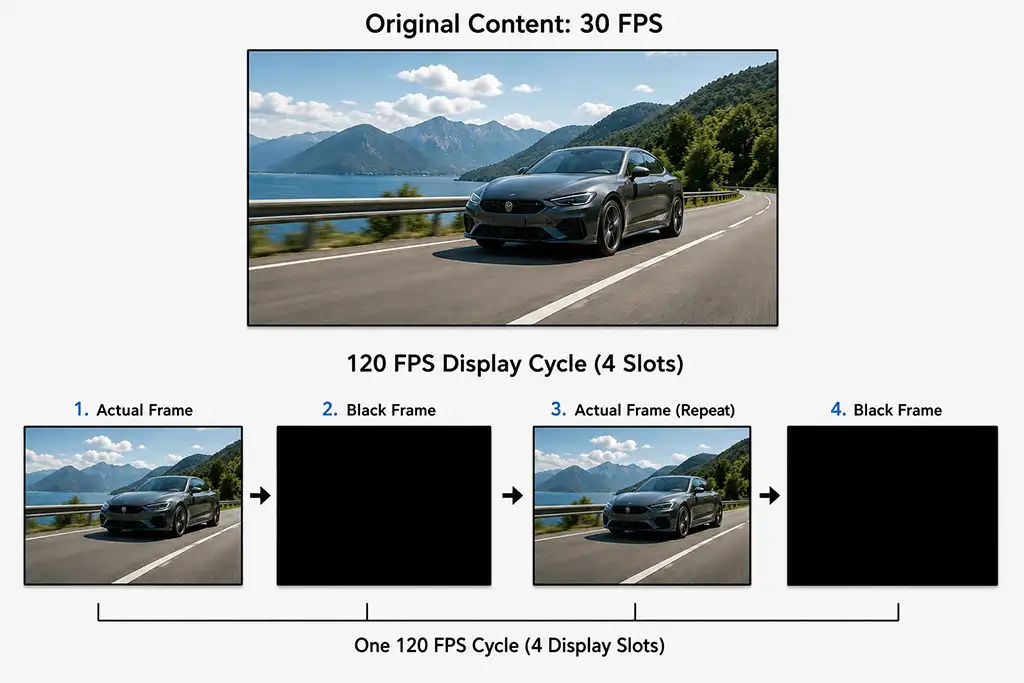
TruMotion is the name of a set of software features designed to improve the TV viewing experience when displaying content with a low frame rate. These include standard techniques such as frame duplication, generating interpolated frames, and inserting black frames between frames
Here is how it works in practice. If the content has a low frame rate, for example 30 frames per second, and the TV supports 120 frames per second, this means that there are four display cycles available for each original frame. The TV software can display the first actual frame, insert a black frame, generate an interpolated frame, and then insert another black frame. To the viewer, the image appears smoother, while black-frame insertion can make moving objects appear sharper by reducing the afterimage perceived by the human eye.
For marketing purposes, TruMotion values are used that, strictly speaking, do not have units of measurement. This is simply a common industry practice and makes it easier to describe the overall motion performance of a TV. It is often assumed that after activating a particular TruMotion mode, the image on the screen will correspond to the quality indicated by the TruMotion number. However, this is not actually the case.
The standard TruMotion values are as follows:
60 Hz native refresh rate = TruMotion 120
120 Hz native refresh rate = TruMotion 240
It should also be noted that OLED TVs, for example, use the OLED Motion setting