
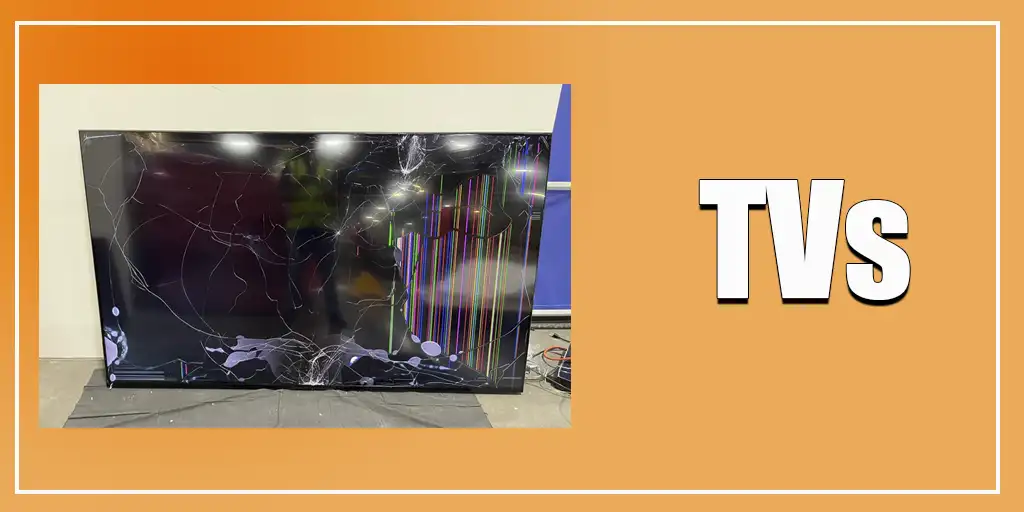
A damaged or malfunctioning TV screen can show cracks, vertical or horizontal lines, black areas, bright spots, or individual defective pixels. These symptoms do not always mean that the entire screen needs to be replaced.
The important thing is to determine whether the problem is caused by the display panel itself, the backlight, an internal connection, or an external device.
Some problems can be repaired relatively easily. A physically cracked LCD or OLED panel, however, usually requires panel replacement.
How to Identify the Problem
The appearance of the defect provides useful information about its possible cause.
| What you see | Possible cause | Usually repairable |
|---|---|---|
| Cracked glass or visible impact mark | Damaged display panel | No, panel replacement |
| One vertical line | Panel connection, driver or panel defect | Sometimes |
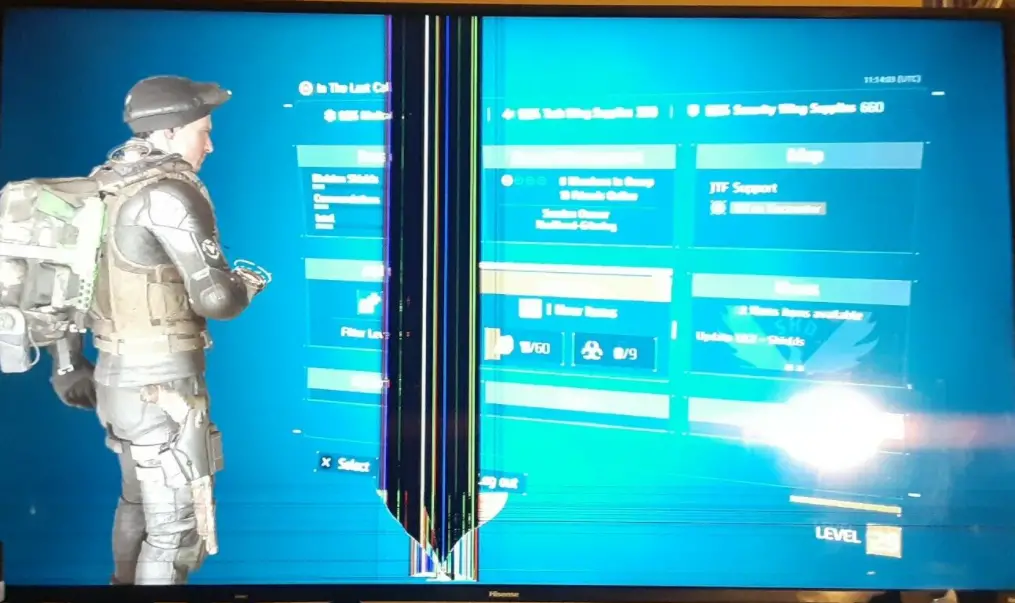
| Several vertical lines | T-Con, connection or panel problem | Sometimes |
| Horizontal lines | Connection, T-Con or panel problem | Sometimes |
| Bright white spots | LED backlight diffuser or panel problem | Often |
| Black or dark areas | Backlight or panel failure | Depends on the cause |
| Small black or colored dots | Dead or stuck pixels | Usually no |
| Lines visible only from one HDMI device | Cable or external device | Usually yes |
| Permanent image or logo on an OLED TV | Burn-in or image retention | Usually not completely |
This table is only a starting point. The same symptom can have several possible causes.
Cracks on a TV Screen
A crack in the screen is usually the result of physical impact. The damage may appear as a visible crack, a spiderweb pattern, black areas, colored lines, or distorted parts of the image.
The display panel is the main image-producing component of the television. If the panel itself is cracked, it cannot normally be repaired by replacing a small component.
The practical solution is to replace the entire panel.
Panel replacement can be expensive because the panel is often one of the most expensive parts of a TV. For an older or inexpensive television, buying a new TV may cost less than replacing the damaged panel.
Do not press on a cracked screen or try to repair the glass yourself. Additional pressure can spread the damage and may cause further failure of the display.
Vertical or Horizontal Lines on the Screen
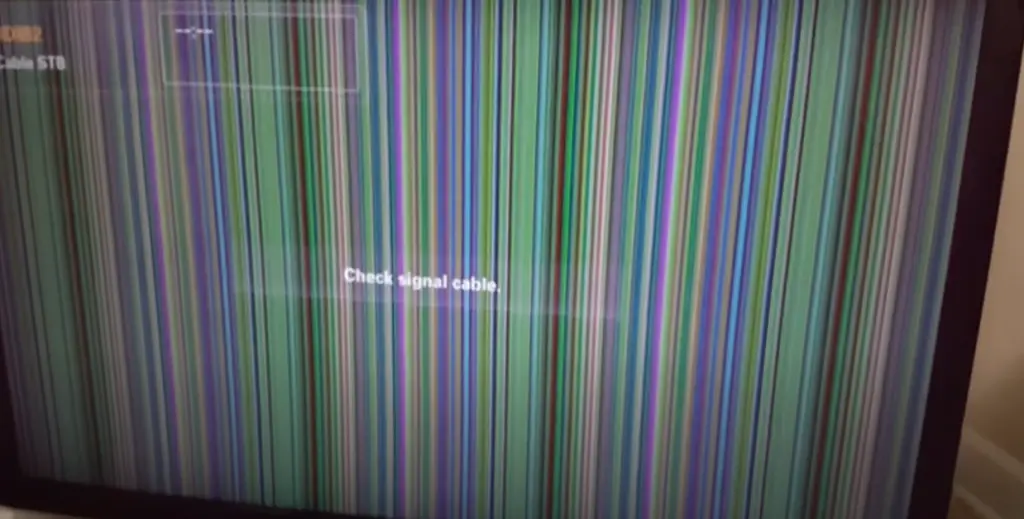
Lines are more complicated because they do not necessarily mean that the panel is broken.
Vertical or horizontal lines can be caused by:
- a loose internal connection;
- a damaged display cable;
- a T-Con board problem in TVs that use a separate T-Con board;
- a panel driver problem;
- a failure of the display panel itself;
- a problem with an external device or cable.
A single line that appeared suddenly may have a different cause from a large group of lines covering part of the screen.
How to Check Lines on a TV
First, open the TV’s own menu or settings screen.
If the lines are visible over the TV menu, the problem is probably inside the television. If the lines disappear when you open the TV menu but appear when using a connected device, check the HDMI cable, source device and input.
You can also try another HDMI input and another cable. If the same lines remain regardless of the input or source, an internal TV problem becomes more likely.
Black and Dark Spots
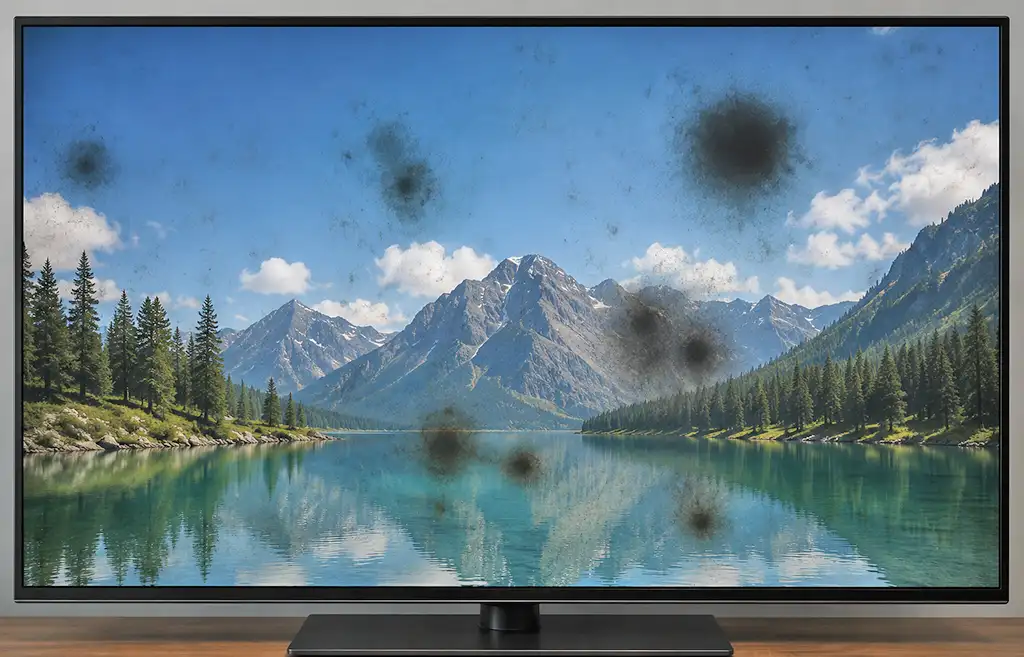
Dark spots can have several causes, particularly on LCD TVs.
A problem with the LED backlight can create dark areas where the screen is not illuminated correctly. A damaged LCD panel can also produce dark regions or areas with abnormal colors.
The location and shape of the spot can help identify the problem.
A large dark area that appeared suddenly may indicate a backlight failure. A small permanent black dot may instead be a dead pixel.
Bright White Spots
Bright white spots are a common type of LCD TV display problem.
Many LCD TVs use LEDs behind the LCD panel to produce the light required to display an image. Light from these LEDs is distributed across the screen using optical components.
If an optical diffuser or lens becomes detached or moves out of position, the light from an LED can become concentrated in a small area. This can appear as a bright white spot, especially when the screen displays a dark image.
In this situation, the LCD panel itself may still be working correctly. The problem can be related to the LED backlight.
Depending on the TV design, repairing the backlight may be possible without replacing the entire LCD panel.
Dead and Stuck Pixels
Individual dots on the screen are usually related to pixels.
A dead pixel remains permanently black or does not produce the expected image.
A stuck pixel may remain permanently red, green, blue, white, or another color.
A small number of defective pixels does not necessarily mean that the entire panel has failed. However, individual pixels are generally not practical to repair because they are part of the display panel.
Manufacturers also have different policies regarding how many defective pixels are considered acceptable under their warranty conditions.
Problems That Appear Only With an HDMI Device
Before assuming that the TV screen is damaged, check whether the problem occurs with every source.
For example, if lines or image distortion appear only when using a game console, computer, set-top box, or Blu-ray player, the television itself may not be defective.
Try the following:
- Disconnect the external device.
- Open the TV’s built-in menu.
- Connect a different HDMI device.
- Try another HDMI input.
- Replace the HDMI cable.
- Check whether the problem changes with different content.
If the TV displays its own menus and other sources normally, the external device or connection is a more likely cause.
OLED Screen Problems
OLED TVs work differently from LCD TVs because each pixel produces its own light. There is no separate LED backlight behind the panel. As a result, some display problems are specific to OLED technology.
One example is burn-in, where a static image or element remains permanently visible after prolonged exposure. News channel logos, game interface elements, and other static graphics can contribute to this problem over time.
OLED TVs can also experience temporary image retention, which is different from permanent burn-in. These problems should not be confused with a physically cracked OLED panel. A cracked OLED panel is still a physical panel failure and normally requires replacement.
Can a Damaged TV Screen Be Repaired?
It depends on what has failed.
A loose connection, damaged cable, faulty T-Con board, or defective backlight may be repairable without replacing the display panel.
A cracked LCD or OLED panel is different. The damaged panel itself normally cannot be repaired in the same way as an electronic board. It has to be replaced.
The same applies to many panel-driver and bonding failures. Although specialized equipment can sometimes be used to repair certain panel connections, this type of repair is not always available or economically practical.
When Should You Replace the TV?
Panel replacement is not always economically sensible. Before ordering a replacement panel, compare the repair cost with the price of a new television.
Replacement may make sense when:
- the TV is relatively new;
- the panel is available at a reasonable price;
- the television is a high-end model;
- the remaining components are in good condition.
Buying a new TV is often more practical when:
- the panel is cracked;
- the television is several years old;
- the replacement panel is difficult to find;
- the repair cost approaches the price of a new TV.