


What is HDR video description, explained
In 2016, HDR (High Dynamic Range) support became the most advertised feature in the television industry. HDR allows videos to be displayed with a...
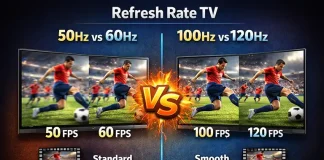
Refresh Rate TV 50 (60) Hz vs 100 (120) Hz
When comparing TVs labeled 50 Hz or 60 Hz and 100 Hz or 120 Hz, it may seem that these are different models. In...
How to know the refresh rate your Samsung TV supports
It is worth noting that modern TVs typically support a maximum video display frequency of up to 120 frames per second. Starting in 2025,...

Digital audio decoder 2.1, 5.1 what is it
In digital devices, sound can be processed through software decoding. For instance, in some laptops, the central processing unit handles the decoding of audio...
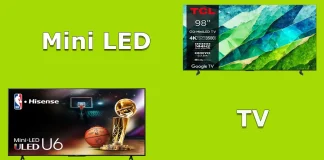
What is Mini LED TVs
TVs with Mini-LED technology represent an advancement of LED display backlighting, using significantly smaller LEDs for direct backlighting. These tiny LEDs are positioned on...
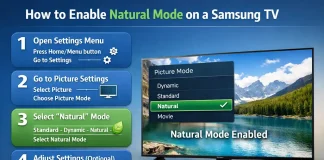
What is Natural Mode Support on Samsung TVs?
Natural Mode Support is a feature present in some Samsung TVs that automatically adjusts the brightness and contrast of the picture depending on the...

What DLNA technology is, explained
The Digital Living Network Alliance (DLNA) is a non-profit organization founded in 2003. Its primary goal was to develop standards that enable convenient sharing...
What Is SimulView Technology and How It Works
SimulView is a technology that allows two players to use the same TV at the same time, while each sees their own image in...

What is Perfect Black on TV LG
LG OLED TVs are described as having “Perfect Black.” This is not a technology or software feature that improves image quality, but a factual...
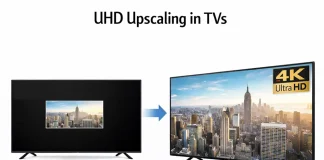
What Is UHD Upscaling, explained
The UHD Upscaling feature built into modern televisions, is designed to enlarge lower-resolution video so that it fills the entire 4K screen. This allows...