

As of 2026, Apple has introduced 10 iPhone model lines. The entire ecosystem is built around the original base iPhone, while all other lines gradually appeared as specialized branches designed for different user needs.
The iPhone Air line, launched in 2025, represents a new direction focused on extreme thinness and lightness while maintaining a premium feel. It sits between the standard iPhone and the Pro models, offering a refined design but without the full professional capabilities of the Pro series.
The iPhone Pro Max line began in 2019 with the iPhone 11 Pro Max and continued with annual releases through 2025. It is the most advanced and largest iPhone family, offering the biggest displays, the best camera systems, the longest battery life, and the most complete set of flagship features.
The iPhone Pro line also started in 2019 with the iPhone 11 Pro and followed the same yearly release cycle. It serves as Apple’s main flagship option in a more compact form than the Pro Max, combining high-end performance, advanced cameras, ProMotion 120 Hz displays, and premium materials.
The iPhone mini line had a short life from 2020 to 2021, appearing only with the iPhone 12 mini and iPhone 13 mini. It was designed for users who prefer compact smartphones, offering a small display and lightweight body while keeping most of the core performance of standard models, though with reduced battery capacity.
The iPhone XR line existed as a single model released in 2018. It was positioned as a more affordable alternative to flagship devices of its time, featuring a large display, modern edge-to-edge design, a single camera system, and a range of bright color options.
The iPhone XS line also appeared in 2018 and included the iPhone XS and XS Max. It represented the premium tier of that generation with OLED displays, improved performance, upgraded cameras, and higher-quality materials, with the XS Max being the largest iPhone of its time.
The iPhone X, released in 2017, existed as a standalone generation and marked a major turning point in iPhone design. It introduced the full-screen OLED display, removed the Home button, introduced Face ID, and established the modern design language that shaped future models.
The iPhone SE line ran from 2016 to 2022 with irregular updates in 2016, 2020, and 2022. It focused on affordability by combining older, familiar designs with newer processors, making it an entry-level option in the iPhone lineup.
The iPhone Plus line originally ran from 2014 to 2017 with the 6 Plus, 6s Plus, 7 Plus, and 8 Plus, then returned from 2022 to 2024 with the 14 Plus, 15 Plus, and 16 Plus. Across both periods, it consistently offered larger displays and bigger batteries compared to the standard iPhone models.
The base iPhone line has existed since 2007 and continues without interruption. It includes every annual generation from the original iPhone through the latest models. This line remains the core of Apple’s smartphone strategy, sitting between the entry-level SE models and the more advanced Pro versions, and serving as the most universal option for most users.
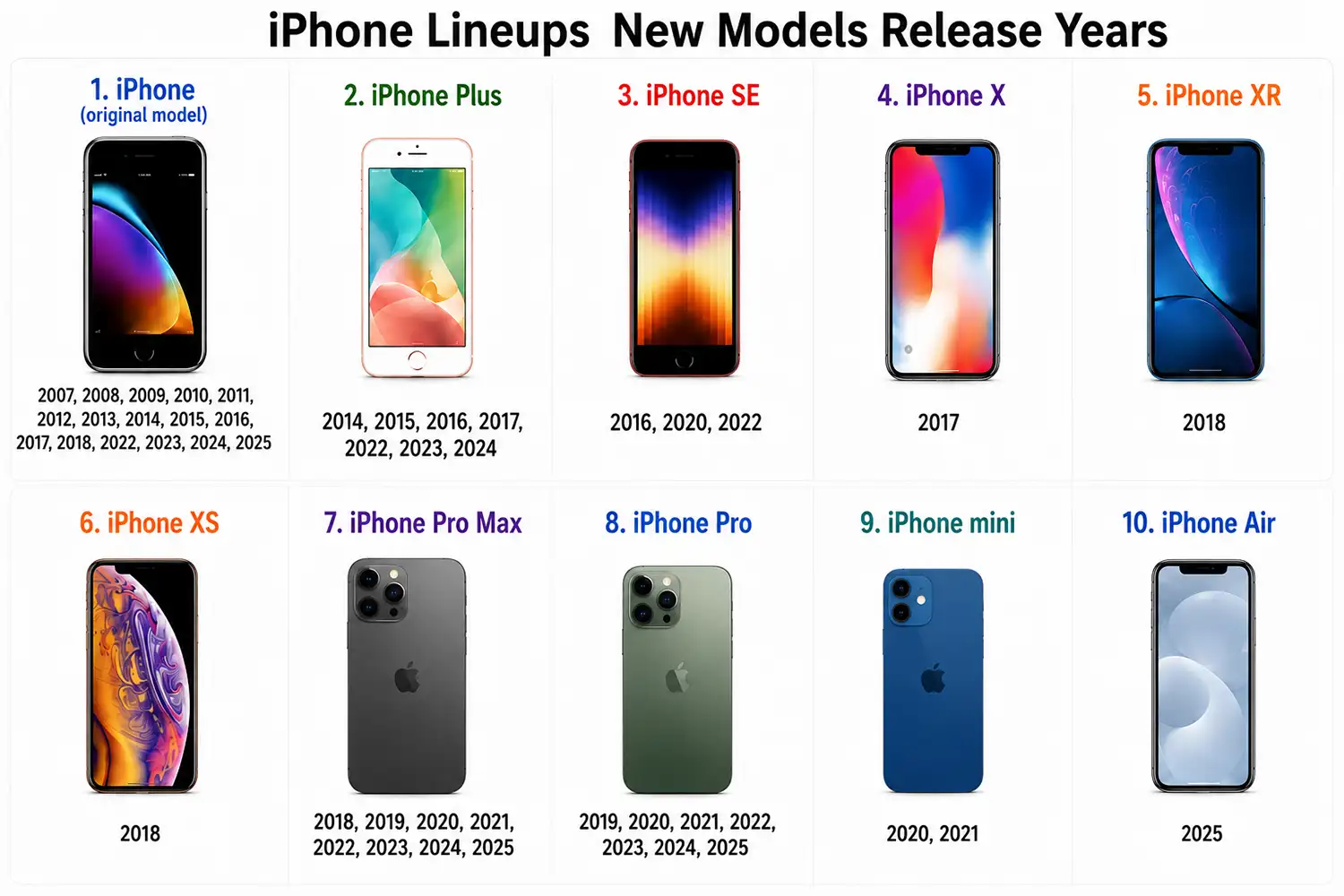
The table below lists each product line and its production period.
| iPhone Line | Production Years |
|---|---|
| iPhone Air | 2025 |
| iPhone Pro Max | 2019–2025 |
| iPhone Pro | 2019–2025 |
| iPhone mini | 2020–2021 |
| iPhone XR | 2018 |
| iPhone XS | 2018 |
| iPhone X | 2017 |
| iPhone SE | 2016–2022* |
| iPhone Plus | 2014–2017, 2022–2024 |
| iPhone | 2007–2026 |
The iPhone SE line was not released annually (models appeared in 2016, 2020, and 2022).
Explanation of the Phone rankings by model
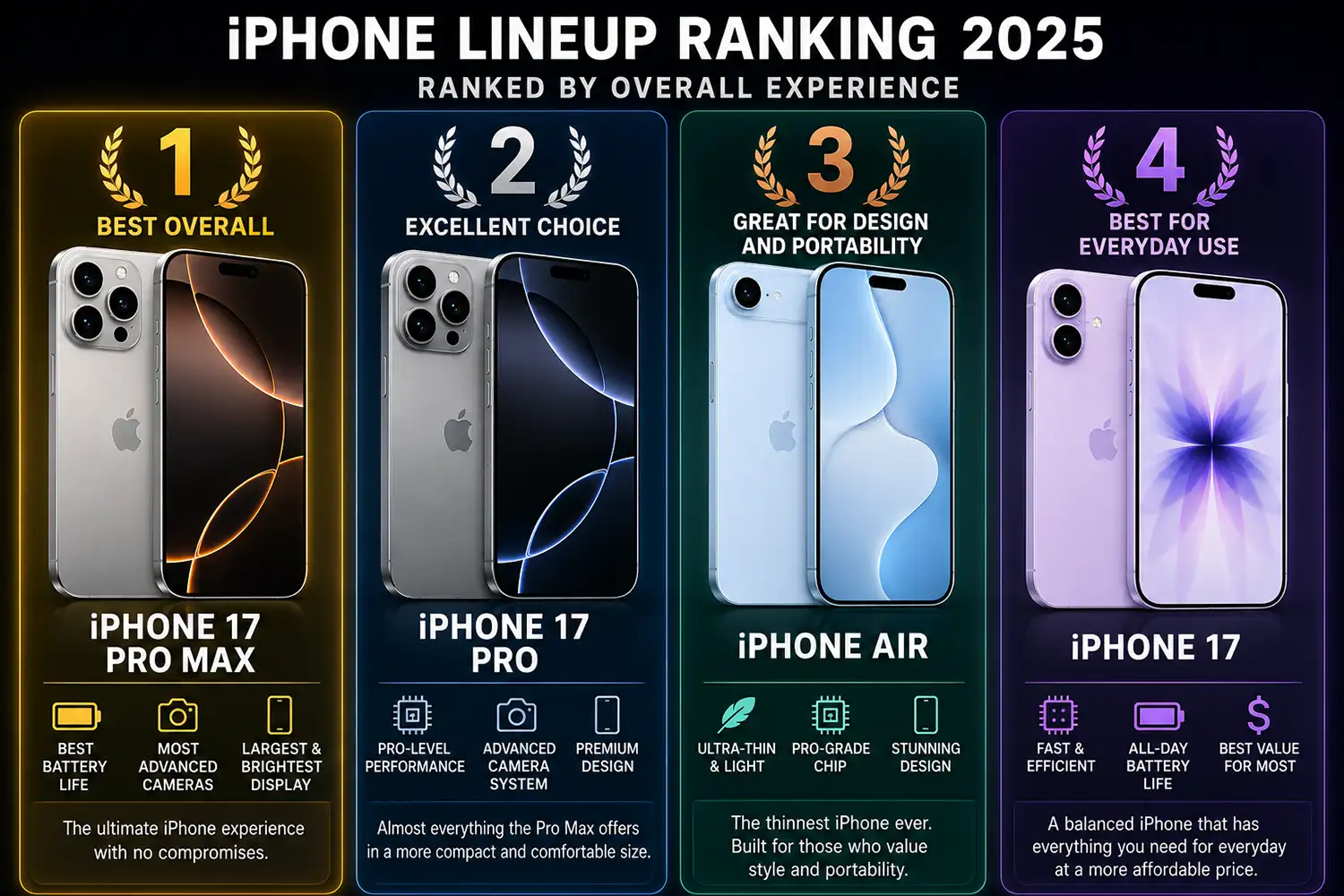
1st place — iPhone Pro Max — Apple’s best iPhone. Large screen, top-notch cameras, and the longest battery life. It has everything that’s best, but it’s also the most expensive phone. For those who want the absolute best.
2nd place — iPhone Pro — almost the same as the Pro Max, but smaller. In terms of capabilities, it’s very close to the flagship model, but cheaper.
3rd place — iPhone Air — the thinnest and lightest iPhone. Designed more for convenience and style than for top-tier specs. It’s Apple’s attempt to create a phone that stands out in the lineup.
4th place — Base iPhone — a standard iPhone; a good phone with basic features, suitable for most users.
iPhone discontinued list
Like all devices, iPhones also become obsolete and are gradually replaced by newer models. If you want to know when production of a particular iPhone model was discontinued, refer to the table below, which lists all iPhone models as of June 2026 along with their production status.
| Model Number | Year of Release | Year discontinued |
|---|---|---|
| iPhone 17 Pro Max | 2025 | in production |
| iPhone 17 Pro | 2025 | in production |
| iPhone 17 Air | 2025 | in production |
| iPhone 17 | 2025 | in production |
| Phone 16e | 2024 | in production |
| iPhone 16 Pro Max | 2024 | in production |
| iPhone 16 Pro | 2024 | in production |
| iPhone 16 Plus | 2024 | in production |
| iPhone 16 | 2024 | in production |
| iPhone 15 Pro Max | 2023 | 2024 |
| iPhone 15 Pro | 2023 | 2024 |
| iPhone 15 Plus | 2023 | 2025 |
| iPhone 15 | 2023 | 2025 |
| iPhone 14 Pro Max | 2022 | 2023 |
| iPhone 14 Pro | 2022 | 2023 |
| iPhone 14 Plus | 2022 | 2025 |
| iPhone 14 | 2022 | 2023 |
| iPhone SE (3rd gen) | 2022 | 2025 |
| iPhone 13 Pro Max | 2021 | 2022 |
| iPhone 13 Pro | 2021 | 2022 |
| iPhone 13 Mini | 2021 | 2023 |
| iPhone 13 | 2021 | 2024 |
| iPhone 12 Pro Max | 2020 | 2021 |
| iPhone 12 Pro | 2020 | 2021 |
| iPhone 12 Mini | 2020 | 2023 |
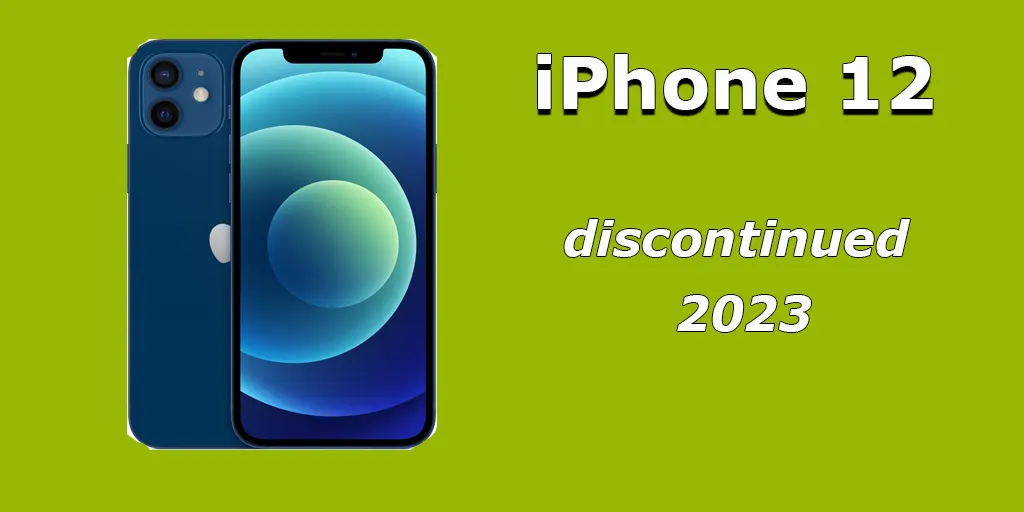
| iPhone 12 | 2020 | 2023 |
| iPhone SE (2nd gen) | 2020 | 2022 |
| iPhone 11 Pro Max | 2019 | 2020 |
| iPhone 11 Pro | 2019 | 2020 |
| iPhone 11 | 2019 | 2022 |
| iPhone XS Max | 2018 | 2019 |
| iPhone XS | 2018 | 2019 |
| iPhone XR | 2018 | 2021 |
| iPhone X | 2017 | 2018 |
| iPhone 8 Plus | 2017 | 2020 |
| iPhone 8 | 2017 | 2020 |
| iPhone 7 Plus | 2016 | 2019 |
| iPhone 7 | 2016 | 2019 |
| iPhone SE (1st gen) | 2016 | 2018 |
| iPhone 6s Plus | 2015 | 2018 |
| iPhone 6s | 2015 | 2018 |
| iPhone 6 Plus | 2014 | 2016 |
| iPhone 6 | 2014 | 2017 |
| iPhone 5s | 2013 | 2016 |
| iPhone 5c | 2013 | 2015 |
| iPhone 5 | 2012 | 2013 |
| iPhone 4s | 2011 | 2014 |
| iPhone 4 | 2010 | 2013 |
| iPhone 3GS | 2009 | 2012 |
| iPhone 3G | 2008 | 2010 |
| iPhone | 2007 | 2008 |