

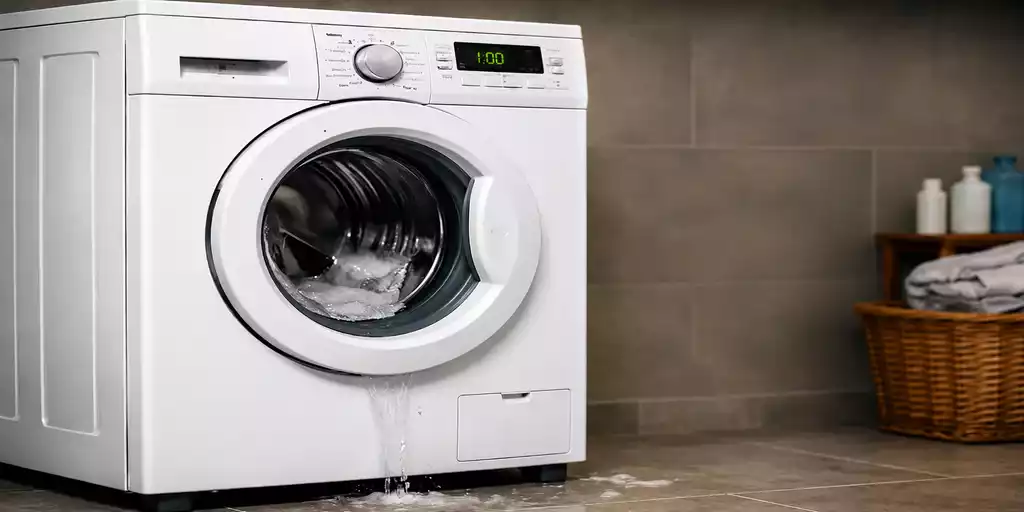
Since the beginning of the 2000s, consumers have increasingly questioned the durability of modern washing machines. Older appliances were often simpler, easier to repair, and could remain in service for many years. Modern machines offer better energy efficiency, more programs, quieter operation, and electronic controls, but some have become more difficult and expensive to repair.
The reasons for this change are connected not only with product quality but also with changes in the appliance market, production methods, and the design of modern machines.
The formation of the washing machine market
In the first half of the 20th century, washing machines were relatively expensive and were not yet common in every household. The introduction of fully automatic washing machines in the 1950s transformed the market and made washing much easier.
Because a washing machine represented a significant purchase, reliability and brand reputation were important competitive advantages. Manufacturers had to build consumer trust, and repairability was also important because replacing an appliance was expensive.
The washing machine market from 1950 to 1990
During this period, washing machines became mass-market products. Manufacturers competed by improving reliability, adding new functions, and developing more convenient designs.
Many machines used relatively simple mechanical components. Motors, pumps, belts, switches, and bearings could often be replaced individually. This made repairs easier and allowed a machine to remain in service for many years.
By the late 1980s and early 1990s, however, washing machines had become common in many developed markets. As market penetration increased, manufacturers faced a new problem: consumers who already owned a working machine did not need to buy another one.
The Market in 1990–2010
During the 1990s and 2000s, demand for washing machines continued to grow in emerging markets. In established markets, however, replacement sales became increasingly important. Many households were still using machines that had been purchased 15 years or more earlier, and these appliances were gradually reaching the end of their service life.
At the same time, washing machines were becoming more sophisticated. Electronic control systems, digital displays, more efficient motors, sensors, and additional wash programs gradually replaced the simpler mechanical systems used in earlier generations.
Manufacturing also became increasingly globalized. To reduce costs, manufacturers began sourcing components and assembling products on an international scale. Washing machines from different brands often became similar in both design and construction, while price became a more important factor in purchasing decisions.
After 2010, competition in many markets became even more intense. Manufacturers focused on reducing production costs, and it became common for the same specialized component manufacturer to supply parts to several different brands. As a result, many washing machines from different manufacturers could share similar components, even when the finished products carried different brand names.
The Issue of Repairability
One of the most noticeable differences between older washing machines and some modern models is their repairability.
For example, some modern machines use sealed or non-separable drum assemblies. The bearings may be integrated into the drum assembly, making their replacement much more difficult. A repair that was relatively straightforward on an older washing machine may now require extensive disassembly or replacement of the entire assembly.
Electronic components present a similar problem. If a single component in the control system fails, it may be necessary to replace the entire control board rather than the individual component. Modern electronic components are smaller and more densely integrated, making component-level repairs increasingly difficult. Finding the faulty component, removing it, and installing a replacement can require considerable time and specialized equipment, which can make the repair economically impractical.
Therefore, the main issue is not necessarily that modern washing machines fail more frequently. In many cases, the greater problem is that certain failures have become more difficult and expensive to repair. A machine that could once be repaired by replacing a single mechanical part may now require the replacement of a much larger and more expensive assembly.
Planned obsolescence
This situation is often described as “planned obsolescence,” suggesting that a product is deliberately designed with a limited service life and that difficult or expensive repairs encourage consumers to replace it rather than repair it.
However, high repair costs or poor repairability do not, by themselves, prove that a manufacturer intentionally designed a washing machine to fail prematurely. Production costs, integrated components, labor expenses, technological changes, and the declining price of new appliances can all contribute to a shorter economically viable lifespan.
Nevertheless, the increasing complexity and cost of repairing some household appliances have raised concerns about planned obsolescence, product durability, and the long-term sustainability of modern appliances.
An Environmental Issue
When a washing machine is discarded instead of repaired, the materials and energy used to manufacture it are effectively lost. Producing a new appliance requires metals, plastics, electronic components, energy, and transportation, all of which have an environmental impact.
For this reason, repairability has become increasingly important. A washing machine designed so that individual components can be replaced can potentially remain in service for many years longer than a machine in which a relatively minor failure requires the replacement of an expensive complete assembly.
As a result, governments have introduced regulations intended to encourage longer product lifespans and easier repairs. In the European Union, for example, requirements for household washing machines and washer-dryers have applied since March 1, 2021. These requirements oblige manufacturers to ensure the availability of a range of essential spare parts for at least 10 years after the last unit of a particular model is placed on the market. Document 32019R2023
The parts covered include motors, pumps, shock absorbers, springs, drums, bearings, heating elements, hoses, valves, electronic circuit boards, displays, sensors, and thermostats. Certain software and firmware requirements are also included.
Other components, such as doors, hinges, door seals, door locks, and detergent dispensers, must also be available for up to 10 years. In addition, specified components must be replaceable using commonly available tools and without causing permanent damage to the appliance.
These rules do not mean that a washing machine is legally required to operate for 10 years. Rather, they are intended to ensure that when a machine develops a fault, the necessary parts remain available for repair, making it more practical to extend the appliance’s useful life.