

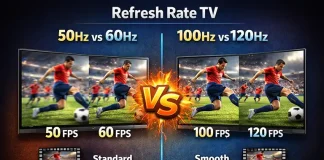
Refresh Rate TV 50 (60) Hz vs 100 (120) Hz
When comparing TVs labeled 50 Hz or 60 Hz and 100 Hz or 120 Hz, it may seem that these are different models. In...
How to know the refresh rate your Samsung TV supports
It is worth noting that modern TVs typically support a maximum video display frequency of up to 120 frames per second. Starting in 2025,...

Digital audio decoder 2.1, 5.1 what is it
In digital devices, sound can be processed through software decoding. For instance, in some laptops, the central processing unit handles the decoding of audio...

How to properly transport and connect your TV
Whether you’re buying a new TV or moving an old one to a new home, following the proper guidelines for transporting a TV is...
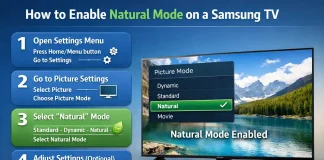
What is Natural Mode Support on Samsung TVs?
Natural Mode Support is a feature present in some Samsung TVs that automatically adjusts the brightness and contrast of the picture depending on the...

What DLNA technology is, explained
The Digital Living Network Alliance (DLNA) is a non-profit organization founded in 2003. Its primary goal was to develop standards that enable convenient sharing...

What Is SimulView Technology and How It Works
SimulView is a technology that allows two players to use the same TV at the same time, while each sees their own image in...

Harman Kardon sound in TVs
Harman Kardon is an American audio equipment brand founded in 1953, known for combining high sound quality with original design. The company has gained...

What is Perfect Black on TV LG
LG OLED TVs are described as having “Perfect Black.” This is not a technology or software feature that improves image quality, but a factual...

Home and Commercial TVs, Differences and Features
TV manufacturers typically divide their products into two main categories: home (consumer) TVs and commercial TVs. Each category is designed with features tailored to...