
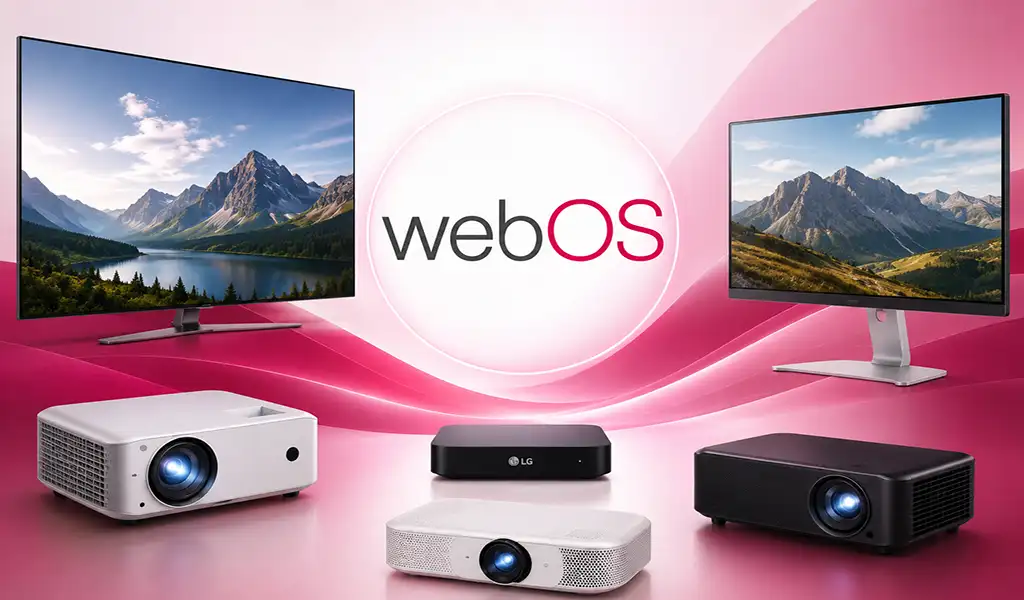
In January 2014, at CES 2014, LG announced that its new TVs released in 2014 would use the new webOS platform. The TVs were equipped with new software designed to improve both TV control and access to streaming services.
This operating system was not originally developed by LG. The company acquired it from Hewlett-Packard in March 2013.
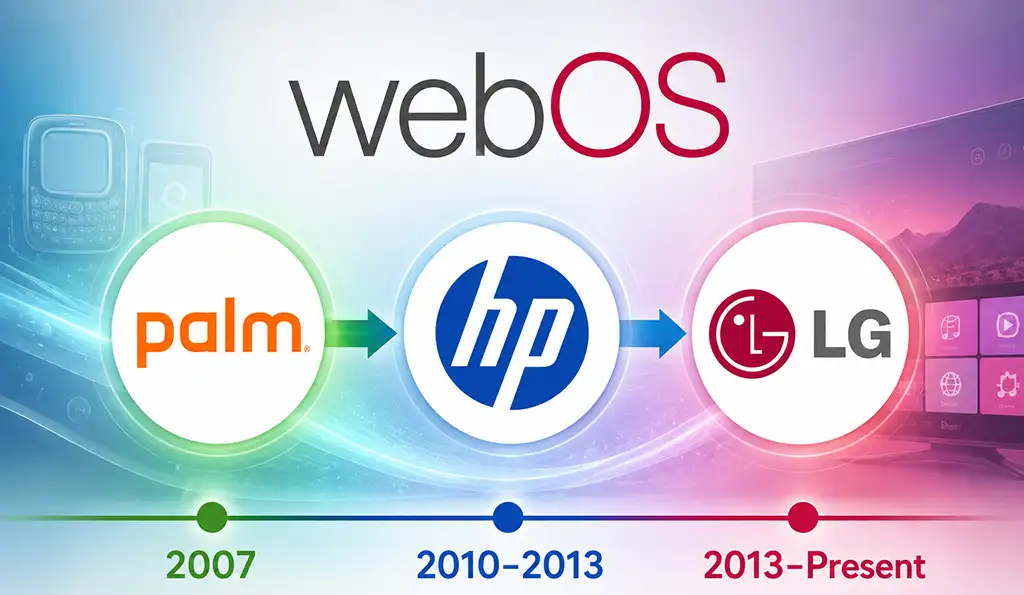
If we trace the history of webOS, we see that this operating system was originally created by Palm as a platform for devices based on ARM processors. In 2010, Hewlett-Packard acquired Palm and continued developing webOS with the intention of using it in smartphones, tablets, and other mobile devices.
However, most manufacturers of ARM-based devices and software developers preferred to support Google’s Android platform. Since webOS did not gain widespread adoption, it became unnecessary for HP. In 2013, Hewlett-Packard sold the operating system to LG.
For its part, LG decided to acquire a ready-made operating system that could be adapted for use in TVs and other “smart” devices. LG did not want to use Android, but instead decided to develop its own OS.
LG’s previous TV operating system, NetCast, was developed for TVs without smart features; although it was later adapted for smart TVs, its core was not well-suited for further development.
Generations of webOS
In 2026, LG released webOS version 11. Unlike smartphones and laptops, LG TVs are not designed to receive full operating system updates to newer versions. This is because the TV’s operating system is stored in read-only memory and is tightly integrated with the hardware platform.
As a result, each new generation of LG TVs is released with a newer version of webOS that supports updated technologies, new codecs, and enhanced hardware capabilities. Older TV models receive only updates for the existing version of the operating system, such as security enhancements, bug fixes, and minor feature improvements.
However, if we take a closer look at the history of webOS development, we can see that only a few significant changes have been made to the operating system’s kernel. Major kernel-level updates occurred primarily in 2016 and 2021. Later versions introduced redesigned interfaces, improved usability, and additional features, while the system’s underlying architecture remained largely unchanged.
LG maintains a policy of open access to its operating system, so any TV manufacturer can license the OS for its devices.