

Tag: Technology TV’s

What Is SimulView Technology and How It Works
SimulView is a technology that allows two players to use the same TV at the same time, while each sees their own image in...

Harman Kardon sound in TVs
Harman Kardon is an American audio equipment brand founded in 1953, known for combining high sound quality with original design. The company has gained...

What is Perfect Black on TV LG
LG OLED TVs are described as having “Perfect Black.” This is not a technology or software feature that improves image quality, but a factual...

Home and Commercial TVs, Differences and Features
TV manufacturers typically divide their products into two main categories: home (consumer) TVs and commercial TVs. Each category is designed with features tailored to...

What Is UHD Upscaling, explained
The UHD Upscaling feature built into modern televisions, is designed to enlarge lower-resolution video so that it fills the entire 4K screen. This allows...

Lock Mode on TV what is it?
Lock mode is a security feature designed to restrict access to TV settings, system menus, and physical ports. It is most commonly found on...

The “Dirty Screen” Effect on TVs
The “dirty screen” effect is a visual phenomenon that can appear on LED and LCD televisions. It presents itself as uneven brightness or faint,...
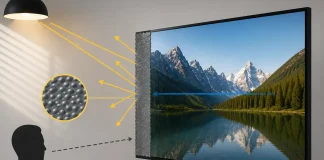
What is Samsung’s Ultra Black Technology?
Samsung announced this feature for its SUHD TVs in 2016, and later introduced it in some QLED models, presenting it as a solution for...

local dimming LED TV, local technology explained
LED TVs have one distinctive feature: when the pixels are off, they still allow light from the backlight to pass through—this is a characteristic...

Quality index, dynamic scene index in LED TVs
In the early years of digital television, manufacturers began heavily promoting their displays with bold claims about how smoothly they could render motion. To...